Sunday, July 26, 2026

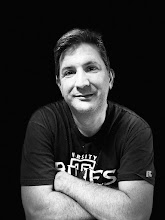
My tribute to former KU standout and NBA player Brian Martin


I am still shocked over the death of Brian Martin. I actually didn’t know Brian had passed until I googled his name recently and saw his obituary. He died on Aug. 15, 2025 at age 62 from complications of a stroke. It seems like just yesterday when I interviewed Brian for our wonderful Where Are They Now? story in about 2000. He was full of life, full of great memories, full of funny stories. It was pure joy talking to him. We were Facebook friends until I deleted my account in 2021 after my dad passed. Brian also endorsed me on LinkedIn several years ago. In addition to my interview with him for Where Are They Now?, I talked to Brian in Allen Fieldhouse about his high school rival and former Jayhawk shooting star Ricky Ross. Brian gave me some great insight into Ricky’s high school prowess and his thoughts on why Ricky never played a second in the NBA. Here’s how Brian endorsed me on LinkedIn, which I am forever grateful:


"I have been interviewed by David on a couple of occasions and found him to be a professional in every sense of the word. As a writer, he has the ability to make the interview feel like a normal conversation and then portray it perfectly into a story that grabs people's interest. In my experience working with David, he always uses the quotes in the perfect context and always made me feel good about how I was portrayed. I would absolutely work with David again if the opportunity ever presented itself."--Brian Martin, former KU basketball standout and NBA player, on Aug. 27, 2014.


That was so kind of Brian to write. We stayed in touch over the years, and when I posted something on Ron Kellogg on LinkedIn over a year ago, Brian wrote something like: “I played with Ronnie for two years at KU. If there was a 3-point line, he would have scored 50.” That might not have been the complete direct quote, but it was something along those lines. Brian was deeply committed to his family, his faith, and loved KU basketball passionately. 


Here is what his obit read: 

Brian L. Martin, 62, Business Development with Equity Bank, passed away Friday, August 15, 2025.

Memorial Service will be at 11:00 am, Friday, August 22, 2025, at Ridgepoint Church. Services will be live streamed and available for viewing by clicking the “Watch” button below.

Brian played basketball at KU from 1981-1984. He had a 10 year professional career including the NBA, CBA, and European leagues. He continued to be an avid KU fan. He enjoyed playing golf and taking care of his yard, but his favorite thing was spending time with his family and always supporting them in anything they did.

Brian was a former member of the Wichita Rotary Club and looked forward to his Men’s Bible Study each week. He will be remembered for his generosity, faith, and leadership.

Brian is preceded in death by his parents, Malty and Wanda Sue Martin. He is survived by his wife, Jodi Martin; daughters, Alissa (Erik) Kusnerus, Emily Martin; son, Alex (Shellby) Martin; sister, Debbie Bush; brother, Keith (Janis) Martin; grandchildren, Braylon Martin, Aiden Kusnerus, and Ella Kusnerus.

Memorials have been established with: Victory in the Valley, 3755 East Douglas, Wichita, Kansas 67218 and Children’s Mercy, 2401 Gillham Road, Kansas City, Missouri 64108.

Services in care of Downing & Lahey Mortuary – West Chapel.

My prayers go out to his lovely wife, Jodi, and Brian’s entire family. I feel so bad that I’m late in posting my tribute to Brian, but I just somehow missed the news when he passed. I fondly recall playing in a pickup game with Brian and his college roommate Mark Ewing at Robinson Gym around 1987 or 88 as I recall, somewhere around then. We were all on the same team and I remember Brian at 6-foot-9 leading a fast break and passing to me. I remember he was very humble and kind.


Brian made a profound difference on people’s lives, including mine. Maya Angelou said it best: “I’ve learned that people will forget what you said, people will forget what you did, but people will never forget how you made them feel.” Brian, I do remember what you said, but above all, I remember how you made me feel good about myself, that I was always very important, you made me feel very special and your spirit lives eternally. Rest in Peace my friend!


Here is that wonderful Where Are They Now? story on the great Brian Martin in Jayhawk Insider, who never saw a blocked shot he didn’t like. I know you’re now blocking lots of shots in Heaven and bringing a ton of smiles to people’s faces.


By David Garfield


Brian Martin never dreamed as a child growing up in Wichita that he’d someday play in the NBA, hold Kareem Abdul-Jabbar to one-of-four shooting, each nachos with jack Nicholson at the Forum in Los Angeles, or travel around the world playing professional basketball.


But he did.


The former Kansas basketball player never really cared much for the game until his sophomore year in high school, when he grew to 6-foot-5. However, by the summer after his junior year, Martin became a national name at the prestigious Five-Star basketball camp.


“I dove for a loose ball in the all-star game and landed in Bob Hill’s (Kansas assistant coach) lap,” Martin said. “The first time I met Bob Hill, he told me that the coach sitting next to him said, ‘You guys are going to be pretty lucky if you can get that guy out of Kansas.’ He goes, ‘Who is he?’ ‘That’s Brian Martin from Wichita.’”


Martin, who had academic difficulties in high school, actually went to Hutchinson Community College for one year before embarking on his KU career. He was basically a 6-foot-9 role player for three years backing up guys like Kelly Knight and Greg Dreiling. As a senior, however, he noticed some NBA scouts like George Irvine of the Indiana Pacers coming to practice late in the year.


“Coach (Larry) Brown said they were looking at me,” Martin recalled. “It really surprised me.”


After KU lost to Wake Forest in the second round of the NCAA Tournament, Indiana eventually selected Martin in the ninth round of the NBA Draft. He was cut just three days into rookie free-agent camp. However, like his high school coach, Brown, and former KU coach Ted Owens, Irvine saw a raw shot-blocking talent who just needed some seasoning and motivation. He told Martin to go to the CBA and “work on your game and see if you got a chance to play, because I really think you do.”


Martin played for Tampa Bay Thrillers’ coach Eric Musselman, a master motivator whom the ex-Jayhawk called the “most eccentric, different coach I’ve ever played for (he once gave death threats to an opposing player during the CBA championship).


He said, ‘You’re not going to play at first, but bide your time, and by the time the playoffs start, you’ll probably be starting,'" Martin remembered.


Sure enough, Martin was in the staring lineup six games before the playoffs began. All he did was help lead the Thrillers to the CBA championship, and wound up as the leading shot blocker and rebounder in the playoffs.


“It must have been the (career) turnaround,” Martin said.


Martin followed his stellar CBA playoffs by making the Seattle Supersonics’ opening-day roster the following season.


“That was obviously a dream come true,” he said.


Martin was with Seattle for a month before being released and sent back to Tampa Bay. And then, the Portland Trail Blazers picked him up in January. Martin, who finished the season in Portland, will never forget playing the Lakers in the Forum. When he first stepped on the court, Martin turned around and saw “Kareem standing right next to me. He’s 7-2, one of the greatest players ever. I thought, ‘This is pretty cool.’’


Martin, who held Jabbar to just one-of-four shooting in the second quarter, was proud the legend “just didn’t go off on me.”


And then there was famous actor and rabid Lakers’ fan Jack Nicholson, who sat eating nachos and drinking a beer next to Martin by the Blazers’ bench. He said, ‘Do you want a nacho?’ I said, ’Sure,’ so I grabbed one of his nachos. He said, ‘Do you want a beer?’ I said, ‘No, I better not do that.’ He gave me that Jack Nicholson smile, which just cracked me up.”


After his stint in the NBA, Martin spent the next two years playing in Spain and Belgium. He returned to the CBA in 1989 and played for three different teams before going back overseas again to Germany for two years. Martin came back to the CBA with Omaha and Fort Wayne before getting burned out and retiring from basketball in 1994.


Martin, who played in two CBA all-star games and led the league in rebounding and blocked shots three years, finally decided to get a “real job” and became a sales representative for an awning company in Denver. He got a better offer in 1997 and moved to Salt Lake City, where he’s been the sales rep and assistant general manager for Allied Awning and Sign the past three years.


After playing basketball so long, Martin admits he initially suffered “quite a shock to the system” entering the “sedentary” business world. This once unknown player from Wichita now has his hoop dreams centered on his 2-year-old son, Alex.


“I miss playing, but it’s been five or six years now,” Martin said. “I kind of joke that he’s my 401K plan. I got him shooting jump shots on a six-foot goal already. I’m working him hard.”


A Closer Look at Brian Martin:


Years at KU: 1981-84

Career Notables: Finished career as fifth-leading shot blocker in school history (83)…only player to block a Wayman Tisdale shot in 1982-83…Career-high 18 points against Ohio State on Dec. 22, 1983.

Education: Martin majored in film studies.

Family:  Martin and his wife, Jodi, have three children (Alissa, 11, Emily, 7, Alex, 2)

Hobbies: Golf

Since Leaving KU: Martin played a year in the CBA with the Tampa Bay before making the NBA in 1985-86 (Seattle and Portland). He spent part of 1986-86 with Tampa Bay, and the rest of his career playing overseas in Belgium, Spain, and Germany and with five different teams in the CBA. Martin also had stints in the USBL, Canadian Basketball League, and Italy. He retired from basketball in 1994, and became a sales representative for an awning company in Denver.

Currently: Martin is a sales rep and assistant general manager for Allied Awning and Sign in Salt Lake City, Utah (since 1987)

Favorite KU Memories: Having a run-in with Indiana coach Bobby Knight after KU beat the Hoosiers, 71-61, in Madison Square Garden in 1981. “He was fuming and yelling at an official. I said, ‘That’s what you get, coach.’ He turned around and just glared at me. His assistant coach goes, ‘You don’t talk to Bobby Knight that way.’…I’ll never forget that look he (Knight) gave me. I thought he was going to hurt me. It was pretty funny.”

On the Jayhawks Today: “I can see them as a possible Final Four in the next year or two…I’m still proud of the team, and proud to say I played for them.”


Sunday, May 3, 2026

Mark Randall was one of the greatest players in KU history


                                                           KU Libraries Digital Collections


In my Sept. 27, 2024 blog, I wrote about Mark Randall and included my Where Are They Now? story I wrote on him in 1999. Here is more on one of KU's all-time greats, whose selfless play and pure heart and emotion won over KU coach Roy Williams and thousands of Jayhawk fans.

Mark Randall had a decorated prep career at Cherry Creek High School in Englewood, Colorado. The Colorado High School Player of the Year as a senior in 1986, he was a McDonald’s All-American while also earning Street & Smith, Gatorade and Parade All-American honors. Randall, who averaged 27.2 points, 12.5 rebounds, 5.8 assists and 4.2 steals per game his senior year while shooting 68% percent from the field and 79% at the free throw line, competed in the McDonald’s All-Star Classic in Washington, D.C. and the East-West All-Star game in Detroit.

The 6-foot-9 do-it-all forward led Cherry Creek to the state finals, falling to Washington High, 66-65, despite Randall’s 27 points. His high school coach was former ABA and NBA star Mack Calvin, who called his prodigy “the next Larry Bird.” Randall chose KU over Duke, Arizona and Colorado.

Randall, who was born in Edina, Minnesota, to Thomas Randall and Patricia Trapanese, joined fellow KU signee Kevin Pritchard on the North team coached by Notre Dame coach Digger Phelps at the National Sports Festival in Houston the summer before his freshman year.

KU coach Larry Brown raved over Randall and his signing class on his Hawk Talk radio show. In addition to Randall, Brown inked Robert Coyne, Jeff Gueldner and Keith Harris in the early November signing period. Pritchard signed in the spring, choosing KU over Kentucky.

“I don’t know if it’s the fifth best (nationally), but we signed four terrific kids as far as I’m concerned,” Brown said. “The four kids we signed can play anywhere. Three of them were recruited by everybody. None of them are like a Danny Manning, but they don’t come along very often. I think Mark Randall and Keith Harris have the potential to play in our program and compete with anybody. I wouldn’t trade our class with anyone.”

“Mark Randall is as good as any prospect we’ve ever signed here,” Brown added. “In my mind, he’s the number one prospect in America, and we’re very fortunate to have him. He’s 6’9 and can handle the ball, run, and defend. He’s tough. He’s got a chance to make an impact in our program immediately next year.

“I went out to California and saw Keith play in a tournament.  He got 11 points and 15 rebounds the night I saw him, and made me feel even better about the fact that he signed early. I just think he’s going to be a great addition to our program. He’s still just 16 and won’t be 17 'till March 28. He can defend and he can handle the ball, and I believe he’s going to be a great player for us. 

“Randall got 20 the first half when I went to see him, and his team won by about 40 points. Both of those coaches are great coaches. They pressure man to man and they run and they allow their kids to play and they’re well-disciplined. I think they’re both going to be great additions to our program. Randall, he is athletic. He does a lot of the same things Danny (Manning) does. For his size, he can handle the ball and pass it. He’s a tough kid and I think they’re both going to be great players.”

What they’re saying about Mark Randall.

Purdue coach Gene Keady, who coached Randall at the World University Games in 1989: “The thing about Mark is that he was enjoyable to be around because he was completely team-oriented. He’s an excellent player and his tools are positive. Mark has a good shot, and understands the game. He can go inside or go outside and make his shots. He is versatile.”

Jay Randolph, Raycom Network Announcer:

“I like Randall. He’s hardworking and a smart player. After the year layoff (redshirted in 1987-88). I thought he’d have trouble coming back – but he only got better. He impresses me.”

KU coach Roy Williams, who said this before his junior year in 1989-90:

“There’s no doubt in my mind that Mark Randall can be an outstanding player at the University of Kansas if he continues to work hard. He’s a weapon because of his ability to run the court, play out on the floor, and down low in the post. I’m anticipating he’ll have a good year.”

Teammate Mike Maddox told me in 2000 about the great chemistry of him and Randall and how they operated the high-low offense to virtual perfection in 1989-90.

“Mark and I developed a real feel for each other, and really took the offense and kind of adapted it to our own games. I probably went to the high post 70 percent of the time, and he went to the low post. ... I was a decent high outside shooter, and Mark was good down on the block. It was hard for defenses to defend both of us.”

After leading underdog Kansas to an improbable NIT championship with a 66-57 victory over St. John's in Madison Square Garden, being named MVP, and recording 25 points and 10 rebounds, Coach Williams gushed over his play.

"He played a game tonight that everybody would like to have in their lifetime," said Williams, whose Jayhawks went from being unranked in preseason to jumping to No. 4 in the AP poll after victories over St. John's, No. 2 LSU with Shaquille O'Neal, Stanley Roberts and Chris Jackson and No. 1 UNLV with Larry Johnson and Stacey Augmon.  "He runs the floor as well as any big man in the game." 

Randall, who averaged 22.3 points in three games during the tournament, is also named Big Eight Player of the Week.

Teammate Steve Woodberry told me at Mr. Goodcents in Lawrence many years ago during his lunch break while rehabbing from injury about Randall and the 1991 Final Four team.

“That was special," Woodberry said. "Nobody expected us to get close to the Final Four. ... Mark Randall was the star, but everybody did their role and played together. ...That was a special year.”

Randall said it before the 1990-91 season. He averaged 13.3 points and 6.2 rebounds in 1989-90.

“I don’t have great numbers, but I do think that I can do things to help the team win.”

Randall started at the World Championships in Argentina the summer of 1990 and helped the team win a bronze medal. Other starters were Billy Owens (Syracuse), Kenny Anderson (Georgia Tech), Alonzo Mourning (Georgetown) and Chris Smith (Georgetown).

One national publication called Randall one of five “Rising Stars” in college basketball before the 1990-91 season, along with Todd Day (Arkansas), Chris Gatling (Old Dominion), Bryant Stith (Virginia) and Henry Williams (UNC-Charlotte). Inside Sports wrote that “Randall…runs the floor as well as any big man in the country.”

After Randall led underdog KU to the 1991 Final Four and ended his career as KU’s all-time field goal percentage leader (62.0) and No. 6-leading scorer (1,627 points), Williams said “you don’t replace a Mark Randall. He did so much for this team on and off the floor.”

Indeed, he did. Mark, thanks for the enduring memories!

He was inducted into the CHSAA (Colorado High School Activities Association) Hall of Fame in 2013.

Randall's bio starts with this rave review of the man:

"It’s hard to say that Mark Randall’s selection to the CHSAA Hall of Fame was based solely on his basketball ability. Nor, was it based solely on his work with Kroenke Sports in the community. Frankly, it was based on the character, integrity and person that Randall is and demonstrates each day..."


Thursday, December 25, 2025

A heartfelt tribute to Jayhawk legend Nolen Ellison


It’s been said perhaps the greatest gift you can give someone is sharing your knowledge and time. Nolen Ellison, one of the greatest players in Kansas basketball history, one of the greatest educators America has ever produced, and one of the kindest people I’ve ever met, definitely shared his knowledge and time with me during his lifetime. He also constantly called me by my first name during our talks, something all successful and kind people do. A person's first name has been called the most beautiful word in the world, the most beautiful word in the English language (and in any language), and I always appreciated Nolen for repeatedly referring to me as "David." The last time we talked for two and half hours in April 2025, he even asked me the names of my beloved late parents. I told him: "Goody and Shirley." He knew my Dad was a professor in the KU School of Social Welfare (for 34 years from 1969-2003) and my mom worked as a field instructor for the School (for 33 years from 1970-2003). He even thought his cousin Elmer Myers was in class with my father until I told him the years my dad taught, which Nolen wrote down. His cousin was actually in the KU School of Social Welfare years before my dad taught at KU.

Nolen, one of my true heroes, sadly passed on June 12, 2025 in Rosevile, California, at age 83. I got the devastating news two days later from Murray Anderson, a friend and colleague of Nolen’s and someone I met with for three hours at Panera restaurant in Lawrence a few months earlier. I was deeply pained and stunned over Nolen’s death; we just had that lengthy phone call in April and he was full of life and vigor.

I first talked to Dr. Nolen Ellison on a Saturday March morning in 2002 at 9:30 a.m. for 90 minutes, which was a Where Are They Now? interview for Jayhawk Insider. He spoke about his KU experience, his life after basketball, and all he humbly accomplished in his professional career. I’ve thought a great deal about Nolen since then and especially since his passing.

I told him at the time about my 82-page honors thesis on racial participation and integration in Kansas basketball history at the University of Kansas, that my Dad was a professor of social welfare at KU, and that he attended the historic March on Washington in 1963. Nolen said, “There’s a reason you called me.” He also urged, “You need to do more with this than Jayhawk Insider.” 

Nolen, who talked about mentoring me that morning, was one of seven African-American players on head coach Dick Harp’s revolutionary 1960-61 team, a squad that I became fascinated with after doing extensive research and writing my senior honors thesis in 1988.


Nolen told me during our interview he became a starter the fourth game of the season (against Michigan State), replacing Dee Ketchum, who injured his foot. Nolen never relinquished his starting position the remainder of season and his career, becoming the fourth black starter for Harp’s Jayhawks in 1960-61, a decision that broke the “gentlemen’s agreement,” an unwritten code about never starting more than three black players/playing more than three at one time. KU was a forerunner nationally in the recruitment of the Black athlete, led by their idealist and progressive young coach Harp. This was before Loyola of Chicago made history starting four black players in winning the 1963 NCAA title, and then when Texas Western, with its all-black starting lineup, beat all-white Kentucky (Rupp's runts) for the 1966 national championship.


Nolen (a Wigsman High School All-American at Wyandotte and two-time All-Big Eight player) and I connected again in 2007 for four hours as I drove with giddy anticipation from my home in Lawrence to his house in Kansas City, Kansas, where we then departed in Nolen’s car to the nearby Legends at Panera. He treated me to lunch while his older brother and former KU teammate, Butch, a Sumner High School graduate and JUCO All-American at Kansas City Kansas Community College. joined us during a large part of that talk, where Nolen and Butch shared their memories of playing for Dick Harp and many other topics. It was an afternoon I’ll never forget.


While we talked briefly a few times after this, I’m saddened that we didn’t connect and I wasn’t more active in reaching out until Nolen emailed me in March 2025 after Murray had read my blog post on KU’s 1960-61 team and shared that with Nolen. I then soon saw Nolen and his lovely wife and junior high sweetheart, Carole, at a Zoom call at 11 a.m. that Murray initiated. Nolen, who smiled when saying he was "spry" at his age, talked for an hour that day, again sharing his time and knowledge with me. It was so great to see and talk to him after all these years!


During our long and expansive conversation last April, Nolen told me I was a "rare entity in Lawrence, Kansas," with my work on my honors thesis and my knowledge of race and Kansas basketball history. He urged me to meet with Lawrence attorney and former KU hoops star Al Lopes and get my thesis copyrighted. I asked him why? Nolen replied: "Someone might use it the wrong way." He talked about how valuable the thesis was, how he had just re-read it (I made a copy for him many years ago), and how he had written notes all over it. Again, I was deeply humbled how he viewed me and how much this great man and educator believed in me, more than I actually believed in myself. 


Nolen also told me he was writing two books and was interested in my "editorial services." Again, I was deeply humbled that he trusted me so much to work with him. He also confided in me some very personal informational that he said he had never told his lovely wife.


During our talks last year, Nolen had spoke of coming to Kansas and meeting with me. He said that day in March, "This will require a face-to-face discussion when I'm out in Kansas so it requires that you and me to understand exactly what I'm saying and not talk in metaphors because that's the only way you can complete (your) book is to understand race at that level, feelings, faith, God."


Very sadly, that day never happened.


I attended his memorial service in Kansas City, Kansas, on August 9, 2025 at Thatcher Funeral Home, which was a beautiful tribute to this great man and his extraordinary life. Nolen, I treasure our time we shared together. I’m also forever grateful you took such a keen interest in me and my thesis, even calling me his “hero”  many years ago, a comment that deeply, deeply humbled me and blew me away. We both shared a strong and deep conviction in racial equality and social justice, something my progressive parents instilled in me. I know countless people viewed you as their hero, including me, and your legacy will always be a rich one for making a profound difference on people’s lives and society!


RIP.


Here is that 2002 Where Are They Now? story on the great and legendary Dr. Nolen Ellison with a few updates.


By David Garfield


It was, quite simply, two of the sweetest events in Nolen Ellison’s life.


Flash back 40 years ago to Dec. 29, 1962 at Municipal Auditorium in Kansas City. In one of the greatest Big Eight basketball games ever, Ellison’s Kansas Jayhawks upset Kansas State in a four-overtime thriller, 90-88, for the Big Eight Holiday Tournament Championship. It was a magical evening for senior Ellison, who scored a career-best 32 points and dished out nine assists while playing the full 60 minutes. Remarkably, he tied the score at the end of each of three overtimes, and made the game-winning assist in the fourth OT. 


“It was obviously the game of my career,” Ellison recalled recently from his home in Kansas City, Kansas. “I got married the next day. My anniversary makes me remember that particular game. … Dick Harp (KU head coach) evidently thought I was doing the job out there on the court that night. That’s a game that will always stand out in my mind. Obviously, because of the anniversary, we get the chance to annually sort of commemorate that.”


Former Jayhawk teammate Harry Gibson will never forget Ellison’s commanding game, which one publication called at the time “arguably the most phenomenal performance ever by a Jayhawk.”


“He wouldn’t let the team lose,” Gibson told the Kansas City Star. “Every time we had a critical juncture, he made a key play.”


Indeed, he did. Ellison’s play that evening defined his sterling character and extreme competitiveness — both on and off the court. Yes, he was one of the best KU players of his generation, a two-time All-Big Eight selection (1962-63) who finished his memorable career as the No. 5 leading scorer (1,045 points) in school history (now No. 38). But Ellison achieved even greater heights after graduation from Mount Oread.


He eventually went on to become the president of a couple of urban community colleges in the country, and retired over a year ago as an endowed professor at UMKC. He was awarded the Distinguished Service Citation for outstanding contributions at KU in 1983, and in 1988, the Miller Co. identified Ellison as one of 12 outstanding educators for its "Calendar of Great Black Educators in the 20th Century.” Ellison credits his older brother, Butch (a KU teammate), junior high coach Jack Van Treece and Wyandotte high school coach Walt Shublom for helping him strive for greatness.


“(They) instilled this question clearly in my mind, in my motivation in athletics that was really part of the same motivation in life, that is to be the best “ Ellison said. “That issue came out clearly in that ‘62 game I’d like to believe that’s a part of my character and whom I am. “


The Kansas City native could do it no other way. Ellison, who was the first player in Kansas school boy history to play on three consecutive state high school championship teams, came to KU with great expectations. After coming off the bench for the first three games his sophomore year (1960-61), Ellison started the rest of the season. He averaged 7.9 ppg for Kansas, which went 17-8. It was a deeply talented team with people like 6-6 All-American center Bill Bridges and 6-8 forward Wayne Hightower.


“Those guys were phenomenal players,” Ellison said.


Unfortunately, KU struggled in Ellison’s junior and senior years. Without a legitimate big man, KU wound up going 7-18 in 1961-62 and 12-13 in 1962-63. Despite the losing records, Ellison flourished. He averaged 18.1 ppg during his junior season and 15.8 ppg his senior year. A quick guard who could shoot outside and take the ball to the hole, Ellison was also a defensive stopper. He only wishes his last two seasons would have been more successful.


“I missed playing with the truly big guys, and the truly big guys are what KU and every other team has needed to win the big games and national championships,” Ellison said.


Yet, he savors his time at KU and the relationships he built with former teammates and coach Harp. Ellison, 62, said he and Harp had an “exceptional relationship,” built in large part on their strong belief in racial equality and justice. A pioneer, Harp was an idealist with a deep social conscience. He recruited black athletes to Kansas at a time when the doors were closed in many programs throughout the country. Ellison was one of seven black players on the 1961 team, a number which was just unheard of in that era.


“Dick Harp was a wonderful human being,” Ellison said. “He was a good coach and a terribly tolerant coach who helped carry KU basketball into the 21st tradition, both with the recruitment of Wilt Chamberlain and opening for KU the real era of integrated basketball. He was a good shaper, molder of men, and he had a representative record there at the university.”


After graduating in 1963, Ellison was drafted in the fourth round by the Chicago Zephyrs (No. 29 overall pick). He turned down a professional basketball career to enter the educational arena.  Ellison first taught at Sumner High School in Kansas City for five years. A lifetime activist, Ellison was then elected to public office on the first board of trustees in Kansas City, Kan., where he served for a year and a half while also working in the city planning department. After Martin Luther King Jr. was assassinated in April, 1968, Ellison decided to change directions and pursue his doctorate degree. He received a Ph.D. at Michigan State University in 1971, and a year later became president of Seattle Central Community College. At just 31, he was one of the youngest college presidents in the country.


In 1974, Ellison became the president and chancellor at Cuyahoga Community College in Cleveland. He enjoyed 18 years of service there before returning to Kansas City in 1991. After dividing his time as a visiting professor in urban affairs at UMKC and as a consultant to the Samuel Rodgers Community Health Clinic, Ellison took an appointment at UMKC as a Schutte professor of urban affairs. He was the Schutte chair from 1994 until his retirement in 2001.


It is certainly an impressive resume for Ellison and “kind of rounds out I think an interesting life of a young kid born in 1941 before World War II in Kansas City.”  Ellison has worked tirelessly over the years trying to make a difference for young people.


“The belief that change in society that goes all the way back to early civilization, has rested upon our ability to provide the kind, I think, of spiritual growth and educational opportunity for citizens,” Ellison said.  “The fact is my commitment to education as a life work has been in the sense a wanting to help and work with other young people to give them the same opportunity in life that I had.”


The former Jayhawk standout is now at peace back home in Kansas City. Ellison stays busy with volunteer work (outreach ministry programs, among his efforts) and is active in his Trinity African Episcopal Church. He looks back with great fondness over his college career, and, of course, that unforgettable four-overtime classic against K-State in 1962. Ellison was part of an underdog team that night who “who knew what it meant to sacrifice and win.”  


Off the court, he feels blessed that he married his junior high sweetheart at KU and that he and his brother were the first two graduates of his family.


“I think the crowning achievement for me when I really look back on it, I was absolutely elated to walk out of the University of Kansas in four years with a degree and with the athletic achievements that I had, and with the prospects for the future,” Ellison said. “The university experience for Nolen Ellison and his young family at the end of my senior year was nearly storybook in character. I think that’s why the transfer of something called achievement, character, personal outlook on life, all that stuff that shapes who an individual is, I think that all came together for me at the university, and I’m thankful to the university for the experience.”


A Closer Look at Nolen Ellison:

Years at KU: 1959-63

Career Notables:  All-Big Eight in 1962 and ‘63...Career-high 32 points on Dec. 29, 1962...Led team in free throw percentage in 1962 (81.1)...Member of Big 8 Holiday Tournament Championship team in 1962...Ended career as No. 5 leading scorer in KU history (now No. 38)...captain of 1962-63 team.

Family: Wife, Carole, sons Marc, 40, Steven, 37, and four grandchildren.

Education: 1963, B.S. Education (history and psychology); 1971. Ph.D. Higher Education and Leadership. Michigan State.

Since Leaving KU: Ellison taught at Sumner High School in Kansas City for five years before being elected to public office on the board of trustees, where he served for a year and a half while also working in the city planning department. In 1968, he went to Michigan State to pursue a master’s and doctorate degree. He was president of Seattle Central Community College from 1972-73. In 1974, Ellison became the president and chancellor at Cuyahoga Community College in Cleveland. He enjoyed 18 years of service there before returning to Kansas City in 1991. After dividing his time as a visiting professor in urban affairs at UMKC and as a consultant to the Samuel Rodgers Community Health Clinic, Ellison took an appointment at UMKC as a Schutte professor of urban affairs. He was the Schutte chair from 1994 until his retirement in 2001.

Currently:  Ellison is retired and living in native Kansas City, Kan.

Hobbies: Reading and watching sports.

Favorite Memories: Playing with his older brother, Butch. “We were only the second brother team to play at the same time at KU. That was really kind of a special occasion for me as I reflect back on my KU years. We were the first and only black brothers that played there during that period of time, and came early on the front end of minority players there at the university.  That sticks out in our minds. We talk about it today an awful lot, the desegregation of colleges and universities and athletics. That’s the kind of distinction that will probably be there forever.”...”The opportunity to be enculturated in the KU tradition after Wilt Chamberlain, Bill Bridges, Ron Loneski. The football greats like John Hadl, Doyle Schick, Curtis McClinton, Burt Coan. I think when I arrived at KU as a freshman to see Allen Fieldhouse and know you were going to play, these were the impressions that really motivated and spurred me on to want to make a contribution at the university.”

On the Jayhawks Today: “Roy Williams is a wonderful coach. He continues to recruit wonderful kids, and I’m keeping my fingers crossed at some point that his wonderful coaching and wonderful kids are going to end up with another national championship.”