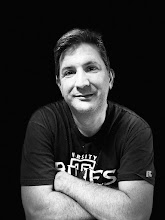
You never forget your first love, the one that took your breath away and captured your imagination forever. Roger Morningstar was one of my first “loves” and I cherish the memories of him playing in Allen Fieldhouse as a bright-eyed 7 and 8-year old kid growing up in Lawrence who had season tickets with my dad since 1973. Roger was an instrumental part of the dream 1974 KU Final Four team, which was nicknamed the “Comeback Kids.” That team stole my heart and I’m forever grateful for my childhood heroes like Roger, Dale Greenlee, Tom Kivisto, Norm Cook, Rick Suttle and Danny Knight for giving me such pure joy and brightening my childhood.
That team had a magical run to the Final Four, going 23-7 after an 8-18 finish the previous season, one of the greatest comebacks in college basketball history. KU won the Big Eight Championship before winning thrilling games against Creighton (55-54) and Oral Roberts (93-90 OT) in the Midwest Regional to advance to the Final Four in Greensboro, N.C., where they fell to head coach Al McGuire and Marquette, 64-51.
And I cried after that loss, a familiar refrain for me whenever KU’s loss ended the season for me growing up. That 1974 Final Four team had superb team chemistry and everybody knew their role. These guys have kept in close contact with each other over the years, and sadly, Knight and Cook have since died. Knight died at such a young age at 24, while Cook passed at 53. Assistant coaches Sam Miranda and Duncan Reid have also passed, while team manager Chuck Purdy died at age 58.
Since I was so young, my memories of Roger are kind of vague. But I remember him as a great long-range shooter, along with Greenlee. He would have been tailor made for the three-point shot, if it had been in effect back then. And Roger also played with great emotion and passion. With the junior college transfer Morningstar and freshman sensation Cook joining the team, KU was able to rebound after a dismal season in 1972-73 and advance to college basketball’s pinnacle --the Final Four.
With a last name like Morningstar and his fabulous play, how could I not fall in “love” with him.
Here is what longtime Lawrence Journal-World columnist Bill Mayer wrote about Morningstar on Dec. 3, 1973 after he played his first college game at KU, a 103-71 rout over Murray State on Dec. 1.
“Morningstar gives the Jayhawks something they’ve needed badly for a long time, a shaker, a guy who sizzles around like the Tazmanian Devil in pursuit of Yosemite Sam. He moves all the time, with the ball or without, on defense, at both ends of the court. He and Cook make things happen.”
I used to live out my Jayhawk childhood hoop dreams playing mock Nerf basketball games in my bedroom with KU vs. Kentucky, KU vs. Marquette, KU vs. UCLA, KU vs. Notre Dame, and so on. I’d entertain myself giving the play by play as I passed the Nerf ball to myself. "Kivisto to Greenlee to Suttle, over to Morningstar." Then, I’d fling my nerf to the hoop.
Swish!
I’d then mark two points by Morningstar’s name on a sheet of paper and continue the game. More times than not, KU would win the games against these powerhouse teams. It was my mock Nerf basketball games, after all, and I had all the power in the outcome.
Roger indeed made things happen on the court. And so did his son Brady, who played from KU from 2006-11. It was a great thrill to me to cover Brady for four years (he redshirted his sophomore season) and write stories about him. He is such a nice guy and true gentleman, and I could tell he was raised great by his parents, Roger and Linda. I’ll never forget when I first met Brady before he began his freshman season. I smiled, said hello, and told him I remembered watching his dad play at Kansas.
Brady was a true glue guy and make all his teammates better. He had “happy feet,” as coach Bill Self said, and was one of the best defenders of the Self era. I’ll never forget when Brady first checked in to the game during his first exhibition contest in 2006. I immediately got chills with an instant flashback of his dad playing in the Phog. It was a surreal experience for me. Brady hit a three-pointer that game, and I was overjoyed for him and his family. I interviewed him for a couple of minutes after that game and asked him how he was adjusting to KU and helping fellow freshmen Darrell Arthur and Sherron Collins get acclimated to KU. Brady was very kind and pleasant to me.
I was lucky and fortunate enough to interview Roger in 2001 for a Where Are They Now? interview for Jayhawk Insider. It was one of the most enjoyable Where Are They Now? interviews I ever did, having the chance to interview my childhood hero. We met at his Sport 2 Sport complex, which he owned at the time. It was a wonderful and memorable interview, as Roger told me about his high school and junior college days, his fond memories of Kansas, his kids, and what he’s been up to since leaving KU.
A sixth-round draft pick by the Boston Celtics, Roger told me he "wanted nothing more in the world than to play in the NBA." While that didn’t work out, he’s had a very successful business career and currently owns Morningstar’s New York Pizza in Lawrence.
I’m always happy and delighted when I see Roger in Allen Fieldhouse and always enjoy his emails throughout the years. He will always have a special place in my heart, as will all his former teammates that I’ve just grown to love more dearly as I’ve gotten older.
You just never forget your first love.
In this blog post, I recall Roger’s recollections of his early high school and junior college career and his recruitment to KU, as well as re-publish my Where Are They Now? story in 2001. I even write about Roger’s childhood heroes.
...
“I wasn’t highly recruited at all. I was from the Chicago area. Of course, high school basketball in Illinois and especially in the Chicago area, is pretty tough--very competitive. I was one of those kids that developed late physically. I grew almost four inches after I got out of high school. My senior year, the fact we were 4 and 20, and the fact that I was a skinny little 6-2, 160 pound kid that was on a bad team didn’t fit well with what college recruiters were looking for. I still had this burning desire to play basketball in college. One of the other coaches in the conference that we played in in Chicago, had a friend, or an ex-player actually, who was an assistant junior college coach. He had called and said something about me. The next thing I know, I got a call from this Olney Central College, which was about four and a half hours south of Chicago. I went down there and just hooked up with a bunch of kids who I had never knew of before. We had a good team, no real great players, just a really good team. We were all freshmen except for one kid. We had a really good season and played in the finals of the state tournament, which enables you to go to to Hutch out there for the national tournament. Actually, not the state, but the regional, which more or less boiled down to a state tournament for the junior colleges in Illinois. We played really well, but didn’t make it.
"The next year we came back and were all sophomores. We did make it that time. By the time my freshman year was over, I was 6-6 and weighed about 190 points or so. That changed the outlook on my basketball career. Again, we went to the regional tournament (sophomore year) and this time we won the thing and came out to Hutch to play. By that time, I had a few more opportunities to take a look at and decided that Kansas was the right place for me. Coach (Sam, KU assistant) Miranda was instrumental in recruiting (me). He was from Illinois. He recruited Illinois. Our whole team (at KU), we had one kid from Kansas --Danny Knight. The rest of the team was all from Illinois, which was pretty interesting.
“There wasn’t a whole lot of recruiting. I’m a little bit old school in that I’m big on tradition and just the fact you come out to play in Allen Fieldhouse in front of 17,000 people. Wilt Chamberlain, Jo Jo White. Dave Robisch, Bud Stallworth, on and on. Phog Allen, James Naismith, the whole deal. It didn’t take much to convince me that this would be a great opportunity. ... Olney Central College, (Olney is a) town famous for white squirrels. It has albino squirrels all over the place.
“It was funny. I had a real strong run late (in high school). Like our last five games, I scored a lot of points and played well. I don’t know what happened. It just kind of fell that way. I had a coach by the name of Rex Hughes, who was an assistant coach at the University of Nebraska for Joe Cipriano. They called late. Of course, I was goo goo over the whole thing. (They said), ‘We want you to fly out and take a visit and all that stuff.’ I had nobody wanting me to visit anywhere, except this little junior college so I thought, ‘Man that would be great.’ He said, ‘We’ll have a ticket in the mail to you in the next couple of days. You ought to have it and we’ll see you.’ Every day, I was blown out of high school. The mail came to our house about 11:00, and at 10:45, I had a study hall or something. I was blown out of high school going home checking the mailbox. It didn’t come. It didn’t come. It didn’t come. It didn’t come. Seven or eight days later, I still don’t have it, and I’m wondering what the heck is going on. So the next day I go to the mailbox, and there’s a letter--a big Cornhusker logo on the envelope. And I’m jacked up. I ripped the thing open and instead of a ticket, it was a letter explaining why they didn’t have any interest anymore. A couple of the other kids that they were looking at, they didn’t think they were going to get, had committed and therefore there wasn’t a need for me at that time. It’s your typical basic kick in the gut for a young kid.
“It served me as great motivation that at least somebody had taken notice. ... At least I got a nibble at the major college level. Now can I turn that into actually doing it? I didn’t come here (KU) for any revenge factor or anything. It was kind of fun. Coach Cipriano was a fiery, the two years I was here, I never saw him finish a game in Allen Fieldhouse. He was thrown out all the time. He was a great, great guy, really fiery. I had a little fun jabbing him from time to time because I always seemed to have decent games against Nebraska. That was just about it as far as opportunities. Nebraska, again, that faded quickly. That was kind of a late deal. If I’m thinking right, timing wise, that was probably in late April, which is real late when it gets down to recruiting purposes. In fact, this is really funny. He (Miranda) watched a game that I played in. I happened to be a junior at that time. We played a team that was extremely good in Illinois, Aurora East High School. On that team was a future teammate of mine here at the University of Kansas, a kid named Tom Kivisto. Tom was one of the absolute best high school player I had ever seen. His dad was his coach. The Kivisto family in basketball circles in Illinois was legendary. So, Aurora East beat us 110-58, I believe. They just crushed us. Coach Miranda watched that game, but he had no idea who I was. Of course, that was the year earlier. I was even scrawnier at that point as I was as a senior. He was very familiar with Dundee. The town I’m from, had years ago had pretty steep tradition in high school basketball in that area. At the time period which I went to school there in the late 60s and early 70s, we were kind of downtrodden.
“We (Olney Central Community College) had a team very similar to what I ended up on here at the University of Kansas. We had about seven kids who knew their role and played hard. We were successful from a won loss standpoint. That’s what helped. The other thing from a personal standpoint that helped me a lot, by being a late developer, when I was younger, I had to play guard and handle the ball a lot. When you grow from 6-1 to 6-6, you don’t forget those ballhandling skills. So now all of a sudden, I was a little bit more of an asset because I was a big guard in college as opposed to a little tiny kid. I think that had some bearing on their recruiting and the fact that Kansas had just come off a weak season. They were 8-18, so what I was looking forward, of course, was an opportunity to play. At that time, the good teams around the country bring in maybe one junior college player every few years. You had to almost pick your spots to make sure you would go to a school that was the type of school you wanted to go to because you’d fit in and you were going to play because you had two years left. Kansas just seemed to be a really good fit at the time, just with the personnel that they had and what they had coming back, and at my size and my position. Plus, I always wanted to play with Kivisto, and that was going to give me an opportunity to do that also. I had a very very strict junior college coach, and thank goodness for that. I had a bagful of letters and opportunities. He told me you’ll pick four places to visit and that’ll be it. So I went to the University of Maryland on a visit because my dad lived out there at that time, and they had really good teams at that point, too. I went to Wake Forest, another team in the ACC. I went to Texas A&M because I’d never been to Texas before, and I came to Kansas. The one trip I had that I was trying to talk coach into taking, I ended up once I was out here and decided to come here, there was no sense in taking any more trips. I canceled a trip to the University of Minnesota, which I thought was a good basketball school at the time. That’s where I ended up taking a look at. Kentucky really didn’t take junior college players. I’d say they were looking at the best players in the country from a high school standpoint year in and year out. I’m a role player. I’m the type of player who needs to find his role and fit into a spot and do a few things. I was not certainly the type to carry a team. Maryland was a top-10 team at that time. John Lucas, Tom Roy, Owen Brown---they had Mo Howard. They had some good players, and that’s when Lefty Dreisel was kind of trying to build Maryland into the UCLA of the East.
“I was blown away (first impression of Lawrence). The only time I had ever been to Kansas was when we drove from Olney straight across I70 to Hutch. We came through at night. We left in the afternoon after class. By the time we got over here to Lawrence, it was dark. Everyone’s sacked up. You got eight kids to a station wagon, bags packed and all that stuff. So when I wake up, we were in Hutch. The next day, I ‘d get up, there was wind blowing, there was sand blowing. Everything was flat. It just looks like a typical midwestern town, and I didn’t think much of it. I had a wonderful experience at Hutch--the fans and the attendance at the tournament and the way we were treated and all that stuff was unbelievable. It was my first taste of some sort of national type tournament. When we left, we were on such a high after we finished third. We were so excited. When we left, we drove from Hutch back through here. I didn’t really notice anything. It was during the day but we didn’t stop in Lawrence. You can see, well, there’s the University. It’s on the Hill. I didn’t think much of it. Then, a few weeks later, I came out to visit and I was blown away by the beauty of the campus, by the rolling hills, the whole thing. It was just a very cool visit."
Roger also talked to me about his childhood heroes growing up.
“I had three guys who I felt really impacted me mentally from a basketball standpoint. They all came kind of at different times. John Havlicek was one. I just absolutely loved the way he played. Everything. Nothing fancy. He just got it done Of course, I’m a longtime Bulls fan, not because of their six championships, but because of basically Jerry Sloan. I just loved Jerry Sloan. He was the toughest, nastiest guy that I had ever seen play. He was very good. And then, a guy that I didn’t see much because the media attention wasn’t there early but has the most astonishing record I think in all of college sports, and that’s Pete Maravich. What he did with the basketball, he started all the kids doing those ballhandling drills, all that stuff today that we all do in our camps, clinics, and programs, just par for the course. He invented. Of course, scoring 44 points a game for three years is just the most remarkable thing. That and John Wooden winning 10, 12 NCAA championships just is mind-boggling.”
By David Garfield (Jayhawk Insider, 2001)
Roger Morningstar wasn’t exactly destined for stardom after finishing his high school basketball career on a 4-20 squad in Dundee, Ill. As Morningstar says, “being a skinny little 6-2, 160 pound kid on a bad team didn’t fit well with what college recruiters were looking for.”
Heck, Morningstar was just recruited by two colleges — Nebraska and Olney Central Junior College in Illinois. After Nebraska lost interest, Morningstar settled in at Olney, where he grew four inches his freshman year.
“That changed the outlook on my basketball career,” Morningstar said.
Suddenly, major colleges throughout the country began recruiting the sweet shooting 6-6 swingman. After narrowing his choices to four schools (Maryland, Wake Forest, Texas A&M, Kansas), Morningstar decided to become a Jayhawk. He admits he was an easy recruit and “blown away” by the campus beauty during his recruiting visit.
“I’m a little bit old school in that I’m big on tradition and just the fact you come out to play in Allen Fieldhouse in front of 17,000 people,” Morningstar said. “Wilt Chamberlain, Jo Jo White, Dave Robisch, Bud Stallworth, on and on. It didn’t take much to convince me that this would be a great opportunity.”
With Morningstar and freshman Norman Cook joining a talented Kansas team, the Jayhawks made one of the most remarkable turnarounds in college basketball history. KU, which went 8-18 in 1972-73, improved to 23-7 the following season and won the conference championship and earned a berth in the Final Four. Morningstar said the team chemistry was superb.
“Rick Suttle might have been our best player, but he came of the bench,” Morningstar said. “He did that willingly. He just said, ‘Hey, if I’m more effective coming off the bench, that’s what we’ll do.’ It was that kind of attitude that everybody had.”
And Morningstar won’t soon forget KU’s journey to the Final Four. KU won two thrilling games against Creighton (55-54) and Oral Roberts (93-90 in OT) in the Midwest Regional to advance to Greensboro, NC. KU, which trailed ORU by nine points with just under five minutes remaining and by seven with 3:19 left, rallied and and eventually won the game in overtime.
“It’s one of those typical things where you just never give up,” Morningstar said.
While Kansas bowed to Marquette (64-51) in the Final Four, Morningstar savors the memories.
“It was a big deal to us,” he said. “We knew we were talking about a national championship, but it wasn’t near the big media deal it is today. We stayed at a little Holiday Inn in Greensboro, NC. There was a little sign out front: ‘Welcome, Kansas Jayhawks.’
A lethal long-range marksman and fiery battler, Morningstar finished the season second on the team in scoring (12.3) and probably first in floor burns.
“I kind of was more of an emotional type player,” he said. “I never really had a problem shooting it. I don’t know if I ever saw a shot I didn’t like. Tom Kivisto had a very nice ability to get you the ball where you were open and where you could shoot.”
After concluding his college career in 1975 (KU won the Big 8 again, but lost to Notre Dame in the first round of the NCAA Tournament), Morningstar was eventually drafted by the Boston Celtics in the sixth round.
“I wanted nothing more in the world than to play in the NBA,” Morningstar said.
However, his dream ended when he was released by Boston. Morningstar then opted to play one season overseas in Holland before returning to Lawrence in 1976. Morningstar, who soon accepted a job with Converse, worked 20 years with the organization in Denver, Chicago, and Boston. Morningstar advanced his way up from sales rep to vice president of sports marketing, where he handled sponsorship opportunities and contract endorsements for pro players in all sports.
Longing for Lawrence, Morningstar decided to return to his college home in 1994. After commuting to Boston for 18 months, Morningstar quit Converse and opened up Sport 2 Sport in Lawrence in 1996.
“We (he and his wife, Linda) both always said the place we want to retire is in Lawrence,” Morningstar said. “We just decided to turn the timetable up a little bit. It’s a kind of town where you want to raise a family. ... There’s a lot of great friends.”
Morningstar loves owning Sport 2 Sport, a multi-purpose recreational facility which has club sports and programs for pre-schoolers to high school age. He spends his time coaching youth and developing sports programs that help kids become better athletes.
“It’s seeing a kid start in our Roy Williams basketball club when he’s a kindergartner and watching him develop into a very good player on one of our club teams three or four years down the road,” Morningstar said. “I think the fact this does allow kids an opportunity to focus a little bit more and become as good as they really want to become has been very meaningful.”
When he’s not working at Sport 2 Sport, Morningstar stays busy operating his own radio show and watching his kids participate in sports. He is at peace with himself after coming full circle in life since first arriving at Mount Oread 28 years ago.
“For me to see my kids doing some of the same things that I did here is very cool,” Morningstar said. “I feel extremely fortunate to have been associated with this school and the town of Lawrence.”
A Closer Look at Roger Morningstar:
Years at KU: 1973-75
Career Notables: Member of 1974 Final Four team...Finished second on team in scoring in ‘74 (12.3) and ‘75 (11.1)...Career-high 28 points vs. Nebraska on Dec. 29, 1973.
Family: Wife, Linda, and “three great kids” — Jamie, 20, Linsey, 16, and Brady, 15.
Education: 1975, B.G.S. College of Liberal Arts and Sciences.
Since Leaving KU: Morningstar played one season in Holland before embarking on a 20-year career with Converse. He then opened Sport 2 Sport in Lawrence in 1996.
Currently: Morningstar is the owner of Sport 2 Sport.
Hobbies: Watching his kids participate in sports.
Favorite Memories: “Probably the overall thing that I cherish the most is the group of guys I played with. Just about all us stay in touch and we get together for Roy Williams’ reunions.”...Winning two conference championships and going to the Final Four. “If you didn’t win the conference, you didn’t go to the tournament. We were excited and that was a big thrill. That’s still something we look back on as a team and think, ‘Hey, a Final Four and two conference championships isn’t a bad deal.’”... First KU-K-State game in Lawrence on March 6, 1974. “Man, I was just blown away. I had never heard noise like that.”
On the Jayhawks Today: “I absolutely love them. I’m definitely more of a fan than a critic. Whatever he (Roy Williams) feels needs to be done, ought to be done in my opinion. ... Obviously, he’s done an extremely good job. I think every year, they’re within a break or two of going all the way.”