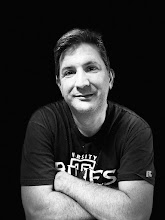
Rodger Bohnenstiehl might not be a name the young KU fan knows about, but Rodger was one of the better players of his era and a member of the 1,000-point club. He was All-Big Eight in 1967, where he led KU in scoring at 16.4 points per game. The 6-6 scoring machine also set a Big Eight career record of 56.6 percent field goal shooting that stood for many years. He finished as the school’s No. 9 all-time leading scorer.
Bohnenstiehl was part of the great and memorable 1965-66 team as a sophomore, serving as backup to All-American center Walt Wesley as KU marched to the Midwest Regional final before losing to eventual NCAA champion Texas Western. KU went 23-4 that season and again the next year, where Rodger led the ‘Hawks to their second straight Big Eight championship and berth in the NCAA Tournament, where KU lost to Houston in the first round. He was even the leading scorer that season ahead of future Naismith Hall of Famer Jo Jo White, a sophomore who averaged 14.8 points per game.
Voice of the Jayhawks Tom Hedrick, someone I loved to listen to on the radio growing up and one of the most positive, kindest and genuine people I’ve ever met, called Rodger “The Machine” for his lethal turnaround jump shot. Hedrick also coined Bohnenstiehl “quick as a hiccup.”
I had a wonderful and memorable Where Are They Now? interview with Rodger in 2001 for Jayhawk Insider, where he talked openly about his recruitment to KU and how instrumental KU assistant Sam Miranda — a fellow Collinsville, Ill., native — was to luring him to Mount Oread. Rodger also spoke of practicing that sweet turnaround jump shot for endless hours in high school and his favorite memories of being a Jayhawk.
Thanks Rodger for the time you gave me. I will forever be grateful.
...
“This is what happened. I originally had visited the University of Missouri, Evansville and Indiana. Sam Miranda called me. He was in New Mexico. I flew out to New Mexico and I really liked it. While I was there, I signed a conference letter of intent because I liked Sam and I liked the school. When I got back home, my father got real ill, I mean really, really ill. My mother and I talked. We decided that was too far to go. It was two and a half hours by jet. She thought I should stay stay somewhere closer to home. So I was going to call Bob Vanatta, who was the head basketball coach at Missouri and ask him if the scholarship there was still good. While I was in the process of thinking about doing that, Sam Miranda called. He said, 'I’m leaving New Mexico and going to Kansas.’ I said, ‘Well, that's great Sam, because I’m not going to New Mexico either because my dad is very, very ill, and my mother wants me to stay close. I’m going to call Bob Vanatta and see if he’s still got a scholarship. He said, ’No you’re not. You come out to Kansas. I want you to see that before you do anything,’ so I flew out and fell in love with the place.’ This was like early June when I went out there, and there were a bunch of guys around there, Riney Lochmann, Wesley Unseld, and guys like that. I hung around with them. They were great guys, people I wanted to be with and a part of.
“In high school, that’s all I did was turnaround jump shots. It was quite an adjustment to play facing the basket. The offense that was designed put me in position where I could use the turnaround jump shot quite a bit. A lot of times, I’d get the opportunity to post up inside, and that’s where I was able to use it.”
“We had a guy when I was in high school named Bogey Redmond. My freshman year in high school, they won the state. They were 32-0. I kind of idolized him as a player. He was 6-6 and 220, and I was about 6-6 and 180. He was kind of my idol. I always wanted to be like him, but better. I think in order to be a player, I think you got to have somebody that you kind of idolize. You got to kind of mimic after him. I didn’t like the pros. At that time, there wasn’t any college basketball on TV, but it was on the radio. I used to listen to the Cincinnati Bearcats.
“As an eight grader, I was cut from the team, so I wasn’t go to try out as a freshman. I wasn’t going to get cut again. I was playing in PE, and Coach Fletcher asked if I was coming out for basketball. I said, ‘No.’ He said, ‘Why don’t you come out and try it. If you like, you can stay, if you don’t, you can go ahead and go.’ So that’s how I got my start in basketball. I liked it, I stayed with it. He worked with me. We had some great teams there. We were 75-14 for three years in high school. It’s a lot like my college career. My sophomore year, we were ] 26-8, my junior year we were 26-3 and lost in the super sectional, which was one game before state. My senior year, we were undefeated all year and lost in the super sectional by five points, just one game before state. I’ve always been close, but no cigar so to speak.
“I spent a lot of my time at the gym in the summer, a lot of time by myself practicing that shot. I go by and get the key from his (Coach Fletcher) house and practice it. I’d go by at 8 a.m. and get it, and give it back at noon. Every morning during the week. That’s the only way you get better is by working at it and working hard at it.”
Here is that 2001 Where Are They Now? story.
...
Rodger Bohnenstiehl’s jump shot didn’t exactly set the world on fire his eighth grade year in Collinsville, Ill. In fact, he was cut from the team and didn’t even plan on trying out again the following season.
Bohnenstiehl, however, had a change of heart when the basketball coach approached him one day in physical education class.
“Coach (Virgil) Fletcher asked if I was coming out for basketball,” Bohnenstiehl recalled recently from his home in Crete, Ill. “I told him, ‘No.’ He said, ‘Why don’t you come out and try it. If you like it, you can stay. If you don’t, you can go ahead and go.’”
Bohnenstiehl stuck with the sport and eventually blossomed into a high school standout. He worked conscientiously with his coach after practice, as well as spending endless hours by himself each morning during the sweltering summer months perfecting his turnaround jump shot.
“I’d go by and get the key (to the gym) from his (Fletcher) house at 8 and give it back to him at noon,” Bohnenstiehl said. “That’s the only way you get better is by working hard at it.”
Recruited by KU assistant coach and fellow Collinsville native Sam Miranda, Bohnenstiehl (6-6) brought his sweet turnaround jumper to Mount Oread in 1964. He substituted for All-American Walt Wesley at center his sophomore season (1965-66) before starting at forward his junior and senior campaigns. Bohnenstiehl, who was All-Big Eight as a junior (16.4 ppg) and finished his career as the No. 9-leading scorer in Jayhawk history (1,006 points), set a Big Eight field goal percentage record (56.6 percent) that stood for many years.
“Voice of the Jayhawks” Tom Hedrick was so enamored by Bohnenstiehl’s uncanny shooting accuracy and trademark jump shot that he nicknamed him “The Machine.” Hedrick coined he was “quick as a hiccup.”
“That (turnaround jumper) was the only way I could score because I played against people that were a lot bigger than I was,” Bohnenstiehl said. “You had to do something to get your shot off. I just tried to be as quick as I could. I wasn’t fast, but I was quick.”
Bohnenstiehl played an instrumental cog in some of the most successful years in KU basketball. Kansas won two Big Eight championships and went 23-4 in both 1965-66 and 1966-67. The ‘66 squad with Wesley and Jo Jo White lost to Texas Western (eventual NCAA champs) in the Midwest Regional finals, while the ‘67 team got beat in the first round of the NCAA Tournament in Allen Fieldhouse. Bohnenstiehl led KU to the NIT finals in Madison Square Garden his senior year (22-8) before falling to Dayton.
“It seemed like even though we had a lot of success, we could never get the big one,” he said. “We just came so close.”
Despite not winning the “big one,” Bohnenstiehl and his teammates enjoyed every second of the ride.
“We loved it,” he said. “It’s always great because teams were shooting for you and you know you had to be at your best. We went to some places like Oklahoma and Nebraska where it was just brutal. Nebraska had that small gym where the out-of-bounds lines were right at the bleachers. When you stood there and took the ball out of bounds, people would pull hair off your legs.”
After concluding a scintillating career in 1968, Bohnenstiehl was drafted by both New York (NBA) and the Pittsburgh Pipers (ABA). He made it to the Pipers’ last cut.
“I broke my nose and ring finger,” Bohnenstiehl said. “I guess it wasn’t to be.”
He then played AAU basketball in Lawrence before returning to native Illinois in 1970 and embarking on a high school teaching and coaching career. From 1985 to 1997, Bohnenstiehl served as head basketball coach at Rich South High School. Bohnenstiehl, who still teaches P.E. and driver’s education at Rich South, received great satisfaction from coaching and shaping young men.
“The biggest joy is watching kids improve and being able to put a team together and make it jell,” he said.
“The Machine” certainly made remarkable improvement himself since those days of yesteryear when he was cut from his eighth grade basketball team. Bohnenstiehl is thankful his basketball skills and turnaround jump shot allowed him the opportunity to play at such a tradition rich university as Kansas, and treasures the lifetime friendships he built with teammates and coaches.
Asked now about his feelings in breaking the 1,000-point barrier his final college game, Bohnenstiehl speaks from the heart.
“I wasn’t much for stats or watching how many points I scored,” he replied. “I just loved the game and tried to play it my hardest.”
A Closer Look at Rodger Bohnenstiehl:
Years at KU: 1964-68
Career Notables: All Big Eight in 1967 (led KU in scoring at 16.4 ppg)...Captain of ‘68 team...Paced KU in field goal percentage 1966-68 (set a Big Eight career record of 56.6 percent that stood for years)...Finished career as No. 9 all-time leading scorer.
Family: Wife, Gail, and children — Michael, 20, Katie, 17.
Education: 1969, B.S. Physical Education; 1991, M.S. Educational Administration (Governor’s State University in Illinois).
Since Leaving KU: Bohnenstiehl played AAU basketball in Lawrence before returning to native Illinois in 1970 and embarking on a high school teaching and coaching career. He taught and coached at four schools (Kankakee, Rich East, Bradley, and Rich South). In 1997, he quit his job (12 years) as head basketball coach at Rich South.
Currently: Bohnenstiehl lives in Crete, Ill., and teaches physical education and driver’s education at Rich South High School.
Hobbies: Handyman work, golf, painting.
Favorite Memories: The 1965-66 squad. “We had a lot of talent there. We had some depth. Things really jelled for us. It was just an outstanding year.”...Final home game on March 9, 1968 (Bohnenstiehl went 10-11 from the field as KU thrashed Iowa State, 91-58, in a nationally televised contest). “I had my family there. It was something special.”
On The Jayhawks Today: “It’s fun to watch them. There are a lot of people in the area that know I went to Kansas. They watch the games, and we talk about them...He’s (Roy Williams) kept the tradition going. That’s not always easy to do, especially with the pressures.”