Showing posts with label Terry Brown. Show all posts

Thursday, April 4, 2019

KU’s 1989-90 team took Jayhawk fans on a memorable ride

The 1989-90 KU basketball team was a very memorable one, entering the season unranked and picked last in the Big Eight in two preseason publications, to winning the preseason NIT and bouncing in and out of the No. 1 and No. 2 spots in the national polls for 13 consecutive weeks.

I’ve followed KU basketball since 1973 when I had season tickets with my dad until I covered the program for 20 years starting in 1998. I can say, without a doubt, this 1989-90 team was by far the best passing KU team I have ever seen. They cut up opponents with their crisp passing and screens, scoring countless back-door layups.

“We probably set the world record for back-door layups on that team,” Kevin Pritchard, a senior point guard and team leader on that squad, told me in a 2000 interview.

And they had talent. Pritchard, Rick Calloway, Adonis Jordan and Mark Randall all had stints in the NBA. Randall, who played on the 1991 Final Four team which lost to Duke in the national championship game, can certainly attest to that.

“Talent wise, that was the best team I played on,” Randall said of his three years with KU coach Roy Williams.

In just his second year as KU head coach, Williams emerged as one of the best coaches and one of the most brilliant coaching minds in America. He was named National Coach of the Year by USBWA and Molten/Billy Packer, while selected as AP and UPI Big Eight Coach of the Year.

“As the architect of (Kansas’) success, Williams is starting to receive accolades proclaiming him to be one the country’s most talented young coaches, said Clifton Brown of the New York Times. “He is not comfortable with that image, but if he keeps winning, he will have to get used to it.”

Williams’ 1990 team was a pure joy to watch play. John Wooden, the legendary former UCLA coach, said during that memorable season that Kansas played the game the right way. And other basketball observers certainly agreed. 

“John Rhode, columnist with the Daily Oklahoman, wrote “it’s a joy to watch Kansas play basketball. The Jayhawks bring back the days of UCLA (no, they’re not THAT good).”

No, the Jayhawks certainly weren’t as good as Wooden’s great Bruins’ teams, but KU left its mark that year as the second-winningest team in school history. It was also a very unselfish team. Four players -- a school record -- recorded more than 100 assists. Kansas also finished with the highest field percentage (53.3) in the country. The ‘Hawks set a school record with averaging 92.0 points per game and beat its foes by an average of nearly 20 points per contest.

In a 150-95 blowout over Kentucky on Dec. 9, 1989, KU broke or tied six school records, including most points, most points in one half (80), and most assists (36).

While KU’s season came to an abrupt end with an NCAA second-round loss to UCLA (71-70) in Atlanta, that team will never be forgotten.

Randall, who was working as a Denver Nuggets scout at the time I interviewed him in 2000, spoke about that team’s legacy.

“The comments I get from not only alumni, but also people who are my colleagues now, that’s their memory of Kansas basketball and of Mark Randall and Kansas basketball — the team that we had that went through the NIT and beat all the teams...and bounced in and out of the No. 1 and 2 spot all year,” Randall said. “That team was obviously special.”

Indeed, it most certainly was.

Here is the 10-year anniversary story I wrote on that team in 2000 for Jayhawk Insider.

...

By David Garfield

It’s been 10 years and four months, but Kevin Pritchard recalls the incident as if was yesterday.

The 1989-90 Jayhawks, who had just shocked Shaquille O’ Neal and No. 2 LSU (Kansas second- year coach Roy Williams later said that was the “first big-time win” of his coaching career) in the second round of the preseason NIT on Nov. 17, arrived in New York for a matchup with top-ranked UNLV. As guests of the tournament at a banquet at Tavern On The Green, Williams was prepared to make a brief speech about his team.

And then the unthinkable happened. The master of ceremonies introduced the KU mentor as Ron Williams.

“I remember the team looking around and we were VERY angry,” said Pritchard, the point guard and senior leader that season. “We definitely from then out said, ‘Maybe we don’t need any motivation, but thank you very much.’ We took that very personal. They can’t even get our coach’s name right. I love coach Williams and I loved everyone on that team, so when that happens, it’s like someone calling your best buddy or girlfriend a bad name. You tend to get a little angry about that.”
 
Pritchard (now the assistant vice president of The Trust Company of Kansas) and his teammates responded by taking their anger out against the No. 1 mighty Rebels (eventual NCAA champions). KU won easily, 91-77, on Nov. 22, and then beat St. John’s two days later to “spoil the party” and win the NIT tournament. In the waning seconds of the championship game, Pritchard had a few words for announcer Dick Vitale:

“It was something like, ‘Maybe now we’ll get some respect.’ Of course, he was like (before the UNLV game) ‘Kansas shouldn’t be here, but they’re here and they’re going to bow out early, and it’s going to be UNLV and St. John’s in the finals.’”

After winning the NIT, Kansas had suddenly gone from being Rodney Dangerfield to the talk of the basketball world. The Dec. 3, 1989 issue of Sports Illustrated featured KU and a picture of Mark Randall (NIT MVP) floating gracefully through the air for a layup against two helpless UNLV defenders. The headline on page 32 read: 

“The Jayhawks Take Flight: By stunningly upsetting No. 1 UNLV and No. 2 LSU and winning the NIT, unflappable Kansas poleaxed the pollsters.”
   
For Randall (he averaged 13.3 ppg and 6.2 rebounds during the year) and KU, it was a perfect beginning for one of the most memorable and successful seasons at Mount Oread. Unranked Kansas jumped to No. 4 in the polls and won its first 19 games of the season. The Jayhawks, who were actually ranked No. 1 or No. 2 in the polls for 13 consecutive weeks, concluded the year at 30-5 (second winningest team at the time in school history).

This was definitely not a season Inside Sports and Basketball Digest had predicted. The two publications actually picked Kansas to finish last in the Big Eight conference.

“We didn’t pin it up or anything like that,” Pritchard said of the Inside Sports clipping. “But everyone was aware of it. It kind of circulated from locker to locker, and we knew that the so called quote-un-quote media didn’t think too highly of us.”

The Jayhawks believed in themselves from day one. With an experienced cast led by Pritchard and three other seniors (Freeman West, Rick Calloway, and Jeff Gueldner), not to mention rising junior stars Randall and Mike Maddox, as well as newcomers “Downtown” Terry Brown, Pekka Markkanen, and freshman Adonis Jordan, KU wound up the season leading the country in field goal percentage (53.3 percent) and breaking several school scoring records, including eight 100-point games and most points in a single game. Kansas also won at Iowa State for the first time since 1983.

While KU didn’t have the raw talent like Vegas or LSU, four Jayhawks eventually had stints in the NBA (Randall, Calloway, Pritchard and Jordan).

“Talent wise, that was the best team I played on,” Randall said of his three years with Williams.

Williams, who established himself as one of the premier coaches in the country in just his second season at KU (he was Big Eight and national coach of the year),  believed KU maximized its talent each game.

“I’ve been around basketball many years and I can’t ever remember a team that played to its potential as well as last year’s team did,” Williams said at the beginning of the 1990-91 season.  “It was a fun group to watch. You had to admire how unselfish they played.”

The chemistry was superb. The Jayhawks, who had five players in double figures (Pritchard led the squad at 14.5 ppg), often resembled a team of poetry in motion, cutting and dicing opponents up with screens, pin-point passes and back-door layups. 

“The most unique thing about that team was that we were all good passers and good shooters, even the big guys,” Pritchard said. “When we ran our motion offense, we felt we were unstoppable. We didn’t out-athletic anybody. We just knew how to play basketball. We were kind of the old Hoosier type of basketball team. Any time you relaxed at all, we knew we were going to get an easy shot. We were so confident in each other. When a team played zone, we knew exactly how to beat a zone. When a team pressured man to man....we probably set the world record for back-door layups on that team.”

Much of that credits belongs to Maddox and Randall — two key big men who defenders had to cover on the perimeter. They also worked the high-low passing game to perfection.

“Mark and I developed a real feel for each other, and really took the offense and kind of adapted it to our own games,” said Maddox, KU’s Super Sub (8.7 ppg) and now the new community president for Intrust Bank in Lawrence. “I probably went to the high post 70 percent of the time, and he went to the low post. ... I was a decent high outside shooter, and Mark was good down on the block. It was hard for defenses to defend both of us.”

Defenses like Kentucky had plenty of problems stopping Kansas the whole season. KU set a school record for points scored in its blowout victory over the Wildcats (150-95) on Dec. 9, 1989. Brown came off the bench and led KU with 31 points.

“Paying Kentucky was pretty fun,” Pritchard said. “I remember they pressed us the whole game.  They pressed with guys (talent-wise) that probably didn’t need to be pressing. We knew we were such a good passing team and ball-handling team that every time they pressed us, ‘OK, here’s a layup, or let’s get a three-pointer.’ We like dictated what we wanted.”

After winning 19 straight games and climbing to No. 1 in the polls, KU suffered its first loss of the season at No. 4 ranked Missouri (95-87) on Jan. 25. Kansas, which won its next five games and regained the No. 1 ranking over the Tigers, lost again to MU (77-71) at home on Feb. 13.

“There were some wars,” Maddox said.

Then, after three more consecutive wins, KU was blown out by No. 3 ranked Oklahoma at Norman (100-78). Two games later in the second round of the Big Eight tournament, Kansas fell once more to the Sooners (95-77). While KU still gained a No. 2 seed in the East Regional in Atlanta, fatigue had taken its toll. KU barely got by Robert Morris (77-71) in the first round, and then ended its season with a devastating loss to UCLA (71-70) on March 18.

“OU and MU were awfully good,” Maddox said. “We had five pretty good losses to good teams.  We didn’t get beat by any patsies. ... We just were physically worn out. We just ran out of gas that year. I’ve talked to several of the guys, and I just remember we were tired. It was a long season. We had a long preseason.”

Pritchard agreed: “We pushed ourselves so hard. No one wanted to say, ‘Hey we need to rest,’ so we didn’t. It was a team so self motivated. We all had something to prove very single day in practice. No one let up, and if you did, there were six other guys on the team that would say, ‘What are you doing? We got to play harder.’”

And then there was the pressure. As the wins mounted, so did the expectations from the media and loyal crimson and blue followers.  

“I think there was so much pride that when we put on the Jayhawk uniform, we felt like we represented so many things — our family, ourselves, and more importantly, everybody who believed in us when nobody believed,” Pritchard said. “We didn’t want to let anyone down.”

Pritchard, who started at point guard on KU’s 1988 championship team, said the 1990 squad went into the tournament with a completely different attitude.

“In ‘88, we’re like, ‘All right. We’re here. Let’s try to play well.’ In ‘90, it was like, ‘We got to get this done. This was something we got to do for our fans again.’ That’s the difference between winning and losing.”

But Pritchard adds, he enjoyed that year even more than the 1988 championship season.  

“It’s amazing when no one cares nothing but winning,” he said. “There was just a lot of leadership on that team, more than any other team I’ve ever been on — NBA or anything. In that locker room, you didn’t have to get on people very hard. They’d know what they were supposed to do. If they did something wrong, it came to a point where a look would be all it would take. It resolved itself.”

The consummate team player, Pritchard was also one of the most fiery competitors and clutch shooters in Jayhawk history. The senior leader admits now that he felt a personal responsibility in KU’s final loss to UCLA. While he doesn’t have nightmares about the game, he says the final seconds “does enter my thoughts.”

“It was the hardest loss I’ve ever had to take,” said Pritchard, who was first-team All-Big Eight that year. “I’m the kind of person who likes to take the last shot. I still replay it in my mind to this day. They double teamed me on the in-bounds and I should have tried harder to get the ball. I’m not saying I would have made it  I just would have liked that opportunity.”

Calloway ended up with the ball and missing a baseline 15 footer.
“He took a great shot,” Pritchard said. “It was just a little short.”

Former UCLA coaching wizard John Wooden certainly observed the game very closely. He said during the year that KU was a joy to watch and played the game the way it’s supposed to be played.

These words definitely did not go unnoticed by Maddox and company.

“It makes you feel great to get that kind of compliment from such a great coach and a great basketball mind,” Maddox said. “You can’t get a higher compliment. And I think we did do it the right way. We were very efficient, and we executed well offensively. We were a really good defensive team. I would put that team up defensively against any team KU’s had. We really got after people.”

And the people in Kansas adored Williams’ Jayhawks. One elderly lady from Wichita called the KU coach’s Hawk Talk radio show just before the Big Eight tournament in March, 1990 and gushed:

“I just want to say that we got a real gem when you accepted the position. I think you are super, and an excellent role model for the players and students. You just never cease to amaze me these things I read about you. You’re way up on the pedestal, and I don’t think you’re ever going to fall,” she said fighting back the tears.

Williams never has. Not only did this “unknown” coach, once referred to as Ron Williams 10 years ago, put his signature on Kansas basketball (KU wound up as the winningest team in the 1990s), his 1989-90 squad left a lasting legacy for Jayhawk fans and basketball aficionados alike.

Just ask Randall, who travels the country as a scout for the Denver Nuggets.

“As I go from city to city, it’s amazing how many Kansas alumni are out there,” Randall said.   “Kansas people are very knowledgeable about basketball and they’re very fanatical about it. I’m still recognized when I go from state to state as a Kansas alum. ... The comments I get from not only alumni, but also people who are my colleagues now, that’s their memory of Kansas basketball and of Mark Randall and Kansas basketball — the team that we had that went through the NIT and beat all the teams...and bounced in and out of the No. 1 and 2 spot all year. That team was obviously special.”

More about the 1989-90 team from Kevin Pritchard:

On Jeff Gueldner (10.7 ppg/ 48.6 percent 3-pointers), the sharp shooting senior. “He was really hurt most of 88-89. He had some back problems and didn’t play a whole lot. He is a great player, obviously. He started on the national championship team. He was healthy the whole year (89-90).”

On Adonis Jordan (3.0 ppg), the freshman point guard from Reseda, Calif. “He really learned the system very quickly.”

On Rick Calloway (13.1 ppg), the senior transfer from Indiana who sat out the 1988-89 season. “He was a great defender, a great team player.”

On Pekka Markkanen (6.9 ppg), the 6-10 center whom Roy Williams recruited from Finland without ever seeing him play in person (scouted him on videotape). “He was a big plus, because we were without a big man — a center.”

On Freeman West (6.0 ppg/59.5 FG percentage), the senior forward from Paris Junior College in Texas. “He was fantastic. He was 6-5 and played inside. And I’ll tell you what, I’d put him up against any 6-5 guy in the United States. He was strong, athletic, knew his role and did it very well. He was another workmanlike player.”


Thursday, March 28, 2019

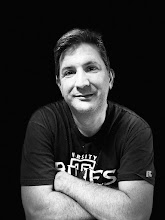
"Downtown" Terry Brown made his mark at KU

Former KU coach Roy Williams called Terry Brown one of the best shooters he’s ever coached. And for good reason. “Downtown” Terry Brown, the former Jayhawk standout, ended his career in 1991 shattering the school record for most career three-point field goals made with 200, despite playing only two years. He currently ranks No. 8 all time at KU in three-point field goals made. His 111 three-point field goals in 1990-91 were a single-season record, which stood for 27 years before Svi Mykhailiuk broke the mark with 115 threes in 20017-18.

Moreover, Brown’s 11 threes (career-high 42 points) against North Carolina State on Jan. 5, 1991 is a KU single-game record. Brown also made seven three-pointers in three other games.

Brown’s 41.2 career three-point field goal percentage ranks No. 10 all time at KU.

After coming off the bench his first season in 1989-90 and averaging 11.0 points per game (he set the single-season three-point field goals made mark at KU with 89) in 16.1 minutes per contest, Brown earned a starting role his senior season and averaged 16.0 points in 25.2 minutes per game.

During the 1991 NCAA Tournament, Brown scored a game-high 22 points in KU’s second-round win over Pittsburgh before following that up with a game-high tying 23 points in KU’s victory over Indiana in the Sweet 16.

Then, the deadly sharpshooter ended his memorable career in the NCAA title game against Duke (KU lost 72-65) with 16 points, six more than future Hall of Famer Grant Hill of Duke.

Brown’s road to KU began at Clyde-Savannah High School in Clyde, N.Y., where he was an All-American and all-state selection in football. He averaged a whopping 35.0 points per game as a senior, while his team went 71-6 in Brown’s three-year career. He then attended Erie Community Community College in Erie, Pa., before transferring to Northeastern A&M in Miami, Okla. 

Brown was a first-team National Junior College Athletic Association All-American in 1989-89, averaging a team-high 22.1 points per game, while second on the team in rebounding at 5.6 boards per contest. He shot a scorching 55.2 percent from the field, 43.0 percent beyond the arc, and 92.0 percent at the free throw line. Brown was selected Most Valuable Player of the NJCAA National Tournament in Hutchinson as his team won the championship. He scored 26 points in the title game.

Brown lit up the nets that season for a season-high 47 points and seven three-pointers in a 106-90 victory over Eastern (Okla.) State. Led by Brown, Northeastern went 36-4 and won its conference and region titles.

I had a wonderful Where Are They Now? interview with Terry in 2003 for Jayhawk Insider, where he talked to me from his home in Minneapolis about honing his hoop skills in New York while practicing all day and night on his unorthodox jump shot. He also fondly remembered his 42-point explosion against N.C. State and the unforgettable experience of playing in the 1991 Final Four in Indianapolis.

Here is that story.

By David Garfield

For Terry Brown, his true makings of greatness began as a seventh grader in Clyde, N.Y. Brown dreamed of being like his brother, Sonny Barnes, who was four years older and turning heads with his own basketball prowess in the New York area.

So Brown went to the playground near his home daily and worked endlessly on his unorthodox shooting form from long range, releasing the ball far back over his head like a slingshot. 

“I told myself I wanted to develop a shot that’s hard to block,” Brown said. “I started shooting like that every day, just shooting around until I got it to the perfect shooting form. That’s pretty much where I came up with that shot. It’s hard to block. The only way you can block it is from behind  Probably like 80 percent of the time you block it from behind, they’re going to call a foul.”

This was his time alone, his little world.

“I used to practice six hours a day in the rain, in the snow, and after football practice,” the former Kansas basketball standout recalled recently from his home in Minneapolis, Minn. “I’d run home and get my ball and go out there and practice until the sun went down.”

And the practice paid off. Brown blossomed into a superstar at Clyde-Savannah High School, averaging a whopping 35 points per game as a senior and earning All-American honors. A versatile athlete, Brown was also an All-American football wide receiver. Due to academics, Brown attended Erie Community College in Pennsylvania for a semester before transferring to Northeastern Oklahoma A&M. He became a first team National Junior College All-American and was named MVP of the NJCAA National Tournament in Hutchinson, Kan., in 1989.

Brown, 35, eventually chose Kansas over Pittsburgh, UNLV, Penn State, and Southwest Missouri State.

“I decided to go to KU because it was close to my junior college, and I felt like I would play a lot my first year,” Brown said. “I liked the campus. They liked to run and shoot, and I felt like I could step in the first year and help them out.”

It certainly didn’t take Brown long to make a name for himself at Mount Oread. Backing up senior Jeff Gueldner at shooting guard, Brown erupted for 31 points (7-10 from 3-point range) in 19 minutes against Kentucky in just his ninth college game. Despite playing only 16.1 minutes per game, Brown (11.0 ppg) finished the season breaking the school record for 3-pointers with 89, which was just two shy of the Big Eight conference mark of 91 set by Oklahoma’s Mookie Blaylock.

The man they called “Downtown” Terry Brown relished shooting the long ball. 

“I loved shooting (outside) because anytime you make a 3-pointer, that’s more than a two-pointer,” Brown said. “I always tried to shoot 3’s. If my game was off, I pretty much tried to get fouled and go to the free throw line. Other than that, I loved shooting the basketball. I looked forward to every game and tried to go out there and make as many 3’s as possible.”

He also loved playing with a winner. Unranked Kansas began the 1989-90 season shocking the basketball world by beating No. 2 LSU, No. 1 UNLV, and No. 25 St. Johns in winning the Preseason NIT title in New York. KU won 19 straight games before concluding the season at 30-5.

“We had a lot of people kind of doubting our team and our talent,” Brown said, “so we set out to prove a point that year, and to prove to people that we can play with those type of teams like LSU and UNLV, the teams that were ranked No. 1, No. 2. That was petty much our mission that year. I think we pretty much proved that by beating the No. 1, No. 2 (teams) on down the line.”

Brown’s own mission took on greater purpose his senior season. Now a starter, KU’s one-man scoring machine opened the 1990-91 campaign with 24 points against Arizona State. And then, nine games later against North Carolina State, the unconscious Brown bombed a career-high 42 points at home versus North Carolina State (KU won, 105-94). He tied a Big 8 record with 11 3-point field goals. It was simply one of the greatest shooting performances in KU history, and indelibly etched 
Brown’s name in Jayhawk lore.

“You feel like you just can’t miss,” Brown said about being in the “zone.” “Every shot you take, you feel like it’s going to go in. That’s something I tried to practice every day, tried to get that type of feeling when I practiced or when I shot around by myself, so when you’re playing in the game, you pretty much get that feeling. It’s a great  feeling. You don’t get it every game. You would like to.  Once you do get in the zone, it’s hard to stop that person. It’s hard to miss. I tried to feel like that every game.”

Brown continued to score and lead the way for the unheralded Jayhawks, who after losing to Nebraska in the Big 8 Tournament, went on a magical five-game winning streak before losing to Duke in the NCAA finals.  

“We came together as team,” Brown said. “We pretty much went out and played hard every night and didn’t leave anything left on the floor. The pressure wasn’t on us. The pressure was on the other teams. We didn’t have anything to lose, so why not just go out and play our hardest and see what happens, and that’s pretty much what we did.”
 
Brown, who led the team in scoring in 1990-91(16.0 ppg), wound up his scintillating career as the all-time 3-point shooter in KU history. Not bad for playing just two seasons. His record has since been broken by four-year players Billy Thomas and Jeff Boschee.

“I feel honored to be up there with those guys,” Brown said.

After leaving his mark in KU history, Brown played a couple months of professional basketball just across the Texas border before returning to Lawrence. He went to school, put on art shows, and worked summer basketball camps until moving to Minneapolis in 1996. Brown began coaching at a youth organization (Minnesota Development Basketball) for two years before accepting a head coaching job of an eighth grade junior high team. He’s been doing that for the past four years, along with running his own basketball program for youth in the summer.  

Brown gets a huge thrill from coaching.
 
“Sometimes you get frustrated,” Brown said. “Other than that, you’re happy to see the kids who love the game and want to learn and move on to the next level. I have a blast. There’s nothing else that I’d rather do than work with kids.”

Brown uses the lessons and values that KU coach Roy Williams instilled in him, and passes them down to the next generation of heroes.

“Just don’t give up,” Brown said. “If you believe in something, just keep working hard and giving 100 percent. Just carry yourself with class and be a gentleman. Pretty much just like on the court. Just work hard.”

In addition to his coaching duties, Brown has worked as a sales rep for a water softener company for the past two years, and is set to begin his second year playing semi-pro football. Brown plays for two teams from March through December.

“I love it,” he said. “I’ve always loved it. I just hate playing in the cold weather. Playing in New York, you play in the snow, so that kind of pushed me into playing basketball because I got tired of playing in the cold weather.” 

Brown said he’s enjoying life 12 years after donning the crimson and blue. He savors his college experience.

I think I had two great years there,” Brown said. “I loved playing for coach Williams. He’s a great coach, and I loved playing with the guys I played with. I had a great time. You can’t ask for anything better than that. I played in the championship game, one of the biggest games in the country. I played against some great players.”

And so, how would “Downtown” Terry Brown like to be remembered?

"As a great guy and a great shooter,” Brown answered.

There were few ever better. 

A Closer Look at Terry Brown:
Years at KU: 1989-91
Career Notables: Member of 1990-91 Final Four team...UPI Big Eight All-Bench selection in 1989-90...UPI All-Big 8 second team in 1990-91...Career-high 42 points versus North Carolina State on Jan. 5, 1991...11 3-pointers against N.C. State most ever at KU in single game...111 3-point FGs in 1990-91 most in single season...No. 3 all-time career 3-pointers (200)...Led 1990-91 team in scoring (16.0 ppg).
Family: Brown is single.
Education: Majored in Art.
Since Leaving KU: Brown played a couple months of pro ball just across the Texas border before returning to Lawrence. He took classes at KU, put on art shows, and worked summer basketball camps before moving to Minneapolis in 1996. Brown coached at a youth organization (Minnesota Development Basketball) for two years before becoming an eighth grade basketball coach. He’s also ran his own summer basketball program for youth the last five years, worked as a sales rep for a water softener company for the past two and a half years, and is beginning his second year playing semi-pro football.
Currently: Brown is an eighth grade basketball coach in Minnesota, where he also runs his own basketball program in the summer. In addition, Brown works as a sales rep for a water softener company and plays semi-pro football.
Hobbies:Working out, fishing, volunteering with Boys and Girls Club, drawing and painting baby murals (trying to start his own side business).  
Favorite Memories: Scoring 42 points against N.C. State on Jan. 5, 1991. “That whole week before the game, I had some of my teammates and friends kind of teasing me that Rodney Monroe was a better shooter than me,” Brown said. “That kind of got me fired up. I really wanted to prove to them and other people who was the better shooter. That game pretty much set everything straight who was the better shooter. I was hot that game, and felt like I couldn’t miss anything. Actually I had 12 (3-pointers), but they called a moving pick on Alonzo Jamison.”...Playing in the 1991 Final Four. “It was great. My first time being there, I had never practiced in front of 30,000 people. It was unreal. It think every kid should have that experience to get the opportunity to play in a Final Four. It was like a dream come true. ... I was very excited to play in the championship game against Duke, even though we didn’t win it. We got there, so not too many teams can say they got there that year.”...”Playing against some of the great players, such as Grant Hill, Shaq O’ Neal, Chris Jackson, Malik Sealy, Jamal Mashburn.”

On the Jayhawks Today: “I think they got a great team.  They seem like the type of team when I played. They’re always fighting to win and never giving up to the end.”

Thursday, March 21, 2019

Jayhawk Hoops Players Childhood Heroes

Part of this blog originally appeared in Jayhawk Illustrated.

Bernard Malamud wrote in “The Natural” that “without heroes, we are all plain people, and don’t know how far we can go.”

Heroes show us the way, the unlimited possibilities we find in our heart, mind and soul. I certainly had heroes growing up in Lawrence, including those KU basketball players whom loomed larger than life for me as a bright-eyed kid whose life revolved around Jayhawk hoops 365 days per year.

I can vividly remember those magical fall afternoons at Park Hill Park on the asphalt court practicing basketball with my friend Lance in eighth grade and learning how to transform from a set shooter into a jump shooter as I’d sling my 10-foot jumper to the goal in front of the free throw line while pretending to be John Douglas. “The Franchise,” who once scored 46 points against Iowa State, had the perfect shot, a release so effortlessly and so smooth. After a while of practice, I finally got the strength to find the net.

I was so thrilled to see my shot tickle the twine and hoped my hero would be proud.

I also idolized Darnell Valentine and emulated him in every way. I wore my socks high like D.V., I shot free throws using his distinctive style, and tried to play relentless basketball just like him while competing against my taller friend Phillip in one-on-one battles. As Valentine entered the NBA with the Portland Trail Blazers, I bought my beloved dog Snoopy Trail Blazer dog food and used to jog in place at home while looking at Valentine’s framed picture of leading a fast break. I jogged a little faster, raised my legs a little higher, my heart raced a little faster, as I drew inspiration and inner strength from my hero.

I put Douglas and Valentine on a pedestal. To me, they could do no wrong.

But what about the Kansas basketball players over the years like D.V. and “The Franchise.” Who were their heroes growing up? Who did they pretend to be while honing their game? I've always enjoyed asking former Jayhawks who they idolized in their childhood wonder years, who they pretended to be while hooping on the playground.

In this two-part series, we'll look at nine former Jayhawk standouts as they talk about their childhood heroes.

DARNELL VALENTINE (1977-81)

A four-time first-team All-Conference selection (only Jayhawk to accomplish that feat), a three-time Academic All-American and a 1981 All-American, Valentine was a legendary point guard who led KU to the Sweet 16 his senior year in ‘81. “The Penetrator” ranks first all time at Kansas in career steals and free throws made. He was arguably the best defensive guard to ever play for Kansas.

Valentine, who grew up in Wichita, idolized star NBA guards like Jo Jo White and spent many hours watching professional games on the tube with Goose Doughty, a mentor for many kids in the city.

“To this day, I can remember sitting in his house, watching NBA games on television,” Valentine told Jeff Bollig and Doug Vance in their 2008 book, “What it Means to be a Jayhawk.”

“He would always comment on the play, pointing out mistakes and bad coaching decisions. His favorite comment was, ‘That was a rookie move.’ He’d be all fired up, and we would just sit and laugh. ... I liked watching the NBA to see how the best players did it. I go back to the days of Hal Greer, Archie Clark, Walt Frazier, Earl Monroe, Nate Archibald, and Jo Jo White.”

White, the former KU star and Boston Celtics Hall of Famer, was Valentine’s favorite.

“I loved Jo Jo’s game,” Valentine said. “He was so smooth. He would come back to KU in the summer and play with us. He was amazing. Here he was, a person who had been in the league for 10 years, and he was coming back and playing with us every day. He kept in such good shape. He looks like he could play today. He was a person I emulated. What I appreciated is he was so committed to helping us develop as players and people. I never got a chance to play against him because he retired just as I was entering the league.”

MARK TURGEON (1983-87)

This confident 5-10 point guard with braces from Hayden High School in Topeka, Kan., convinced KU coach Larry Brown to offer him a scholarship after a standout prep career, where he guided Hayden to a 41-1 record his junior and senior seasons, including a 25-0 record during his senior year.

Turgeon, who was an all-league, all-city and all-state selection at Hayden, was named MVP of the Kansas Basketball Classic and Pizza Hut Classic.

Entering his freshman season, the KU basketball media guide wrote that he was “considered by Brown to have all the tools to become a great point guard.”

Turgeon was co-captain his junior and senior seasons and part of the rebirth of Kansas basketball under Brown, helping the Jayhawks drive to the 1986 Final Four. Turgeon, now the head coach at Maryland who led the team in assists his freshman season with 138 (No. 3 on single-season freshman list), currently ranks No. 12 at Kansas in career helpers with 437 while tied with several players for most games played in a season (39 in 1986).

John Hendel, in his 1991 book, “Kansas Jayhawks: History-Making Basketball,” wrote that Turgeon “used to play mock games pitting Kansas against Notre Dame and took time to imitate the Jayhawks of the time such as Paul Mokeski, Ken Koenigs, and Clint Johnson. He idolized Darnell Valentine."

“I used to be Darnell,” Turgeon said. “I used to try to shoot free throws like Darnell and do everything like Darnell. We had a puppy and we named it D.V.”

TERRY BROWN (1989-91)

Brown could light up the nets in a hurry as very few Jayahwks ever have. A phenomenal three-point shooter and high school All-American from Clyde, N.Y., the 6-2 guard exploded for a career-high 42 points against North Carolina State on Jan. 5, 1991, when he made the most three-pointers (11) ever in a game by a Jayhawk. Brown’s 111 threes in 1990-91 was also a school record for a single season, which stood for 27 years before Svi Mykhailiuk broke the mark with 115 threes in 2017-18. Former KU coach Roy Williams once said Brown, who played on the 1991 Final Four team, was one of the best shooters he’d ever coached.

Brown idolized his older brother growing up.

“My brother played. He was like the big basketball star up in the New York area,” Brown said in a 2003 interview. “That’s kind of what got me into playing basketball because I wanted to be a big star like him playing. Sonny Barnes was his name. He was four years older than me.

“Up in New York, I used to practice on my own for like six or seven hours (a day) sometime. I was probably in seventh grade. I used to practice in the rain, in the snow, and after football practice. I told myself I wanted to develop a shot that’s hard to block. I started shooting like that (behind my head) every day, just shooting around until I got it to the perfect shooting form. That’s pretty much where I came up with that shot because it’s hard to block. The only way you can block it is from behind, probably like 80 percent of the time you block it from behind, they’re going to call a foul. 

“That’s pretty much all I shot when I practiced, like three-point shots or far from the basket. I’d run home and get my ball and go out there and practice until the sun went down. There was a playground near my home.”

BOOTY NEAL (1977-81)

A great long-range bomber from Oxon Hill, Md., Neal got the attention of the Kansas coaching staff 
after an impressive showing in the preliminary game of the Capital Classic his senior year of high school. The 6-5 guard became a huge fan favorite in Allen Fieldhouse with his deep shot.

Neal’s heroes growing up were sharpshooters Rick Mount and Pete Maravich.

“(They) were sort of the two guys I’d sit at home and watch when I was in junior high school,” Neal said in a 2001 interview. “I used to love watching them. They shot the jump shot.”

Neal admits he “had the deep shot in boys club” at age 12.

“You just keep putting it up,” Neal said. “I don’t know how many shots a day, it was just constantly in practice. You just do the same things. You take the same shot. You take your favorite shot. My favorite shot was shooting from outside. l loved the wings, but when I was in boys club, I was able to kind of shoot from anywhere — top of the key, off the side, deep corner. Then when I got to junior high school (and emulated Mount and Maravich), it got ridiculous.

“Then when I got to high school, it got totally ridiculous. I had 50 points in one game, I had 30 at halftime. The freedom to know you’re going to play and you’re that team leader, that puts a lot on your shoulders. Michael Sweetney (former Georgetown star) graduated from my high school. He came along and broke a lot of my scoring records.


“In the neighborhood, they still talk about who was the best player. They tend to get my name out sometimes.”