Tuesday, April 16, 2019

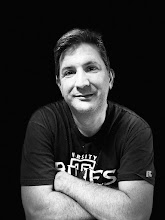
Former walk-on Steven Johnson made his mark at KU as a tackling machine


With Les Miles injecting new passion as the KU football coach and the Jayhawks having their first spring game on April 13 under the former national championship coach at LSU, I thought I would include this KU football feature I wrote on Steven Johnson in 2011.

This article was one of the most inspirational stories I’ve ever written on a KU football player. Johnson came to KU as a walk-on, earned a scholarship, and ended up leading the Big 12 in tackles his senior year (120) and was among the nation’s leaders.

After going undrafted, Johnson again overcame adversity and played six years in the NFL while competing in the Super Bowl in 2014 for the Denver Broncos. This hard-hitting linebacker was named a first-team All-Pro selection by Pro Football Focus that year with 39 tackles.

In all, Johnson played in 74 games (seven starts) for his career while recording 47 tackles, two forced fumbles, three fumble recoveries and 0.5 sacks. He played for Denver, Tennessee, Pittsburgh and Baltimore.

Here is that story on Johnson in the November 2011 issue of Kansas City Sports & Fitness.

By David Garfield 

It’s past midnight this October evening as Steven Johnson hobbles into Mrkonic Auditorium in Lawrence for postgame interviews after his Kansas Jayhawks fell to the Oklahoma Sooners, 47-17. Johnson is beat up physically, but mentally sharp and ready to watch film this late hour after first answering questions from reporters.

The senior linebacker will see on film that he made 13 tackles, including one for loss with also one pass breakup, one quarterback hurry and his first interception of his collegiate career. Johnson will also see the grit, determination and passion that KU fans have come to expect from this 6-1, 237-pound native of Media, Pa.

If there was one play that epitomized Johnson’s life and Jayhawk career, that was his interception in the fourth quarter with about eight minutes remaining and OU holding a commanding 40-17 lead.
Oklahoma appeared ready to tack on another touchdown and blow this game even more open on KU’s 32-yard-line when quarterback Landry Jones dropped back to pass on second down. But there was Johnson, who had been all over the field this evening, running hard and diving to his right and picking off the short pass from one of the best quarterbacks in the country.

“I’m not going to give up,” Johnson said. “I got a lot of pride, and I’m not going to let anybody run all over me. I don’t care how tired I am. My coaches were trying to take me out and give me a break because they know it’s a long season. I’m like, ‘No, no, don’t take  me out.’ I’m out here and I’m going.”

Johnson, who led the Big 12 in tackles at press time in late October and tied for No. 16 nationally with 10.14 stops per game, has never given up since he started playing football at age 5. Always the underdog, he didn’t make the varsity at Strath Haven High School until his senior year, when he led the state in tackles in 2005 with 123 stops.

However, Johnson came on the scene too late to attract college recruiters and wound up attending Wyoming Seminary College Prep School. Then adversity struck again after he tore his ACL and LCL in the fifth game.

Suddenly, Johnson’s dreams of attending college appeared dashed. Some coaches told him he’d never play again, much less compete at a Division I school. But Johnson didn’t listen and jumped at the chance to attend Kansas as a preferred walk-on.

“God is the reason I am here because schools didn’t want me,” Johnson said. “Everybody but Kansas.”

Johnson toiled in anonymity his freshman and sophomore seasons while wondering at one point if he could continue playing at KU and make ends meet without a scholarship. 

But Johnson kept working, kept a strong faith and prayed. Then one day at practice just before fall classes started his sophomore year, then-coach Mark Mangino pulled Johnson to the side and told him he had earned a scholarship.

He became overwhelmed with emotion while fighting back the tears in one of the greatest moments of his life.

“I was happy,” Johnson recalled. “I didn’t want to cry on the field because it was practice, but there were tears inside. I worked so hard for so long and for all the hard work to pay off and to finally see the rewards of it, it was just great.”

Johnson, who saw limited action with 10 total tackles his freshman and sophomore years, reaped even more rewards when Turner Gill was hired as head coach after the 2009 season. Johnson impressed Gill from day one and earned a starting nod, where he had a breakout year last season with a team-high 96 tackles.

Johnson credits Gill for reviving his career.

“By him just believing in me was a great deal,” Johnson said, “and I’ll forever thank him for that.”

As good as he was last year, Johnson is even better this season. He is on pace to record over 120 tackles in 2011, the most by a Jayhawk in a season since Nick Reid in 2003. Johnson has posted double-figure tackles in five of seven games while tied for second on the team in tackles for loss (5.0).

“He’s improved in a lot of ways,” Gill said. “He’s gotten better physically. He understands the game better. Coach (Vantz) Singletary and coach (Vic) Shealy have done a great job talking to him and teaching him about what needs to be done and how it needs to be done. (Johnson) has really done a fantastic job; he’s a leader. I hope he gets recognized by the conference as one of the top linebackers.”

The co-captain’s coaches and teammates have great admiration and respect for him — as a young man and as an athlete.

“He’s a great player,” junior safety Bradley McDougald said. “It’s probably going to be a story made about him. He’s one of those guys that you love to root about, just to be faced with the situation as a walk-on and come in and be determined that you’re going to work (and) have nobody that can possibly tell you no. Not only do you get a scholarship but you actually continue to fulfill your dreams and you play up to your level and starting at middle linebacker, that’s awesome.”

As the heart and soul of this Jayhawk team, Johnson feels a special sense of responsibility to be a leader and motivate his teammates. He did just that with a stern message to his defense heading into the Oklahoma game on Oct. 15 after KU had dropped three straight, including allowing 66 points at Georgia Tech and 70 points at Oklahoma State.

“It’s an embarrassment for your family and all the people that came miles and miles to see you play,” Johnson said. “I got in each and every single person’s face. I just told people what they need to improve at, and we went out in practice and really amped it up and started working.”

Despite falling to No. 3 Oklahoma by 30 points, KU’s defense played physical, made stops in the red zone and forced three turnovers. While the Jayhawks (2-5) took a step backwards the following week in a 59-21 loss to K-State, Johnson continues to believe in the team, Gill, and himself.

He’s on a mission to turn the season around and also fulfill his preseason goal of leading the nation in tackles.

“I’ve always wanted to be the best linebacker I could be and just being able to help any team I was on to win championships,” Johnson said. “That was something instilled in me from my parents. I just continue to push myself to be the best I can be.”

Johnson could do it no other way after overcoming great adversity in life to now thriving at KU and on the brink of an NFL career.

“Those challenges made me the person I am today,” he said. “One day if I have kids, I’ll be able to tell them that perseverance is everything, just keep going. When you really go through something and see what happens at the end of it, you can really have hope. ‘Hey, I’ve been through this before, it’s nothing, just keep fighting.’ It ultimately helps you become a better person and better athlete.

 “I would never take back anything that happened to me,” he added. “Some people may take the straight road to Division I, but I had to take the back road. It all worked out well.”

Johnson smiles.

“I thank God every day,” he said. “I’m truly blessed to just be out there playing football.”

Sunday, April 14, 2019

Recalling my childhood hero and former Jayhawk star John “The Franchise” Douglas


John Douglas is one of my all-time favorite Jayhawks. There was just something magical about this 6-2 slender and athletic guard. He had the perfect shooting form, and when his shot swished through the net in Allen Fieldhouse, I thought it was the most beautiful sight in the world.

As a very impressionable 11-year-old kid growing up in Lawrence, John was my childhood hero. I put him up on a pedestal; for me, he simply could do no wrong.

This was especially the case that memorable night at Hilton Coliseum on Feb. 16, 1977. I remember pacing in my bedroom as I listened to my favorite announcer Tom Hedrick broadcast that thrilling KU game against Iowa State. I was so nervous and hanging on each basket. Douglas was unconscious this night, scoring a career-high 46 points, still the third-most points in a single game in KU history behind legends Wilt Chamberlain and Bud Stallworth.

He shot 19 of 30 from the field and also had nine rebounds.

Here is how Chuck Woodling of the Lawrence Journal-World wrote about John’s scoring exploits that night.

“John Douglas did everything but put a drum on his back, a harmonica in his mouth and cymbals between his knees here Wednesday night. Douglas was one-man band, all right, scoring 46 points to help the Jayhawks escape cellar-dwelling Iowa State, 91-89, in overtime.”

Four KU players fouled out, with seldom-used reserve Chris Barnthouse tipping in a missed 20-footer by Douglas at the buzzer for the game-winning bucket in OT.

Hedrick recalls what Barnthouse said on the bus afterwards.

“’Today, John Douglas and Chris Barnthouse combined for 48 points. Of course, John had 46 and I had two.’ Everybody laughed. They couldn’t quit laughing.” 

I absolutely loved Hedrick’s nickname for John, “The Franchise.” I’d get chills hearing Hedrick calling him “The Franchise” on the radio and watching Douglas perform his magic in Allen Fieldhouse. He was a bright spot on the 18-10 Jayhawks in 1976-77, Douglas’s junior year after transferring from Calhoun (Ala.) Community College, where he holds numerous scoring records and led his the Warhawks his freshman season to a  27–3 record and a No. 3 national ranking. Douglas averaged 19.2 points per game for KU and was named All Big-Eight and Honorable Mention All-American.

With the arrival of freshman sensation Darnell Valentine the following season, Douglas sacrificed his game for the betterment of the team and averaged 12.7 points per game. He still could do it all on offense and defense, always drawing the opposing team’s small forward in KU’s three guard lineup with Clint Johnson and Valentine.

While he didn’t have unlimited range, Douglas could knock down the 20-foot jumper with consistency and was quick and could dribble and drive to the hoop. For me, he was so smooth and poetry in motion. I never wanted him to leave Kansas and I'd get mad at Valentine for not passing the ball to John on the fast break. I wanted my childhood hero to score all the points, just as he did his previous season. John helped lead KU to a No. 5 national ranking and a 24-5 record that senior year, one of the most underrated teams in school history.

While John’s college career ended with a devastating loss to UCLA in the first round of the NCAA Tournament, he was drafted in the sixth round by the New Orleans Jazz in 1978. Douglas played two years in the CBA for Montana under head coach George Karl, competing for championships in 1981 and 1983. John ended up playing for the Los Angeles Clippers with Kobe Byrant’s dad, Joe “Jellybean” Bryant in 1981-82. Douglas played in 64 games, averaging 7.0 points per game while playing just three games the next season.

John then embarked on a long, successful career in Europe, playing in Italy and France.

“He was a scoring machine up there,” said Ken Koenigs in 2001, Douglas’s teammate and roommate at Kansas.

Koenigs told me that John became “very worldly” and “very polished” in Europe.

“It was good to see his growth and where he’s gone now,” Koenigs said.

Koenigs has very fond memories of Douglas from their days at Kansas. But Koenigs did have one little problem with his former roommate.

“I never got a phone message the entire year. He was not a good answering machine,” Koenigs told me with a chuckle. “A great roommate, but not very good at passing along the phone messages.” 

I had a lifetime thrill with having John in my sociology of sport class at KU when I went back to school in the summer of 1989 or ‘90 (I forget the exact year) after graduating with honors in 1988. John returned to KU finishing up his B.S. degree in education (he also ended up receiving a master of science in education at North Alabama). It was great talking to John and getting to know him a little bit in class. He was very nice and kind to me, and I even played in a pick-up basketball game with him one night at Lawrence High School, along with guys like Terry Brown and Bud Stallworth. That was indeed a memorable night.

After his playing career ended, John has had a very successful career in coaching. He led his alma mater, Calhoun Community College, to a 32-4 record in 2000 and runner-up finish in the NJCAA national tournament. He is only the second coach in the history of Alabama Junior Colleges to have coached in a national championship game. The Warhawks were picked as the preseason No. 2 team in the nation in one preseason publication the following year; a team that had only been in Division 1 the first year they made their national championship game appearance in Hutchinson. 

A three-time Coach of the Year winner, Douglas was selected to be a court coach with the USA Olympic Team in 2000.

Douglas has also been head coach at Fort Valley State and Lawson State Community College in Birmingham, Ala., and also served as coach of the Magic City Court Kings (summer of 2005) and Druid City Dragons (summer of 2006) in the World Basketball Association. 

Douglas helped resurrect the Lawson State program, coaching the team to a 46-16 record his first two years after LSCC recorded just an 8-20 mark a year prior to his arrival. Lawson State won the Alabama Community College Conference championship in 2005. 

Douglas, who began his long coaching career as an assistant at Calhoun Community College, has also served as an assistant coach under his older brother Leon, a two-time All-American at Alabama and longtime NBA veteran, at Tuskegee Institute and Miles College.

Above all, John “The Franchise” Douglas is a winner who left me lasting memories at KU that I will cherish forever. I first learned to shoot a jump shot in eighth grade at Park Hill Park while pretending to be him. That jump shot helped me make my eighth grade team, a huge accomplishment at my size (5-foot-2 at the time), despite not completing full tryouts due to an injury. I guess I impressed my coaches with my abilities and jump shot, all thanks to my inspiration and my childhood hero John Douglas.

John, I will never forget you. Thanks for the memories! You left an indelible impact on my life.

Friday, April 12, 2019

Al Kelley made his mark on KU basketball and college hoops history

Al Kelley left an indelible mark in Kansas basketball and college hoops history. A member of the 1952 national championship team and national title runner-up squad in ‘53, Kelley also played on the gold-medal winning 1960 Olympic basketball team, which was enshrined in the Naismith Hall of Fame in 2010.

Kelley, who died at age 83 in 2016, was also a member of the Kansas Sports Hall of Fame.

After sitting the bench and only scoring two points his sophomore year in 1951-52, Kelley improved dramatically the following season and was the team’s second-leading scorer at 12.9 points per game.

Kelley played with his older brother Dean for two years at KU, forming one of the best sibling duos in KU history.

Above all, Kelley was a fierce competitor.

“Al was the alley fighter,” former KU player and assistant coach Jerry Waugh told the Kansas City Star in 2016 after he passed. “He was the tough guy.”

KU coach Bill Self praised Kelley as a great ambassador for the program.

“Al Kelley is Kansas basketball,” Self said. “He had a great career, which included winning a national championship at KU and a gold medal for the U.S.A. at the 1960 Olympics. He was always a pleasure when he would come to the office or a practice and was a fixture at home games.”

While a good scorer, Kelley made his name on defense.

“Al particularly was a tenacious defensive player,” Waugh said. “He had good quickness. He was a tough, ornery player.

“He was a competitor, and I don’t say that about many, but damn, he was going to fight you. He was a competitor,” Waugh added. “There were a few I played with up there (also), but he was the one. I admired that in him more than anything.”

I had a wonderful Where Are They Now? interview with Al in 2002 for Jayhawk Insider, as he spoke fondly of growing up in McCune, Kan., and playing hoops in the dirt alley behind his home with Dean and others. Here, I include Al’s childhood memories and his recruitment to KU, while also posting the Where Are They Now? story I wrote on him.

“I always wanted to play for Kansas and Phog Allen and Dick Harp. From the time I was in high school, I always wanted to play for the University of Kansas. Dean and I played together in McCune. I started as a freshman. We played three years together down there. That was always a joy. You always get a lot of help from an older bother. Number two brother always tries harder. Luckily, we didn’t have a lot (of people playing). If you could get the ball up to the goal in a a class B school, sometimes you got to play a little more. As you got to play more, I think small schools have that advantage. You get to play more and have a chance to develop, whereas if I were to been at a big school, I think I would have probably been cut and wouldn’t have the chance to play more because the competition was greater. I’ve always liked small schools. I still do.

“Of course, we had a goal out in our alley behind our house in McCune. It was dirt, and we’d go out there and shoot. Then, our junior year, they let us in the high school. We’d go down there and play on Sunday. We’d go to church, and then after church, we’d get home and we’d go down there and play Sunday afternoons. That was a lot of fun  I still have a lot of friends down there in McCune. It’s a small community, but I have a lot of friends down there in Pittsburg, Parsons, and places like that . We had some players like Buddy Bull. He was from Columbus. He played at KU. I knew a fella from Pittsburg that wanted to play here, Elden Mikkelson. He recently passed away. You listened to it on radio at that time. Phog was a well-known coach, and Kansas had a winning tradition. I always wanted to play for Kansas. I always thought I’d be lucky if I could travel with Kansas. Just to travel with the team would have been an achievement for me.

“I wasn’t a highly recruited athlete. Dick Harp came down and talked to me. I had a chance to go to like Pittsburg State. My father went to K-State, but they weren’t too interested in me, really. I wasn’t highly recruited. I could (have went) to a lot of the teacher colleges. I lived with my uncle up here, Keith Kelly. He was a principal at Haskell and Dean and I both lived with him. He didn’t have any children, so Dean and I lived with him.

“ (I have) fond memories of playing in the alley. He (Dean) and I, and then we’d always invite some other guys over there. It was always a competitive game. McCune is a town of abut 600. You had a dirt road through there. We put the basket up on the garage back there. We’d play with the neighbor kids."


By David Garfield

Allen Kelley can still close his eyes and remember those childhood wonder years growing up in McCune, Kan. He’ll never forget the endless hours and battles of playing basketball with the neighbors and his older brother, Dean, in the dirt alley behind his home. When he wasn’t outside hooping, he’d go inside and listen to Max Falkenstien broadcast KU basketball games on the radio.

Kelley had a simple dream back then.

“From the time I was in high school, I always wanted to play for the University of Kansas,” Kelley said recently from his home in Lawrence.

His dream became reality when coach Phog Allen offered Kelley a scholarship. After sitting out his freshman season, Kelley became eligible for varsity competition in 1951. Part of the “splinter gang,” Kelley and the other reserves sat on the bench and watched as Clyde Lovellette and his brother Dean led KU to a magical 28-3 season and national championship.

“We enjoyed it,” Kelley said. “We got to see a lot of good games. They won decisively some times, so we’d get in the last couple of minutes and play around a little bit. That was always fun.”

Officially, Kelley played in nine games that season, made one field goal, and averaged 0.2 points per game. He would only get better. The following year, Kelley was part of what KU publicist Don Pierce called the “most astounding season in KU basketball history.” A fiery battler and quick 5-11 forward, Kelley dramatically improved his average to 12.9 points per game and helped guide KU (along with 6-9 standout center B.H. Born) to the national championship game, where the miracle Jayhawks lost by one point to Indiana (69-68).

“The competition generally pushes you to try to do your best and work hard,” Kelley said.  “I think when you get a chance to play, you have to play your hardest and try to out-work and out-perform your competition.”

Kelley called the 1952-53 campaign even more gratifying than the preceding championship season, just because he was a vital contributor for a team that nobody expected to do anything.

“We lost (Bill) Hougland, Lovellette, (Bob)  Kenney and (Bill) Lienhard,” Kelley said. “We had my brother back. That was it, and a bunch of scrubs. We weren’t very big. We didn’t have any expectations or anything to live up to so you could go out there and lay it on the line because nobody is expecting very much. We had a tight knit group. ...The chemistry fit. You have to have good chemistry.”

Kelley made his name on both offense and in particular defense. Veteran Journal World scribe Bill Mayer said he “played defense like a Tasmanian Devil and had more steals than an Acapulco pickpocket.” He was part of a threesome with brother Dean (5-11) and Dean Smith (5-10) whom Allen called the “bandy legged roosters.” Kelley was always prepared for battle.

“When you’re small, you have to play harder,” Kelley said. “You have to play your best. You’re born with God-given abilities sometimes. That helps a lot if you’re quick. Most of the fellas I played against, a lot of them were my size or bigger. You thought you were a little quicker so you’d gamble a little more.”

The Kelley brothers formed one of the most formidable sibling combinations in Jayhawk history.  Kelley said he loved playing with his older brother and that Dean always pushed him to improve.

“He was quicker than I was,” Kelley said. “He was a good leader. Playing with your brother, we got along real well. We had differences, but we’d come back the next day and everything was all right.” 

With the graduation of his brother in 1953, Kelley concluded his collegiate career himself the next season by earning All-Big Seven honors for the second consecutive year (12.4 ppg). KU tied for a share of the conference title (third straight Big Seven championship), but did not advance to NCAA play.

After receiving an education degree in 1954, Kelley spent the next 45 years working for Peoria Caterpillar (he did take a leave of absence to join the Air Force in 1956 and ‘57). In addition, Kelley continued his basketball career with the AAU Caterpillar club (1955, 1958-60).  His skills landed him a berth on the 1960 gold medal U.S. Olympic team in Rome.

“That was very memorable because at that time, the Cold War was still going on,” Kelley said. “It got to be more than a ball game. It got to be one culture, one economic belief against the Russians, who had a different economy and a different belief. It was very emotional, and that’s why when they play the Star Spangled Banner, it still means a lot to us.”

Kelley cherished his time at the Olympic Games, as well as the 45 years with Caterpillar. He worked in parts distribution and management in Peoria, Indianapolis, Kansas City, and Denver.  Kelley retired in 1999 as facility manager in Denver.

“It was a good company that treated me right,” Kelley said. “I got a lot of good friends there now. I liked my assignments. I always had different jobs. ... You meet different people and try to improve the operation. ... I think my family learned a lot from moving around.”

After retiring in 1999, Kelley and his family moved back to Lawrence. Kelley keeps busy now visiting with old friends at their regular coffee gathering, a golf group that meets and talks about health, basketball, economics, family, and “solving all the world’s problems.”

“I like the Kansas people and I love the university,” Kelley said. “We’ve been real happy here.”

Kelley recently shared good times with former teammates during the 50th year anniversary weekend of the 1952 NCAA championship squad. The surviving members were honored in Allen Fieldhouse during halftime of the KU-Colorado game on Feb. 2.

“It’s always nice to walk on the floor where some of the great Kansas players have played,” Kelley said. “It’s always fine to see and visit with all of them (teammates). You pick up where you left off, so you never seem to miss very much.”

Yes, life has turned out just fine for this small town hoopster from McCune who all he ever wanted was to play at KU.  

“I always thought I’d be lucky if I could travel with Kansas,” Kelley said. “Just to travel with the team would have been an achievement for me.”

Well, Kelley got to travel and a lot more, including winning a national championship, going to two Final Fours, and playing in the Olympics.

“That was a great thrill,” he said. “You make so many friends over the years, you always run into someone you know. It’s always a good way to break the ice and start talking about roundball.”

A Closer Look at Allen Kelley:
Years at KU: 1950-54
Career Notables: Member of 1952 national championship team and ‘53 Final Four squad...Also played on the 1960 gold medal U.S. Olympic team in Rome...All Big-Seven in 1953 and ‘54...Led  KU in free throw shooting (86.2 percent) in 1953-54 (ranks No. 6 all-time at KU for single season)
Education: 1954, B.S. Education.
Family: Wife, Barbara, son, Allen, 45, daughter, Kirsten, 42, and son, Jeffrey, 39. Kelley also has 10 grandchildren.
Since Leaving KU: Kelley worked for Peoria Caterpillar for 45 years before retiring in 1999 as facility manager in Denver (he took a leave of absence to join the Air Force in 1956 and ‘57). Kelley also played AAU basketball with Caterpillar in 1955, and 1958-60.
Currently: Kelley is retired and lives in Lawrence.
Hobbies: Stock market, farming, following the Jayhawks.
Favorite Memories: 1952 championship team. “We’d scrap real hard (in scrimmages), but we knew who should be starting and who should be on the bench. We gave it our best and tried to make them better.”...Lifetime friendships with teammates. “A lot of the players were quality people. They worked hard in the classroom. There wasn’t anybody ineligible because of grades, which is a tribute to the coaches.”
On the Jayhawks Today: “I think we got the finest coach in the nation. He’s awfully good to the old players. He remembers names and places, and has built quite a family. I feel real fortunate that he’s the coach at the university.”                                                                             


Tuesday, April 9, 2019

Former KU standout Riney Lochmann played for the love of the game


I recently profiled Delvy Lewis. Now, I’m featuring his former KU teammate Riney Lochmann, who was a co-captain with Lewis on that great 1965-66 team. A Parade High School All-American from Wichita, this 6-6 forward was one of the greatest team and unselfish players in KU annals. A great scorer in high school, Lochmann sacrificed his game for the betterment of the team at Kansas. He only averaged a career-high 6.7 points per game his junior season in 1964-65, yet was good enough to play three years in the ABA.

When Jo Jo White became eligible during the second semester in 1966, Lochmann happily agreed to give up his starter’s role and come off the bench.

                                                       KU Libraries Digital Collection
“He (head coach Ted Owens) talked to me ahead of time and said, ‘We got a chance to go all the way,’” Lochmann told me in a 2003 interview. “He told me that with Jo Jo coming in, that he was going to play...and I would end up coming off the bench, which I had no problem at all. I said, ‘If it’s going to make us a better team, I’m all for it.’ I knew that it would, because I knew how good Jo Jo was. He was a phenomenal, phenomenal, college player. I realized how much it was going to help us.”

Like Lewis, Lochmann loved playing for Owens.

“Ted Owens, just his honesty. He was fun to play for,” Lochmann said. “Just enjoyed that relationship.”
Lochmann endeared himself to Owens and all Jayhawk fans with his fierce hustle, great work ethic, and true love of the game. "I think Riney and I were (Owens') favorites on that team (1965-66), because he just appreciated the 'roll up your sleeves and work,' and that's pretty much what Riney and I did," Lewis told me years ago.

Lochmann talked to me about his childhood heroes during our interview 16 years ago.

“Micky Mantle was (a hero) in baseball, Johnny Unitas, those were people I looked up to because I enjoyed all sports. I might have been a better football player, but I enjoyed basketball more. I thought it was more fun, so I probably had to work harder to improve my game in basketball. Bob Pettit was (a hero), I always liked watching the old Boston Celtic teams; I didn’t have any particular one, just the fact how they played together with Bill Russell and all those other guys. I was in Boston the same years that Larry Bird was there. I became a real real fan of Larry Bird’s, just what he brought to the game. He brought really an enthusiasm and love to the game, it just kind of carried over to his teammates. I got to see him play his whole career, which was a real thrill.”

In 2012, Wichita Eagle columnist Bob Lutz ranked Lochmann the No. 20 best Wichita City League player he’s seen since the early 1960s.

“I saw Lochmann play for the (Wichita North) Redskins during a Saturday afternoon game in Derby way, way, way back. It was the first high school game I saw, I believe. And it was televised by KAKE. My recollection is that Derby won the game. Anyway, Lochmann was a 6-6 forward who could really score, one of the finest players of his era."

Here is the Where Are They Now? article I wrote on Lochmann in 2003 for Jayhawk Insider. Thanks so much for your time you gave me Riney and for sharing all your fond KU memories and stories. I will forever be grateful! 

...


For Riney Lochmann, sports has always been about the love of the game. From first picking up a basketball as a child in Wichita, to playing college hoops for Kansas and professionally in the ABA, to now, at 58, playing roundball in the national senior Olympics.

His love affair with basketball was first nurtured growing up in Wichita and idolizing the likes of Bob Pettit, Wilt Chamberlain, and the great Boston Celtics teams. While he admits football was his best sport, it was not his passion.  His true love was basketball, which he practiced religiously.  

Lochmann’s work ethic paid off, becoming a Parade All-American at Wichita North High School. Major colleges throughout the country beckoned at his doorstep, including Duke and Cincinnati. But those schools never really had a chance.

“I was always a great fan of Kansas University and their whole tradition,” said Lochmann, who fondly remembers listening to the radio as an eighth grader and hearing about Chamberlain’s wondrous exploits. “I was maybe a little old fashioned, but (I thought)  a Kansas boy should go to a Kansas school. Even though I showed interest in some of these other places, I knew I was always going to go to Kansas.”

And what a ride he had. Life at Mount Oread, however, didn’t begin so rosy for Lochmann his sophomore year. The rugged forward (6-6, 215) started the first five games before injuring his right knee, which would require surgery. While he came back to play the final seven games, Lochmann’s season was basically lost.

“It was discouraging just from the standpoint I really loved the game so much and the fact I worked real hard and was able to start as a sophomore,” Lochmann said recently from his home in Dublin, Ohio. “But it did give me more resolve to get the knee in shape and to be ready to go the next season.”

Both Lochmann and KU, which finished at just 13-12 in 1962-63, were looking to rebound the following year. Head coach Dick Harp had resigned, as assistant Ted Owens took over the post.  Owens brought a new sense of discipline to the program, leading KU to a 17-8 record. Lochmann flourished his junior season, averaging 6.7 points and 6.8 boards. A team player and tenacious hustler, Lochmann said he fully accepted being a role player after averaging 20-plus points per game in high school.

“I prided myself in playing defense and also rebounding, and being able to shut down or defend at least the toughest offensive player on the other team,” he said. “I would say I was unselfish. I put team first and then any individual accolades secondary because I’ve always felt that basketball is a team sport, and if there were certain things I  could do to help the team, that’s what I was going to do. ...I just enjoyed the game and felt like, ‘Hey, that’s what it’s all about.’”

With “Wonderful” Walt Wesley, Lochmann, Al Lopes, Del Lewis, and Ron Franz returning for the 1965-66 campaign, KU was picked as one of the top teams in the country. The Jayhawks rolled out to a 15-3 start before semester break. That’s when Owens had to make a decision whether or not to play Jo Jo White, the heralded freshman from St. Louis, Mo., who had just become eligible. Lochmann, a senior co-captain and starter, recalls what transpired.

“He (Owens) talked to me ahead of time and said, ‘We got a chance to go all the way,’” Lochmann said.  “He told me that with Jo Jo coming in, that he was going to play...and I would end up coming off the bench, which I had no problem at all. I said, ‘If it’s going to make us a better team, I’m all for it.’  I knew that it would, because I knew how good Jo Jo was.  He was a phenomenal, phenomenal, college player.  I realized how much it was going to help us.”

As White made an immediate impact and Lochmann injected fire and punch off the bench, KU easily won its next eight games and advanced to the Midwest Regional finals before losing to Texas Western (81-80) in double overtime. KU had appeared to win the game in the first overtime when White hit a 30-foot jumper at the buzzer. However, the referee ruled that White’s foot was on the line, and disallowed the bucket. It was a heartbreaking loss for Lochmann, the KU players, and all Jayhawk fans.

“We felt like if we had won against Texas Western (eventual NCAA champs), we would have gone on and won the national championship,” Lochmann said. “It took me about a week to get out of shock. I was really down in the dumps afterwards, from the standpoint to being totally depressed knowing that was your last college game. You don’t dwell on those things after a while, but that was a hurtful game. We kind of left our heart and soul out on on the court.”

Lochmann believes a strong case can be made that the 1965-66 squad was KU’s best team ever. A whopping five players from that club went on to play professional basketball.

“I do know that was a team that had probably all the ingredients you could want in a basketball team, because it had size, quickness, and strength,” Lochmann said. “We were deep from the bench. There weren’t many things that you didn’t have as a team that could win games.”

Lochmann, of course, moved on with his life. After graduating in 1966, he spent the next season as a graduate assistant coach at Kansas. Then, he defied great odds and made the ABA’s Dallas Chaparrals the next season, which was the inaugural year for the league. Nicknamed “The Bull,” Lochmann played three years in Dallas, and made it to the playoffs each season. Lochmann relished his opportunity, saying it was a childhood dream to play professional basketball. 
 
“To a kid out of college who loves to play the game and getting paid to play, you couldn’t be (more happier),” he said. “You got to see the country.  We played in some of the finest and nicest cities in the country.” 

Shortly upon getting married, Lochmann quit the ABA in 1970 and accepted a sales and promotion job with Converse. He spent the next 20 years working in Kansas City and Boston before leaving Converse in 1990 as senior vice president of sales and promotions. After opening a footwear company for a year, Lochmann worked with Puma before moving to Ohio in 1995, where he was employed with United Rotary Brush, which manufacturers street and airport sweepers. Lochmann, who spent five years with the organization, then switched careers to become the project manager for a consulting company (Martin Consultants). 

“We come in and try to turn the (bankrupt) companies around and get them reorganized,” Lochmann said. “It’s interesting. It’s certainly a change from what I’ve had done anyway. There’s a lot of diverse companies that you get involved with.  As yo  know, every conceivable business under the sun can go bankrupt.”

When he’s not working, Lochmann finds time to stay close to his lifetime passion. He helps volunteer coach the local high school girls basketball team in Dublin, and also assists with basketball camps in the area. And yes, he plays basketball twice a week in a 50-over league. Lochmann, who has played for teams in two national senior Olympics, has a squad already qualified for the 2003 senior Olympic games in Virginia.

The former Jayhawk standout is currently looking forward to attending the 105th reunion of Kansas basketball in February. Although he never made All-Big Eight or All-American, Lochmann said he relished his days on the Hill.

“I probably could have gone other places and maybe had scored more points or whatever, but at Kansas, it was part of the team,” he said. “That’s what I enjoyed the best. I don’t have any regrets at all. One of the things I’ve always told my wife, is when I pass away, I want my remains spread over Allen Fieldhouse.”

All for the love of the game.

A Closer Look at Riney Lochmann
Years at KU: 1962-66
Career Notables: Member of 1965-66 Big Eight championship team, which advanced to the Midwest Regional finals...Career-high 6.7 ppg and 6.8 rpg in 1964-65 (finished 14th in the conference in rebounding)...Co-MVP of Big 8 Holiday Tournament in 1964.
Family: Wife, Cheryl and children —Craig, 18, Sarah, 20 (plays basketball for University of South Florida), Hunter, 30, and Megan, 31.
Education:  B.S. Education, 1966.
Since Leaving KU: Lochmann spent one year as graduate assistant basketball coach at KU before playing three years in the ABA. He then spent 20 years working for Converse. In 1991, he started an active footwear business. After the company dissolved, he worked for Puma before moving to Ohio in 1995 and being employed by United Rotary Brush for five years. He's spent the last couple of years working as project manager for Martin Consultants.
Currently: Lochmann serves as project manager for Martin Consultants in Ohio.
Hobbies: Basketball, spending time with family, working out, golf.
Favorite Memories: “My fondest memories were just being able to play basketball there those four years with all the fun times we had and the tremendous friends and teammates that I met while I was there. Those were times when you can’t erase how fun they were, but they certainly went by much too fast. As you get older, the faster the years go by.”...Whipping Top 10 Nebraska at home, 110-73, on Feb. 26, 1966.  “We really put it to them. I think that kind of put our stamp from the standpoint of then winning the Big 8 championship and being one of the better teams in the country...The fact that there was such a deafening noise — you  know how they stamp their feet — you could hardly hear yourself. It was so loud in there as we were pretty much putting them away in the second half.”

On the Jayhawks today: “I think they’ve gotten off to a little bit of a shaky start. ...They play a real difficult and competitive schedule. I think it will help them now once the conference starts, because the conference is so tough and competitive.”

Saturday, April 6, 2019

Recalling former Jayhawk standout Delvy Lewis

.                                                     KU Libraries Digital Collection
Delvy Lewis was one of the most underrated point guards and leaders in KU history. Lewis, a Topeka native who played at KU from 1963-66, teamed with Jo Jo White in the backcourt in 1966 and made it a dream season to remember. KU went 23-4, won the Big Eight championship and advanced to the Midwest Regional final, where it lost to eventual NCAA champs Texas Western.

Lewis was named first-team All-Big Eight his senior year in 1965-66, when he averaged 10.9 points per game and led the team in assists and free throw percentage. He posted career averages of 8.6 points and 2.6 rebounds in 76 games, while shooting 40.2 percent from the field and 75.1 percent at the free throw line.

A fierce competitor and blue-collar worker, Lewis endeared himself to head coach Ted Owens. Lewis and Riney Lochmann were co-captains their senior year in 1965-66.

“I think Riney and I were his (Owens') favorites on that team, because he just appreciated the ‘roll up your sleeves and work,’ and that’s pretty much what Riney and I did,” Lewis told me in 2003 for Jayhawk Insider. “I hustled and gave it all I had every game. Everybody did. We had a group that pretty much got after it. We were pretty no nonsense."

Lewis, who died in 2012, relished playing for Owens and KU.

"I just have nothing but great words to say about Ted Owens as a coach,” Lewis said. "He was a gentleman. I just feel badly, because I think he’s kind of gotten a bad rap, as far as perception. He still has a tremendous winning record. I just hope he gets some credit for what he did, because I think he did a lot more than people realize. To this day, I have the greatest respect for him. He’s just a neat, neat man.”

A die-hard Jayhawk fan growing up with his dad, Lewis has fond memories of listening on the radio with his father to his heroes like B.H. Born and Wilt Chamberlain.

This was father and son time alone to bond, their little word.

KU was where he wanted to go all along.

“It was just a great honor to play at KU,” Lewis said. “It’s a great tradition. To say that you played there and to have some success, is just a thrill.”

Here is a look at Delvy’s recollections on his recruitment to KU and his high school career at Washburn Rural. We talked for over an hour that memorable night in 2003.

...


“I was pretty much headed to K-State, they had offered me a scholarship. Of course, my teammate Ron Paradis, who was a great player, in fact, he was certainly more acclaimed than I was in high school-- Tex Winter had come to the school. That’s where Ron had decided he was going to go and Tex wanted me to go also, and I really wanted to go to KU, but they had not offered me a scholarship. I had several other places that talked to me. Colorado had visited with me a little bit, and a couple of some smaller schools out west. I really honestly just thought I’d probably end up at K-State, and I’d be close to home. I liked Tex Winter. He was a good guy, I was very impressed with him. Then we played in the state tournament my senior year, and we ended up playing Wyandotte in the semi-final. I had a great game. I had 28 points. I just had one of those really good games. After that, I heard from KU. I was voted on the all-state team, both Ron and I both were. They (KU) called and asked to come and visit with us. Of course, my dad was just an avid KU person. He’s passed away, he’s passed away now for a number of years. I can remember sitting at the radio and listening to B.H. Born. He was just an avid fan. Of course, Wilt. That’s where he (dad) would have wanted me to go, but we didn’t think it was going to happen since they hadn’t contacted me. But when they came and visited with me and said they would like me to consider going there, there wasn’t much consideration. That’s where I wanted to go. I chose to go there.


“We had a high school coach who was extremely disciplined. Tom O’Dell was his name. He was just a super high school coach. We won the state tournament as a sophomore with another coach, and then he came in our junior and senior years. The other coach was really laid back and easy going, pretty much do as you please. O’Dell was really structured and really a disciplinarian, really got on you, which was great for me because when I went to college, I really didn’t have any major adjustments fundamentally. I played defense. Fundamentals wasn’t a big stretch. Just the emotion and the stuff we were going through was the hard part to deal with. As far as the fundamental part was, I felt really well prepared. The only thing I needed to work on was going to my left more. I was pretty much a right-handed player. Tom O’ Dell, I give him a tremendous amount of credit for demanding that kind of discipline.

“Gosh we had a lot of memories. We were the little rural school. Back in the 60’s, there were just two divisions. There were two divisions,  2A and 1A, and I guess they did have some lower divisions. Class 2A was the biggest. When we won the state my sophomore year, we were 1A. The next year, I want to say we had 400 and some kids in our school. We were like seven or eight kids too many, so we went to the double A. That’s when we ended up playing Topeka High and all the big double A schools, which had 1500, 1700 kids and we had 400 and we beat them. I remember that was always a big deal. We were always playing the big schools, and we beat them. That’s how we got to the state tournament. We ended up beating Topeka High in regionals and going to state. Then, we played Wyandotte in the semis. We were a real small school. Now Washburn Rural is a big school. 

“I can remember playing in grade school. I can remember that far back. And Ron Paradis, we lived in the same area, so we went to the same school. Pauline was the school system. We always had good teams. I’m sure I probably did (emulate someone), but I don’t remember that. I was just a big fan of KU because of  my dad. He was just an avid KU guy. We’d just listen to the radio, pretty much listened to the games. Like I said, I can remember listening to them when I was a kid, probably like what a lot these kids do today, watching them on the tube. I can remember listening to the Wilt Chamberlain era. In fact, I went up to B. H. Born at the reunion and told him I can remember listening to him play back in the 50’s. My dad was always a fan and always had the games on. I remember Wilt’s group, Maurice King, Bob Billings, all those players.  


“I think it was just a handful of schools, I had a lot of small schools. Colorado voiced a little bit of interest. But it was pretty much Tex Winter, and that’s pretty much where I was going until the Wyandotte game. That was the game that I think caught their eye. Owens, I think he said he was at the game. I don’t know if (Dick) Harp was there or not. I wasn’t really holding out. Back then, they pretty much waited until the season was over before they got commitments. They had recruiting trips. Tex came in and visited with me a couple of times. He took me out to lunch, and visited about the program and what his expectations were. That’s pretty much where I figured I would go. Then, after the season, I started to get the attention from KU. That would have been my choice. Oh sure. I really thought the world of Tex. I could have played for him. We just are a KU family. My dad was such a fan, and it just kind of rubbed off on me. So that was where my heart was. Of course, when I got the  opportunity, there was no question. They offered me a full scholarship, and I said, ‘Lets go.’ He (dad) went to all the games, all the ones that were within reasonable driving area. My mother both went to all the games and just thoroughly loved it. They went to all the games, they were big supporters.”

Thursday, April 4, 2019

KU’s 1989-90 team took Jayhawk fans on a memorable ride

The 1989-90 KU basketball team was a very memorable one, entering the season unranked and picked last in the Big Eight in two preseason publications, to winning the preseason NIT and bouncing in and out of the No. 1 and No. 2 spots in the national polls for 13 consecutive weeks.

I’ve followed KU basketball since 1973 when I had season tickets with my dad until I covered the program for 20 years starting in 1998. I can say, without a doubt, this 1989-90 team was by far the best passing KU team I have ever seen. They cut up opponents with their crisp passing and screens, scoring countless back-door layups.

“We probably set the world record for back-door layups on that team,” Kevin Pritchard, a senior point guard and team leader on that squad, told me in a 2000 interview.

And they had talent. Pritchard, Rick Calloway, Adonis Jordan and Mark Randall all had stints in the NBA. Randall, who played on the 1991 Final Four team which lost to Duke in the national championship game, can certainly attest to that.

“Talent wise, that was the best team I played on,” Randall said of his three years with KU coach Roy Williams.

In just his second year as KU head coach, Williams emerged as one of the best coaches and one of the most brilliant coaching minds in America. He was named National Coach of the Year by USBWA and Molten/Billy Packer, while selected as AP and UPI Big Eight Coach of the Year.

“As the architect of (Kansas’) success, Williams is starting to receive accolades proclaiming him to be one the country’s most talented young coaches, said Clifton Brown of the New York Times. “He is not comfortable with that image, but if he keeps winning, he will have to get used to it.”

Williams’ 1990 team was a pure joy to watch play. John Wooden, the legendary former UCLA coach, said during that memorable season that Kansas played the game the right way. And other basketball observers certainly agreed. 

“John Rhode, columnist with the Daily Oklahoman, wrote “it’s a joy to watch Kansas play basketball. The Jayhawks bring back the days of UCLA (no, they’re not THAT good).”

No, the Jayhawks certainly weren’t as good as Wooden’s great Bruins’ teams, but KU left its mark that year as the second-winningest team in school history. It was also a very unselfish team. Four players -- a school record -- recorded more than 100 assists. Kansas also finished with the highest field percentage (53.3) in the country. The ‘Hawks set a school record with averaging 92.0 points per game and beat its foes by an average of nearly 20 points per contest.

In a 150-95 blowout over Kentucky on Dec. 9, 1989, KU broke or tied six school records, including most points, most points in one half (80), and most assists (36).

While KU’s season came to an abrupt end with an NCAA second-round loss to UCLA (71-70) in Atlanta, that team will never be forgotten.

Randall, who was working as a Denver Nuggets scout at the time I interviewed him in 2000, spoke about that team’s legacy.

“The comments I get from not only alumni, but also people who are my colleagues now, that’s their memory of Kansas basketball and of Mark Randall and Kansas basketball — the team that we had that went through the NIT and beat all the teams...and bounced in and out of the No. 1 and 2 spot all year,” Randall said. “That team was obviously special.”

Indeed, it most certainly was.

Here is the 10-year anniversary story I wrote on that team in 2000 for Jayhawk Insider.

...

By David Garfield

It’s been 10 years and four months, but Kevin Pritchard recalls the incident as if was yesterday.

The 1989-90 Jayhawks, who had just shocked Shaquille O’ Neal and No. 2 LSU (Kansas second- year coach Roy Williams later said that was the “first big-time win” of his coaching career) in the second round of the preseason NIT on Nov. 17, arrived in New York for a matchup with top-ranked UNLV. As guests of the tournament at a banquet at Tavern On The Green, Williams was prepared to make a brief speech about his team.

And then the unthinkable happened. The master of ceremonies introduced the KU mentor as Ron Williams.

“I remember the team looking around and we were VERY angry,” said Pritchard, the point guard and senior leader that season. “We definitely from then out said, ‘Maybe we don’t need any motivation, but thank you very much.’ We took that very personal. They can’t even get our coach’s name right. I love coach Williams and I loved everyone on that team, so when that happens, it’s like someone calling your best buddy or girlfriend a bad name. You tend to get a little angry about that.”
 
Pritchard (now the assistant vice president of The Trust Company of Kansas) and his teammates responded by taking their anger out against the No. 1 mighty Rebels (eventual NCAA champions). KU won easily, 91-77, on Nov. 22, and then beat St. John’s two days later to “spoil the party” and win the NIT tournament. In the waning seconds of the championship game, Pritchard had a few words for announcer Dick Vitale:

“It was something like, ‘Maybe now we’ll get some respect.’ Of course, he was like (before the UNLV game) ‘Kansas shouldn’t be here, but they’re here and they’re going to bow out early, and it’s going to be UNLV and St. John’s in the finals.’”

After winning the NIT, Kansas had suddenly gone from being Rodney Dangerfield to the talk of the basketball world. The Dec. 3, 1989 issue of Sports Illustrated featured KU and a picture of Mark Randall (NIT MVP) floating gracefully through the air for a layup against two helpless UNLV defenders. The headline on page 32 read: 

“The Jayhawks Take Flight: By stunningly upsetting No. 1 UNLV and No. 2 LSU and winning the NIT, unflappable Kansas poleaxed the pollsters.”
   
For Randall (he averaged 13.3 ppg and 6.2 rebounds during the year) and KU, it was a perfect beginning for one of the most memorable and successful seasons at Mount Oread. Unranked Kansas jumped to No. 4 in the polls and won its first 19 games of the season. The Jayhawks, who were actually ranked No. 1 or No. 2 in the polls for 13 consecutive weeks, concluded the year at 30-5 (second winningest team at the time in school history).

This was definitely not a season Inside Sports and Basketball Digest had predicted. The two publications actually picked Kansas to finish last in the Big Eight conference.

“We didn’t pin it up or anything like that,” Pritchard said of the Inside Sports clipping. “But everyone was aware of it. It kind of circulated from locker to locker, and we knew that the so called quote-un-quote media didn’t think too highly of us.”

The Jayhawks believed in themselves from day one. With an experienced cast led by Pritchard and three other seniors (Freeman West, Rick Calloway, and Jeff Gueldner), not to mention rising junior stars Randall and Mike Maddox, as well as newcomers “Downtown” Terry Brown, Pekka Markkanen, and freshman Adonis Jordan, KU wound up the season leading the country in field goal percentage (53.3 percent) and breaking several school scoring records, including eight 100-point games and most points in a single game. Kansas also won at Iowa State for the first time since 1983.

While KU didn’t have the raw talent like Vegas or LSU, four Jayhawks eventually had stints in the NBA (Randall, Calloway, Pritchard and Jordan).

“Talent wise, that was the best team I played on,” Randall said of his three years with Williams.

Williams, who established himself as one of the premier coaches in the country in just his second season at KU (he was Big Eight and national coach of the year),  believed KU maximized its talent each game.

“I’ve been around basketball many years and I can’t ever remember a team that played to its potential as well as last year’s team did,” Williams said at the beginning of the 1990-91 season.  “It was a fun group to watch. You had to admire how unselfish they played.”

The chemistry was superb. The Jayhawks, who had five players in double figures (Pritchard led the squad at 14.5 ppg), often resembled a team of poetry in motion, cutting and dicing opponents up with screens, pin-point passes and back-door layups. 

“The most unique thing about that team was that we were all good passers and good shooters, even the big guys,” Pritchard said. “When we ran our motion offense, we felt we were unstoppable. We didn’t out-athletic anybody. We just knew how to play basketball. We were kind of the old Hoosier type of basketball team. Any time you relaxed at all, we knew we were going to get an easy shot. We were so confident in each other. When a team played zone, we knew exactly how to beat a zone. When a team pressured man to man....we probably set the world record for back-door layups on that team.”

Much of that credits belongs to Maddox and Randall — two key big men who defenders had to cover on the perimeter. They also worked the high-low passing game to perfection.

“Mark and I developed a real feel for each other, and really took the offense and kind of adapted it to our own games,” said Maddox, KU’s Super Sub (8.7 ppg) and now the new community president for Intrust Bank in Lawrence. “I probably went to the high post 70 percent of the time, and he went to the low post. ... I was a decent high outside shooter, and Mark was good down on the block. It was hard for defenses to defend both of us.”

Defenses like Kentucky had plenty of problems stopping Kansas the whole season. KU set a school record for points scored in its blowout victory over the Wildcats (150-95) on Dec. 9, 1989. Brown came off the bench and led KU with 31 points.

“Paying Kentucky was pretty fun,” Pritchard said. “I remember they pressed us the whole game.  They pressed with guys (talent-wise) that probably didn’t need to be pressing. We knew we were such a good passing team and ball-handling team that every time they pressed us, ‘OK, here’s a layup, or let’s get a three-pointer.’ We like dictated what we wanted.”

After winning 19 straight games and climbing to No. 1 in the polls, KU suffered its first loss of the season at No. 4 ranked Missouri (95-87) on Jan. 25. Kansas, which won its next five games and regained the No. 1 ranking over the Tigers, lost again to MU (77-71) at home on Feb. 13.

“There were some wars,” Maddox said.

Then, after three more consecutive wins, KU was blown out by No. 3 ranked Oklahoma at Norman (100-78). Two games later in the second round of the Big Eight tournament, Kansas fell once more to the Sooners (95-77). While KU still gained a No. 2 seed in the East Regional in Atlanta, fatigue had taken its toll. KU barely got by Robert Morris (77-71) in the first round, and then ended its season with a devastating loss to UCLA (71-70) on March 18.

“OU and MU were awfully good,” Maddox said. “We had five pretty good losses to good teams.  We didn’t get beat by any patsies. ... We just were physically worn out. We just ran out of gas that year. I’ve talked to several of the guys, and I just remember we were tired. It was a long season. We had a long preseason.”

Pritchard agreed: “We pushed ourselves so hard. No one wanted to say, ‘Hey we need to rest,’ so we didn’t. It was a team so self motivated. We all had something to prove very single day in practice. No one let up, and if you did, there were six other guys on the team that would say, ‘What are you doing? We got to play harder.’”

And then there was the pressure. As the wins mounted, so did the expectations from the media and loyal crimson and blue followers.  

“I think there was so much pride that when we put on the Jayhawk uniform, we felt like we represented so many things — our family, ourselves, and more importantly, everybody who believed in us when nobody believed,” Pritchard said. “We didn’t want to let anyone down.”

Pritchard, who started at point guard on KU’s 1988 championship team, said the 1990 squad went into the tournament with a completely different attitude.

“In ‘88, we’re like, ‘All right. We’re here. Let’s try to play well.’ In ‘90, it was like, ‘We got to get this done. This was something we got to do for our fans again.’ That’s the difference between winning and losing.”

But Pritchard adds, he enjoyed that year even more than the 1988 championship season.  

“It’s amazing when no one cares nothing but winning,” he said. “There was just a lot of leadership on that team, more than any other team I’ve ever been on — NBA or anything. In that locker room, you didn’t have to get on people very hard. They’d know what they were supposed to do. If they did something wrong, it came to a point where a look would be all it would take. It resolved itself.”

The consummate team player, Pritchard was also one of the most fiery competitors and clutch shooters in Jayhawk history. The senior leader admits now that he felt a personal responsibility in KU’s final loss to UCLA. While he doesn’t have nightmares about the game, he says the final seconds “does enter my thoughts.”

“It was the hardest loss I’ve ever had to take,” said Pritchard, who was first-team All-Big Eight that year. “I’m the kind of person who likes to take the last shot. I still replay it in my mind to this day. They double teamed me on the in-bounds and I should have tried harder to get the ball. I’m not saying I would have made it  I just would have liked that opportunity.”

Calloway ended up with the ball and missing a baseline 15 footer.
“He took a great shot,” Pritchard said. “It was just a little short.”

Former UCLA coaching wizard John Wooden certainly observed the game very closely. He said during the year that KU was a joy to watch and played the game the way it’s supposed to be played.

These words definitely did not go unnoticed by Maddox and company.

“It makes you feel great to get that kind of compliment from such a great coach and a great basketball mind,” Maddox said. “You can’t get a higher compliment. And I think we did do it the right way. We were very efficient, and we executed well offensively. We were a really good defensive team. I would put that team up defensively against any team KU’s had. We really got after people.”

And the people in Kansas adored Williams’ Jayhawks. One elderly lady from Wichita called the KU coach’s Hawk Talk radio show just before the Big Eight tournament in March, 1990 and gushed:

“I just want to say that we got a real gem when you accepted the position. I think you are super, and an excellent role model for the players and students. You just never cease to amaze me these things I read about you. You’re way up on the pedestal, and I don’t think you’re ever going to fall,” she said fighting back the tears.

Williams never has. Not only did this “unknown” coach, once referred to as Ron Williams 10 years ago, put his signature on Kansas basketball (KU wound up as the winningest team in the 1990s), his 1989-90 squad left a lasting legacy for Jayhawk fans and basketball aficionados alike.

Just ask Randall, who travels the country as a scout for the Denver Nuggets.

“As I go from city to city, it’s amazing how many Kansas alumni are out there,” Randall said.   “Kansas people are very knowledgeable about basketball and they’re very fanatical about it. I’m still recognized when I go from state to state as a Kansas alum. ... The comments I get from not only alumni, but also people who are my colleagues now, that’s their memory of Kansas basketball and of Mark Randall and Kansas basketball — the team that we had that went through the NIT and beat all the teams...and bounced in and out of the No. 1 and 2 spot all year. That team was obviously special.”

More about the 1989-90 team from Kevin Pritchard:

On Jeff Gueldner (10.7 ppg/ 48.6 percent 3-pointers), the sharp shooting senior. “He was really hurt most of 88-89. He had some back problems and didn’t play a whole lot. He is a great player, obviously. He started on the national championship team. He was healthy the whole year (89-90).”

On Adonis Jordan (3.0 ppg), the freshman point guard from Reseda, Calif. “He really learned the system very quickly.”

On Rick Calloway (13.1 ppg), the senior transfer from Indiana who sat out the 1988-89 season. “He was a great defender, a great team player.”

On Pekka Markkanen (6.9 ppg), the 6-10 center whom Roy Williams recruited from Finland without ever seeing him play in person (scouted him on videotape). “He was a big plus, because we were without a big man — a center.”

On Freeman West (6.0 ppg/59.5 FG percentage), the senior forward from Paris Junior College in Texas. “He was fantastic. He was 6-5 and played inside. And I’ll tell you what, I’d put him up against any 6-5 guy in the United States. He was strong, athletic, knew his role and did it very well. He was another workmanlike player.”


Tuesday, April 2, 2019

Former Jayhawk standout Booty Neal was a long-range bomber


                                                     KU Libraries Digital Collection

Booty Neal was one of the most popular Jayhawks of his era. With his lethal long-range jump shots off the bench, he even had a fan club called the “Booty Bombers.” When Booty was lighting up the nets from distance, Allen Fieldhouse was rocking as loud as ever.

I had a wonderful Where Are They Now? interview with Booty in 2001 for Jayhawk Insider, where he talked to me about developing his deep shot in Boys Club and how he idolized sharpshooters Pete Maravich and Rick Mount. He also talked so fondly of his KU sponsor family Kurt and Sue Watson and what they meant to him.

Booty, who worked in special education after leaving KU, averaged a career-high 7.4 points his senior year as KU’s sixth man in 1980-81, helping lead KU to the Sweet 16. In limited playing time (12.0 minutes per game), Booty posted career averages of 5.8 points and 1.3 rebounds, while shooting 44 percent from the field and 67.9 percent at the charity stripe. He scored 582 career points, which would have been much higher had there been a three-point line back then.

A die-hard Kansas City Chiefs fan growing up, Booty was sold on KU once assistant Lafayette Norwood began recruiting him after his performance in the preliminary game of the Capital Classic in Washington, D.C., his senior year.

And Booty and all Jayhawk fans have great memories of his time at Mount Oread.

Here, Booty talks about his recruitment to KU and playing hoops in Boys Club, junior high and high school. I also included that memorable Where Are They Now? story I wrote on him for Jayhawk Insider in 2001. Booty was so fun to talk with, very personable and upbeat.

...

“Back then, what happened is I had an opportunity to play in the Capital Classic (All-Star game in Washington, D.C.)  I played in the prelim game of the Capital Classic, and that’s the game before the big game. I had a pretty good game. Somehow or another, I had gotten a call from the University of Kansas. Coach (Lafayette, assistant) Norwood flew down, and they started the recruiting process. The next thing I know, I went out to visit Kansas, and I liked it. I was ready to go. I signed in the summertime and I was in Kansas. I looked at University of West Virginia, Georgetown University, Howard University in Washington, DC., Roanoke College in Virginia, University of Arkansas.

“You won’t even believe this. Check this out. Ever since I was a little boy, I loved the Kansas City Chiefs. When I heard Kansas, I didn’t even know anything about the tradition. I just wanted to go there because I thought maybe I’d get a chance to see the Chiefs a little bit. So when the University of Kansas came knocking on the door, I just though it was an opportunity for me to go. Then when I got to Lawrence and visited, I found out that Jo Jo White and all these people had graduated from there. I was like, Holy Cow. Bud Stallworth and all these famous people. Wow. I felt honored. To have people tell you about tradition and everything,  I just thought it was incredible. I was like, How did I get myself into this. That sold me even more. Being one of the top academic schools in the nation, I felt good about it. I was sort of sold on going to Kansas anyway. Coach (Ted) Owens sent coach Norwood down to do the recruiting. Jo Jo White was very instrumental, and then all the current players  that were there. I had a chance to meet all of them. They made me feel at home. Donnie Von Moore, John Douglas, (they were) very instrumental. I was All-Metropolitan second team. I was averaging 28 per game. I was second-leading scorer in Washington, D.C.-Virginia area behind only Tracy Jackson, who played at Notre Dame.

“...I remember playing on my junior high team when I was in eighth grade. I went out for the team.  Should have went out my seventh grade year, but I played Boys Cub. We were very successful Boys Club, so the basketball coach said, ‘I got to have you.  You got to play this year.’ I started trying out with the eighth graders. It was like a perfect fit from day one. It was sort of  like, if you got it, you got it. Coach was happy to have me on the junior high team, after successful stint with Boys Club team. I had the deep shot in Boys Club at 12 (years old). I just kept shooting. You just keep putting it up. I don’t know if it was how many shots a day, it was just that constantly in practice, you just do do the same things. You take the same shot. You take your favorite shot.  My favorite shot was shooting from the outside.”

“I loved the wings, but when I was in Boys Club, I was able to kind of shoot in from anywhere-top of the key, off the side, deep corner. Then when I got to  junior high school, it got ridiculous. Then when I got to high school, it got totally ridiculous. I had 50 points in one game game, I had  0 at halftime.  The freedom to know you’re going out to play and you’re that team leader, that puts a lot to sit on your shoulders. Michael Sweetney, who plays for Georgetown, graduated from my high school. He came along and broke a lot of my scoring records. He came in and broke a lot of records. Whatever was standing just about fell now. They still in the neighborhood, they still talk about who was the best player. They tend to get my name out there sometimes.”

And then there were his childhood heroes.

“You wouldn’t believe it. Rick Mount, Pete Maravich, were sort of the two guys I’d sit at home and watch when I was in junior high school. I used to love watching them. They shot the jump shot. They said I needed to work on my ball handling. I think along with everything else, you have to use your players for what they do best. My ball-handling skills were adequate.”

By David Garfield (Jayhawk Insider)

Booty Neal grew up in Oxon Hill, Md., idolizing the likes of Pistol Pete Maravich and Rick Mount on television. When he wasn’t watching them swish jump shots at home, Neal would be at the local Boys Club pretending to be his heroes and practicing his craft. At age 12, he already found his niche on the playground.

“I had the deep shot in Boys Club,” Neal said. “You just keep putting it up. I don’t know if it was how many shots a day, it was just that constantly in practice, you do the same thing. You take your favorite shot. My favorite shot was shooting from the outside.”

And few Kansas basketball players have ever shot the deep ball better than the man they called Booty. Neal brought his jump shot to KU in 1977 and soon established himself as a lethal long range shooting artist off the bench. He had unlimited range, with many of his shots coming from 25 feet. Neal, who became a folk hero of sorts in Allen Fieldhouse, even had a fan club called the “Booty Bombers.”

“They got the crowd roaring when I got up and then the whole place just started yelling my name: ‘Booty, Booty,’” Neal said. “Of course, everyone was under the implication that I was coming in to to put some up. They were right.”

A 6-5 shooting guard, Neal never really saw a shot he didn’t like. He credits the fan support for helping him gradually accept his role off the bench.

“It sort of cleared the fact that I didn’t have to be a starter to be appreciated,” Neal said. “I sort of get teary-eyed when I think about those times because there was so many memorable and special times.”

While he loved his teammates and has no regrets, Neal can’t help but envision what his career would have been like had there been a 3-point line back in his day.

“Of course, I was born way too soon,” Neal said. “A lot of these kids are experiencing this shot in junior high school. I’ve never had the opportunity to do it until I left college and got old. ... If I had the opportunity to play with that mess, I don’t know what I would have done. I probably would have given my coach a heart attack. If I had to wish upon something, it just would have been the opportunity to experience that. See the man (official) throw his hands up, hear the crowd go crazy, and then do it about four or five times in a row. The place would have shut down.”

And how did Neal’s coach at Kansas (Ted Owens) react to Neal’s affinity for shooting the “bomb?”
“It got to one point, ‘Well, Booty, whatever. If you catch fire, you got about five minutes to do it,’” Neal said.

And when Neal caught fire, there was nothing hotter in Allen Fieldhouse. In four years at KU, Neal’s teams went 81-38. After his freshman season (KU finished 24-5), Kansas struggled the next two years going 18-11 and 15-14. The pieces finally fit together Neal’s senior year in 1980-81, as the Darnell Valentine-led Jayhawks went 24-8 and advanced to the Sweet 16. Neal was primarily the sixth man that season and averaged a career-best 7.4 points in 15 minutes per game.

“You wouldn’t believe it,” Neal said. “We had to fight our way out of the old doldrums of not living up to expectations, and finally, we caught another gear and we were on our way  We were one shot away from getting to the final eight. ...It was a fantastic team. We may have only went seven deep, but all 15 of those players played a very important role that year. Without them, I don’t know where we could have been.”

After KU lost to Wichita State in the Sweet 16, Neal’s collegiate career officially ended. He received a bachelor’s degree the summer of 1981, and then spent the following season as a graduate assistant at Kansas. Next, Neal returned home to native Maryland and embarked on a new profession helping others less fortunate. He’s been teaching special education at various levels (elementary, middle school, and high school) ever since in Maryland and nearby Washington, D.C. Neal, who became recertified as a special education teacher in 1994, has also served as basketball coach at Shaw Junior High in D.C. for the past nine years. He’s currently the boys and girls coach.

Neal, 42, said he became interested in teaching special education because his brother, Ortiz, has an intellectual disability. For the past year, Neal’s taught at Edison Friendship charter school in D.C.

“I thought that would be an interesting field, and I also wanted to know just how my brother functions,” Neal said. “I love it. It’s not that I think about my brother when I’m teaching, it’s just the mere fact that once I came across with those kids, I found out how special it was for me to be able to help them and for them to share their love with me. Their love is so much different than you would get from a normal person. It’s more sincere.”

When he’s not teaching and coaching, Neal still finds time to lace up the sneakers and play basketball once a week. He realizes how far he’s come as a person since breaking records at Oxon Hill High School and finishing his career as the second-leading scorer in the Washington, D.C.-Virginia area. 

Neal, who averaged 28 points his senior season, once erupted for 50 points in a game.

“In the neighborhood, they still talk about who was the best player,” Neal said. “They tend to get my name out there sometimes.”

A Closer Look at Booty Neal:
Years at KU: 1977-81
Career Notables: Member of 1980-81 Sweet 16 team...averaged 7.4 points in 15 minutes per game in ‘81...Career-high 22 points in 22 minutes against Oklahoma on Jan. 17, 1981.
Family: Wife, Tamara. “She’s probably by far one of my dear supporters. I don’t know what my life would be without her.”
Education: 1981, B.G.S. College of Liberal Arts and Sciences.
Since Leaving KU: Neal served as a graduate assistant coach at KU before returning home to native Maryland and working in the helping profession. He’s taught special education at various school levels in Maryland and Washington, D.C. Neal has also served as basketball coach at Shaw Junior High in D.C. since 1992.
Currently: Neal lives in Clinton, Md., and teaches special education at Edison Friendship charter school in Washington, D.C. He’s also boys and girls basketball coach at Shaw Junior High.
Hobbies: Watching sports and KU basketball.
Favorite Memories: Neal’s lifetime friendship with his sponsor family at KU, Kurt and Sue Watson, and their children, Brett and Kelly. “I don’t think anyone will ever know the importance they played in my life at Kansas through the days when I didn’t get a chance to play when I thought I should have played, and the days I played and they were there to support me when my parents couldn’t be there. They are very special people. I just want to tell them that I love them and that I think about them all the time.”...Game-winning layup at K-State on Feb. 16, 1980. “The thing that was so amazing about that is you just never know that you’re going to be the one to do it, and to be able to do it is like a landmark. You place a landmark in that gymnasium. I don’t think those folks will forget me for a while. I don’t think I’m one of their favorites.”
On the Jayhawks Today: “It’s a wonderful team. ...A lot of people think you got to win championships to represent Kansas. We all would like to see that, but there’s a lot of other things they do as far as character is concerned that the University of Kansas should be proud of.  Coach Williams offers a lot of class and he’s a special person.”