Showing posts with label Tony Guy. Show all posts

Monday, July 1, 2024

A (Tony) Guy to always remember


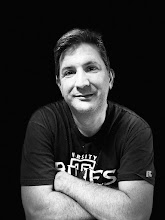
I first wrote about my all-time favorite Jayhawk Tony Guy in my blog on Feb. 17, 2019, writing about our Where are they Now? interview in 1999 and my dad's friendship with Tony. Here's more good stuff on Tone--in his own words from that 1999 interview at his State Farm office in Kansas City, Mo. Tony, you will always have a special place in my heart…far more than you will ever know. You helped bring my beloved late, forever hero dad and I closer together, and I will always be grateful to you for that. I was an impressionable high school sophomore then when I met you at my parents house the summer of 1982 when you regularly played racquetball with my dad, who sadly passed on March 11, 2021 at age 95. 


You told me during our interview that it was people like my dad, who treated you as Tony Guy the person, and not Tony Guy, the athlete, that helped make your college experience so special. That meant a lot to me; my dad, myself, and our family treat everyone we meet equally. When we met at your State Farm office in Kansas City, Mo, on that memorable afternoon in 1999, we talked man to man. Maybe no other person I’ve ever interviewed in my long journalism career talked to me the way you did; you spoke about being a good father, a good husband — so more important than your kids don’t know or don’t care about your basketball exploits. You also spoke that society has sports out of perspective, and so much more profound wisdom. While I truly loved watching you play growing up in Lawrence — pure grace in motion —I honestly don’t care if you ever shot a ball threw a hoop. Who you are as a person, as a man — someone of impeccable character, morals, values and integrity, how you graciously treated me as a teenager when I first met you and then again at our wonderful interview in 1999. You are the tremendous man, father and husband your mom, Gertrude, raise you to be — that’s what counts for me. Humble, gracious, and kind. That’s the bigger picture by far! That's the Anthony Guy I remember, and I will always remember! So thank you Tony. I wish you and your family all my best, and hope to connect again with you in the future! You are one of the greatest ambassadors that not only KU basketball, but the University of Kansas has ever seen!


And yes, it would be a thrill to shoot hoops with you at some point. I regret I never took you up on your offer to do that when we talked at Robinson Gym way back in the summer of 1982. While I've lost my quickness and speed and my jumper isn't what it once was, it would still be very special!


Favorite memory at KU:


“Ironically enough, some of my favorite memories about KU have nothing to do about basketball. And I think that’s the way it ought to be. My favorite memory of KU has to do with a conversation with (sociology professor) Norm Yetman, a surrogate father. We’re extremely close today. My sophomore year (1978-79), we were walking up on campus. Norm said, 'Tony, this is a neat place to go to school. You’re a neat basketball player. And who knows what’s going to happen to you in the future. But I just want you to keep something in mind while you’re at the university. And the thing that you’ll need to always remember is way after you’re gone, KU’s going to continue to have great basketball players and teams. The most important thing you can do for Tony Guy is to get the most of this experience as possible, meaning you need to graduate and you need to get a degree. 


“The thing he was trying to let me know, was that although my name was in the paper and everybody’s telling me how great I am, well, you’re just another basketball player, you’re just another athlete that after four years, no one talks about you. No one remembers what you did on the basketball (court) — all the great things you did on the basketball floor. That’s just the way life is. I think more young people need to have conversations like that so we don’t get caught up on the euphoria that takes place. We need to go to school and get an education. That’s the exchange. If you get a degree, it’s a fair exchange. You better believe it. The more relationships that young people can get plugged into, the better off they’re going to be. That was my most important conversation I had in my four years at the university. Basketball takes care of itself. There’s highs and lows. What young people need to be concerned with is four years is just a short period of time. There’s a lot of life left after college. And what do we with all the time that we have left.”


Most important experience at KU:


“The most important experience I take from KU is the night (teammate and best friend) David Magley took me to a FCA meeting (our senior year). I gave my life over to Christ. That experience (helped me) make it through the Celtics (when Guy was injured and cut after being a second-round draft pick (No. 46 overall). There’s nothing (else) that would have enabled me get through it. He’s been with me every step of the way. …(I speak) a lot on behalf of FCA.”


The games:


“I didn’t care much for the lower echelon team. (Playing) Kentucky, North Carolina, Indiana, K-State, Missouri, Arizona State, that’s what basketball should be about —when you get the upper echelon teams playing against each other. You find out how good a player I was. (When you) play against the best, (that’s an) accurate guage. And that’s what it should be about. The better teams in the country playing against the better teams in the country.” 


“Playing at Rupp arena (against Kentucky as a freshman). I was in awe of the place. We were blowing them out. They had a great backcourt—(Kyle) Macy, (Jay) Schilder. They had unlimited range (and hitting) bombs. They made a comeback with 30 seconds to go (with KU up six points). The last thing in timeout huddle, (Coach Ted Owens) tells us (we have no more timeouts). Mac Stallcup calls a a timeout (and they) score (and win). ”It broke us. I don’t know if we ever recovered from that (loss). (We went) 18-11, (were) ranked number two in Playboy preseason. (We had Paul) Mokeski (7-1 star center), we had a great team. We had the players. I started at forward, (Parade All-American Wilmore) Fowler (was) a guard (with superstar point guard Darnell Valentine).”


Playing against No. 3 Arizona State in the second round of the NCAA Tournament in 1981, Guy’s junior year and best season, when he finally played his true position at shooting guard. He exploded for a career-high 36 points on 13-of-15 shooting and 10-of-12 from the free throw line. KU easily upset the Sun Devils, 88-71, and advanced to the Sweet 16 in New Orleans to play Wichita State.


“All week, we read about how good they were and they were going to blow us out and blow everyone out for that matter. They deserved all the press clippings they received (all four starters had NBA careers in Alton Lister, Fat Lever, Byron Scott and Sam Williams). We were extremely talented, too. While Art Housey didn’t have the skill level as Alton Lister, it wasn’t neccessary. Byron Scott was a great player, Fat lever, Sam Williams. It was just one of those games that whenever I was open, Darnell got me the ball. My teammates got me the ball. I think at that point, it’s kind of neat the first couple of shots you shoot, they go in. My teammates (were) confident (in me). At some point, Darnell was like, ‘Hey, Tone, whenever you’re open it’s going to be there.  And it was.


“(One of) funniest things, Arizona State scored. (It was the) left side of court (and) I was dribbling after pass from Darnell, a step inside the (free throw line). “I’m in the air and I thought to myself, ‘Tony, you’re on national TV,  you’re about to fall flat on your face in front of millions of people. What were you thinking about?' I’m in the air thinking about all this stuff and I just keep going, and going, and thinking I’m going to get to the bucket. And I get to the bucket, and the place just goes off. It just goes off. My best friend, David Magley. He said, ‘Tone, you’re the only brother I ever met in my life that can’t dunk.’ That was the physically proudest moment on the court. I didn’t have a lot of dunks in my career. I jumped from at least from the dotted line. At the (season-ending) banquet, everybody still went off. Everybody still couldn’t believe it.


“Magley has the tape (of that game). Every time I ask him about it, he says, ‘I don’t know where that tape is.” l (should) call KU (and have them) make another one. It was a lot of fun. I always dreamed about having a game like that. I guess that’s a zone. Everything I did, I felt at ease with it. I felt comfortable. ‘Yes, this was the right decision’ I only took 15 shots, not an exhorbitant (amount of) shots. I made most of them. It couldn’t have come at a better time. That’s what I was about; I was about wanting to perform well against the better teams.”


KU jelling at end of season:


“(We were) starting to play really well as a team. The only bad thing is that only seven players played. Booty Neal (reserve guard and long-range bomber) could really play. He could flat out play. The one thing I like about Roy Williams is that when you’re wearing a Kansas uniform, the chances are you’re going to get a chance to play. And I think that’s the way it’s supposed to be.”


Playing against North Carolina at Charlotte, N.C., on Nov. 28, 1981, the first game of the season in Guy’s senior year, one of the first ESPN nationally televised games. UNC featured a promising star but relatively unknown freshman at that time named Mike Jordan, who started in his debut college game and defended Guy. KU played ‘Carolina close, but lost 74-67.


“Mike’s a freshman; we did not know much about him. We were more concerned about (James) Worthy, (Sam) Perkins, (Jimmy) Black. Mike was guarding me. I had a real good first half. I remember I was at the free throw line, and I remember Worthy yelling over to Mike,‘Hey, don’t go for his ball fakes.' He was really coaching Mike on how to defend me and how to guard me. (At one point in the game), a shot went up. I didn’t know where Jordan was. No box out. (I jump) to grab the rebound, all of a sudden I feel someone’s body on me. I look up and there’s a long arm up in the air. He went to dunk it and missed. I said to myself, ‘Tony, don’t ever lose track of where that guy is again.’ I thought, ‘My goodness, who is this guy?’ I was up about to grab the ball when I saw this outreached arm.”


On that 13-14 team in 1981-82 during Guy's senior year, which played without a true point guard after All-American Darnell Valentine graduated the previous year. Guy and Magley had to carry the offensive load without much of a supporting cast. Kansas lost eight of its last nine games.


“I played point guard for a while. That was probably one of the least talented teams to ever play at the University of Kansas. (I was) Playboy preseason All-American.”


On his preseason injury before senior year:


“I remember as if it was yesterday. It was my senior year. ...  (I couldn’t jump off) one leg my entire senior year. I had a sleeve on left leg; it was a serious leg injury. I injured leg in preseason conditioning. I went to coach (Ted Owens and told him I was in) pretty bad shape (and could use some time off). (Owens said), “We’re a young team, (we’re) dependent upon leadership, we need example for youngsters. (I participated in) preseason conditioning program. I shouldn’t have. A calcium deposit developed in leg; at night, I couldn’t sleep (it was) between fibula and tibia. All season I was in so much pain. Nobody knew it. A lot of guys would be bitter. (I could have redshirted). I played, that’s what team athletics is all about, making sacrifices. My senior year, (I had) my worse year, worse time. (I could have went) hardship after junior year. Portland had the 16th pick (and wanted to draft me) behind Darnell if I wanted to come out. I said, ‘No, I didn’t want to come come (out). The lesson is that things don’t always work out the way we ‘d like them to or the way we’d play for them to work out. That’s pretty much what life is about. Very seldom does things go the way we want them to. But life goes on ...For all that basketball has given me, it didn’t owe me anything at that time and it doesn’t owe me anything now. (Portland) called Darnell (and said), ‘we got the 15th and 16th picks in the first round (in 1981 NBA Draft). We’re going to use one of them on you. ‘Is Tony interested in coming out? Check with Tony.’ The thought of going hardship never even crossed my mind. As a kid, (we could) not afford it to go to college. If basketball works out, (I could get a) scholarship, and then you get the degree. That’s all it was about. It wasn’t about trying to be rich and famous. It was about going to school and getting a degree. The quality of life that I have today, there is no doubt in my mind that had I played in the NBA, the quality of my life wouldn’t have been richer than what it is today. Things normally work out for the best.”


Guy’s “consistency” and more on his serious injury:


“I was consistent over (my) career. I had been playing out of position first two years (at small forward) until junior year. (There was) no coincidence (when I played big guard), once everyone saw that I could not only play guard, but I could defend guards as well, it was pretty obvious that I was a pretty good player. I could guard just about anyone on the perimeter. (I was) unique, 6-6, defend on the perimeter. (I could move my feet) and play guard. (There was) a question mark (if I could) score. (Team-high and career-high 15.8 points per game in 1980-81, Guy’s junior season) and Sweet 16 team). There was never a doubt in my mind that I could play in the NBA.


(...There was a) pickup game before season,” Guy added about he got hurt. (I was) dribbling the ball. I shot the ball better than ever, (I was in) weight room (and) physically peak shape. Tim Banks (was) running up from behind to steal the ball — slipped, fell and his knee hit the back of my leg. (It was a) deep bruise. In the middle of preseason conditioning program,I was running around (Memorial) stadium, (it turned) turned into calcium deposit. (There were) serious problems. I literally couldn’t jump off left foot (for whole season). I couldn’t elevate.”


On the Boston Celtics camp and playing in the CBA and Switzerland:


“Probably the lowest moment of my life. Up until that point in time, I achieved and accomplished everythiing I set out to do. Playing in the NBA was important, the next step, validate that I was continue to grow and improve as an athlete and a basketball player. I couldn’t move (because of leg injury). Nobody knew. Even on one leg, Danny Ainge couldn’t score or defend me. He was starting for the Celtics. I thought to myself, ‘What could I be doing if I was healthy; (they) didn’t see half the player I really was...If I was at 100 percent (and they said), ‘You ain’t good enough, that’s fine but to be at 25-30 percent, when I knew I was good enough to play in the NBA, never had experienced dissapointment of that magnitude. I never once talked about my injury, no excuses. Life goes on. I got cut. (I then played in the ) CBA. (I was with) Maine (and) traded to Wyoming for one year. I felt injury was getting better. I played extremely well. The following year, (I played in) Switzerland. The best year of my life. I had gotten married the day before I left. By far, the best year of my life. I wouldn’t trade it for anything.The reason being, my wife and I had the foundation for our marriage that will last a lifetime. And that was important. Only place I know of, postcards don’t do it justice, even the best postcards. I was still hurt, never recovered from that injury. I had a great year in Switzerland, (developed) more leg strength. I still had pain, but not as severe. I played 1983 in CBA and1984 in Switzerland.”


(After returning home from Switzerland), “a couple of months went by and I talked to my agent. He called and said, ‘The team loved you, but same money.’ I talked to my wife. I’m thinking, ‘A lot of guys spent playing in CBA or over in Europe. They come back after having done that after eight, nine years, still need to get a job.’ She said, ‘Hey, why don’t we just get started on our lives after basketball.’” (I told my agent), ‘Thanks, but no thanks.’”


Working at State Farm and lessons shared


In 1987, Guy began working for State Farm in Kansas City, Mo., as a insurance agent. He’s been there ever since.


“I think every thing I stand for, this company is about. It’s a neat feeling to be working for a corporation who you think values the same things you value. Just taking care of people’s needs is important.. (They’re) dependent on me to have a certain skill level as it relates to being the guy that handles their insurance needs. Almost like being a coach. I have two staff, own little team. I’m in the office and out. I schedule my own, speak when I where I want to. … Most importantly, it allows me the flexibility and the time to spend with my wife and kids. I have three wonderful kids, wonderful wife. My wife is a full-time homemaker, it’s a neat home with the kids. I’m having more fun now than I’ve  ever had in my entire life. 


“I guess the lesson I share with younger guys playing, ‘there’s a lot of life left after basketball. The bottom line is all that matters is ultimately, what type of fathers we become and what type of husbands we become, because those are the most important roles we have in this lifetime is my role as a father and my role as a husband. To be quite honest, my kids don’t know or do they care about any of my basketball exploits. And that’s the way it ought to be. But they do care if I’m a good father and a good husband. … KU is an important time (but) it’s not the most important thing. ... Society, it’s out of perspective...out of whack.


“No one thinks character counts, but character does count and it always will.  No matter how much hypocrisy exists in the system, character does count. Ultimately, my mom raised me to be good husband and father; she never once called and asked how basketball is going. In the final analysis, (basketball) is a vehicle to get a college education, vehicle to be a productive member of society. We treat it as if it’s everything to me. ‘Without it, I’m nobody. I can’t do anything.” 


Guy thinks about that defining conversation with Yetman his sophomore year in his “daily life.”


“What Norm was trying to tell me was, “Tony, a lot of people you’re going to come in contact with are going to like you because you’re Tony Guy, the basketball player. I just want you to know that I care about you because you’re Tony Guy, the person. I just want you to know that Tony Guy the person will carry you much further than Tony Guy the basketball player ever will.” Guy now laughs when adding what Yetman then said, ‘I’ve been watching you. You don’t jump very high.’ I was fortunate to have a mom, Gertrude, she kept myself grounded. …(When I) speak, (I) share (about) society today. Michael Jordan retired, the world still turning. If we don’t somehow find a way to bring young people up in such a way that they become people--men and women of integrity--of high character--this place isn’t going to last much longer … unless we start having better fathers and better mothers. It’s going to collapse. It’s going to collapse. …“What (matter is what) type of adults we become.”


Guarding Magic Johnson, a sophomore sensation point guard at Michigan State, when Guy was a freshman on Feb. 4, 1979 at East Lansing, Mich. MSU blew KU out, 85-61.


“(My) freshman year, (it was both a) high light and low light (of having the) dubious honor of having to guard Magic Johnson. I realized I was OK, but I was just an average basketball player. Magic was so overwhelming that I said to myself, ‘What am I doing out here. He was just truly incredible, truly amazing. Those experiences shape your own perspectives as a player. Having to guard (Magic) was a nightmare. That was bloody.” 


On Roy Williams and the Jayhawks:


“I think that those kids play with an enthusiasm and togetherness that is unparallelled. We didn’t have it when I played. There is more of a one for all and all for one attitude. (There’s a) togetherness that Roy’s teams have that we did not have. Those guys generally care for another one. They’ll do any things for one another. These guys graduate. (They) are class acts. They’re not goofing off. They’re going to class. The positives far outweigh the negatives. … A great coach, and a great guy. (He’s) not perfect, but nobody is.”


Guy’s passions:


“Golf is my new passion, and my kids. My family is my passion. Faith, obviously. Those things are what keeps me going. …I love golf.” 


High-School All-American and Super Prep Stats


Tony made his mark in high school at Loyola in Towson, Md, and one of the country’s most highly recruited prep stars. He was a McDonald’s All-American (KU’s second one in history behind Darnell Valentine), Parade All-American, Street & Smith Yearbook All-American, and Basketball Weekly and Scholastic Magazine All-American.


Guy was a second-team Parade All-American, along with future Hall of Famer James Worthy. Mark Aguirre, a third-team selection, was a future No. 1 overall NBA Draft pick by the Dallas Mavericks.  KU teammate and best friend David Magley was a fourth-team Parade All-American. Guy and Aguirre were also members of the 1978 McDonald’s All-American team.


A three-time all-league selection and three-year starter at Loyola, Guy helped lead the Dons to a 78-19 record during that time. Loyola went 27-6 his first year as a sophomore, then 26-4 and 25-9 his senior year. The Dons ranked No. 2 in the state in final polls both his sophomore and junior seasons. Guy, who lead the team in scoring, rebounding and assists his senior year, averaging 22.9 points,11.1 rebounds and 3.6 assists per game. In league games, Tony averaged 26.5 points,10.0 rebounds and 5.1 assists.


Guy also led Loyola in scoring (15.4 ppg) and assists (154) his junior year, while second on squad in rebounding (9.0 rpg). He culminated his magical career with 1,499 points in 89 games (16.8 ppg). He also had 881 career rebounds (9.9 rpg) and 341 assists (3.8 apg). He connected on better than 50 percent of his field goal attempts last two seasons, while shooting 50.6 percent from the field during his career. He was also a career 77.0 free throw shooter. 


Tony scored a career-high 38 points his senior year and grabbed a career-best 18 boards his junior and senior seasons. Above all, he was a winner and team player. Loyola won the Catholic League Tournament all three years, while Guy served as team captain his senior year.


Tony sums it up:


“(I was) extremely fortunate in my career. I started from day one and played every game. I had a great career. The university and coach Owens and the players were extremely kind to me.”


Friday, December 17, 2021

Former KU teammates and Max Falkenstien Blast Darnell Valentine


Darnell Valentine culminated his magical and tremendous career in 1981 as KU’s No. 2 all-time leading scorer (1,821 points) behind Clyde Lovellette, the school’s all-time assist leader with 609, while also ranking first in steals with 336 and free throws made (541).

Forty years later, his steals and free throws made still rank No. 1, while he is No. 7 in scoring and No. 6 in assists.

Valentine, a second-team AP All-American his senior year in 1981, averaged 15.4 points, 5.2 assists, 2.8 steals and 3.6 rebounds in 33.1 minutes per game over 118 contests during his career, while shooting 47.6 percent from the field and 71.8 percent at the free throw line.

He is the only player in Big Eight history to be named first-team All-League four years, while also selected as a three-time Academic All-American. He achieved a 3.3 GPA in pre-law.
 
Valentine received the ultimate honor when his No. 14 jersey was retired for eternity in the hallowed Allen Fieldhouse rafters on Dec. 1, 2005 at halftime of the KU-Georgia Tech game.
 
“This is large, this is an incredible opportunity for me just to come back,” Valentine said before the game. “This is like the crowning moment for me. I don’t know how involved, or what my presence will be from this point forward, other than another time for them to recognize me. This is the crowning of my adult life right now.”
 
Asked about it taking 24 years since he left KU for his jersey to be retired, Valentine gave an eloquent reply.

 “I was just looking at the media guide. There was a gentleman in 1927 whose jersey was retired in 2002. I forget this name,” Valentine said. “That was a great era. ... Jo Jo, he left here in ‘69. His jersey wasn’t retired until 2001. It seems like 24 years is a nice place. I can certainly appreciate it and I can relish that it is happening now and come back and be excited about it and fully appreciate what it means.”

 D.V. definitely has a special place in his former KU coach Ted Owens’ heart. He couldn’t have been more elated to see his jersey retired.

 “Darnell Valentine is one of the greatest players we’ve ever had here,” Owens told the Jayhawk Radio Network on Jan. 1, 2005. 

“It’s a wonderful day. To see him honored is a blessing for all of us.”
 
Despite all of Valentine’s accomplishments, he also had critics. Former teammates Donnie Von Moore and Tony Guy blasted Valentine during interviews with me many years ago. 

"Darnell Valentine, he was supposed to be the Academic All-American and all that crap, but (he got) a general studies degree,” Von Moore told me in 2000. “They don’t talk about that. I’m not saying there’s nothing wrong with a general studies degree if you know what you’re doing with it, if there’s an interest in it or something that you really want to do. But it can be used for something negative, too, to get you a lot of easy, bullcrap classes that don’t amount to a hill of beans. You get your degree and you go out there...(They find out) you took basketweaving one through eight for 20 hours. I kind of blew the whistle on that. Mike Fisher (KU academic counselor), he kind of took the fall for all that. That was a big story. It kind of led to Ted Owens being fired. He was pissed off at me for a long time. Ted didn’t speak to me for about 10 years because it kind of blew the lid off the thing.”

Von Moore was just getting started in firing criticism at Valentine, whom he played with for one year in 1977-78 when Donnie was a senior and D.V. a freshman sensation. KU won the Big Eight championship, but Final Four dreams were crashed when Kansas lost to UCLA in the first round of the NCAA Tournament. I cried after the loss having dinner with my parents. This was one of my all-time favorite KU teams and I got chills every night in Allen Fieldhouse watching KU play next to my dad each game with our season tickets knowing I was watching the No. 5 ranked team in the land.

Darnell, Donnie, Paul Mokeski, Clint Johnson, John "The Franchise" Douglas, Wilmore Fowler...These were my childhood heroes and I loved them dearly, much more than words can show.
 
Von Moore was angry at Valentine and Owens. He said Valentine was a very selfish player.
 
“Darnell got something he didn’t deserve. He was one of the reasons we lost the UCLA game,” Von Moore said. “He tried to have a personal one-one-one contest with Hamilton (Roy, star UCLA point guard). Darnell had two or three charges trying to take the man. Ted let him do it. It changed whole momentum and led them back in. (He got in) foul trouble (and fouled out when UCLA then took control of the game). (It was) stupid, so pissed off. We could have went somewhere with all the players we had.  
“They put the game in (Valentine’s) hands,” Donnie added. “Other than Darnell bringing the ball up the court, no shot. Had no jumper, no real overall game. He was just Darnell Valentine who had the ball all the time.”
 
Von Moore was so upset that he didn’t return with the team to Lawrence. Instead, he went with teammate Clint Johnson to California to stay with Johnson’s brother for two weeks before coming back to Lawrence.
 
Valentine and KU assistant Lafayette Norwood also hurt chemistry on the squad. Norwood, Valentine’s high school coach at Wichita Heights who came to KU as a package deal with D.V., was always inseparable with Valentine at KU, apart from the other players and coaches. Max Falkenstien, the legendary KU announcer, wrote about this in his 1996 book, Max and the Jayhawks:
 
“In fact, it was a strange coach-player relationship. They were always together. In airports, hotels, they were generally in tandem, separated from the rest of the team. I always questioned whether this was a good situation for team unity, but we never talked much about it.”
 
Norwood even had a picture of Valentine in his office. Owens got angry, and told Norwood to take it down, and said if he’s going to have a picture, make it be a team picture.
 
Even the great players, leaders, and tremendous people have their faults and imperfections. Valentine certainly did. He had a big ego and didn’t seem to care about his teammates. Tony Guy, a starter for four years from 1978-82 whom played with Valentine for three seasons, said teaming with Valentine was very troubling.

 “I think that Darnell Valentine was a great basketball player, there’s no doubt about it. But Darnell did not have a lot of confidence in the guys he was playing with,” Guy told Mark Stallard in his 2005 book, Tales from the Jayhawks Hardwood.
 
“It was almost as if we had to prove to Darnell that we were worthy to be his teammates. I always found that interesting, in that you’re talking about a guy who was a great athlete, but he was just an okay basketball player. I thought he was a great athlete, you couldn’t help admire him as an athlete. But as a basketball player, he was just an average shooter. If you look at the overall statistics, it’s not like he lit the place up. He didn’t pass the ball a whole lot, to be totally honest. I was a shooting guard, and trying to get the ball of out of his hands was like pulling teeth. 

 “It was interesting, because it was almost like we had to prove that we could play.”
 
This is painful to write, because I truly idolized Valentine growing up and he meant so much to me and I followed his NBA career so religiously and had pictures of him all over my wall as true inspiration. I put him on a pedestal; to me, he could do no wrong. I always thought his work ethic and defense were peerless, and he could penetrate the lane with the best.

Darnell Valentine was always my all-time favorite Jayhawk before Tony Guy replaced him in my heart as my No. 1 KU player ever.

Guy told me in 1999 that Valentine was a very egotistical player who was only concerned about furthering his career, instead of winning.
 
Guy gave an example of Ricky Ross, Valentine’s teammate in 1979-80 who was well-known to be extremely selfish with a big ego. One game, Guy told told me, Ross had a big scoring night but KU lost. Everyone was despondent in the locker room except Ross. Ricky couldn’t understand why his teammates were down after his high-scoring game.
 
“That’s how Darnell was,” Guy said.
 
However, Guy greatly admired Valentine’s defense and work ethic.
 
“I wouldn’t say we were friends,” he said. “I had a great deal of respect for that guy. The guy was an incredible athlete, his work ethic was phenomenal.” But?
 
“Darnell could have made it possible for two or three other guys to have gone to the NBA,” Guy said. “That’s how good Darnell was. That’s what Magic (Johnson) did (for Michigan State). Jay Vincent (he played nine years in the NBA) and Gregory Kelser (No. 4 overall pick in 1979 by Dick Vitale's-coached Detroit Pistons who played five years in the NBA) weren’t great basketball players. But every time time you saw them, they were dunking it. That was Magic. They were just average basketball players. Magic was about winning championships. How do you measure a great player? You measure a great player by his ability to make those around him better than they actually are. It’s about winning. Team sports is about winning

 “... Darnell was a phenomenal player,” Guy continued. “Trust me, I had to play with him every day and against. The guy was incredible. There was not a guy that I played against that I had to worry about another team’s point guard. Other than one--Larry Drew (Missouri star). One of the best players that we played against. He could shoot, but more important, he used his skills to help his team win. He could have shot more than he actually shot.”
 
Despite these critical comments about Valentine, Guy admitted that “Darnell was a lot of fun to play with. We had a lot of laughs. Had a great time with him. But we had a lot of disappointments, too.”

Former KU assistant Bob Hill, who coached Valentine all four years, was also critical of this All-American. Hill spoke to my Coaching Basketball class at KU in 1985, when I asked him who was the best player ever coached.
 
Without hesitation, Hill replied:

“Darnell Valentine.”
 
Hill, though, quickly added that Valentine wasn’t the most coachable player. He said that Valentine would break down plays at the end of the game and KU would lose. Hill added that everyone blamed Owens when it was Valentine’s fault.
 
While Valentine told the local media that he was elated that Jan. 1, 2005 day when his jersey was retired, he had a different opinion when talking to a Portland newspaper, his longtime hometown. Valentine fell in love with the Portland community and area since entering the NBA as a first-draft pick of the Blazers in 1981. 
 
“I am excited, no question,”  Valentine said. “But they retired the numbers of so many of their recent players — Raef LaFrentz, Nick Collison, Jacque Vaughn — within a year or two after they left Kansas. I think the timing for me is a little bit off, to say the least.”

 Falkenstien came close to summing it up best about Valentine’s huge ego and how it hurt the Jayhawks in his book:
 
“Darnell was a fabulous player for KU, but I felt that often he tried to do too much at the expense of the team.”
 
A longtime journalist and sports editor in Kansas once told me that Valentine had no friends on the team. However, I saw Valentine playing tennis with teammate David Magley at KU one time. Magley has also repeatedly talked very warmly of Valentine, his longtime friend who he first met on his recruiting trip to Lawrence.

As has Drew, who battled against Valentine in college and then the NBA, while also teammates with Valentine with the Los Angeles Clippers.

“He was a warrior,” Drew told me once of Valentine.

 But in the end, Guy said Valentine extremely hurt KU too often during his career. 
 
“He was very selfish and it cost us dearly,” Guy said. “He wanted to get his. When I played, Darnell was basically allowed to do whatever he wanted and whenever he wanted to do it. And it cost us. We weren’t nearly the teams we could have been under Darnell. A tremendous basketball player, but he used all of his skills to enhance his own career. That’s all he was about.”


Wednesday, May 13, 2020

Darnell Valentine emerged as starting point guard in second season with Portland Trail Blazers

Red Auerbach, the legendary Hall of Fame coach of the Boston Celtics and then-Celtics president, thought Darnell Valentine was destined for greatness in the NBA.

Auerbach scouted Valentine at Kansas, and was deeply impressed.

In the Feb. 3, 1979 issue of The Reporter, an Akron, Ohio, newspaper, Josh Watson wrote the following:

“Every pro coach in the NBA knows you got to have a playmaker--without one you don't go too far in the NBA. Kansas Darnell Valentine is not only a great playmaker, he's also a 20 point per game scorer. Red Auerbach likes what he saw of Valentine and thinks Valentine will have a great future in the NBA.

“Auerbach also would like to see Valentine wearing a Boston uniform. Keep your eyes on Darnell Valentine; you are going to hear a lot about this great playmaker out of Kansas.”

Now, entering his second season in the NBA with the Portland Trail Blazers, Valentine was also drawing rave reviews from Portland coach Jack Ramsay. Despite playing limited minutes his rookie year backing up Kelvin Ransey at point guard and averaging just 6.4 points per game on only 41.3 percent shooting (worst percentage on team), Ramsay thought Valentine showed great potential and deemed this former KU All-American for stardom.

"Darnell Valentine may be the best point guard in the NBA, you'll see," Ramsay told Sports Illustrated on Nov. 1, 1982.

With Ransey traded to Dallas after last season for 6-10 center Wayne Cooper and a first-round draft pick in 1985, Valentine had now emerged as the starting point guard for the Blazers. But he had competition from 1982 first-round draft pick Lafayette Lever (11th overall) from Arizona State.

Valentine and Lever had actually battled each other twice in college with Valentine bettering him both times. Valentine scored 16 points to Lever’s 10 in Arizona State’s 73-65 overtime victory over KU on Dec. 29, 1979, while Valentine had 16 points again to Lever’s 9 in KU’s 88-71 upset win over the No. 3 Sun Devils on March 15, 1981 in the second round of the NCAA Tournament.

The Lawrence Journal-World’s Chuck Woodling wrote about the competition between Valentine and Lever while also addressing why Portland dealt Ransey to the Mavericks.

“We traded Ransey because we were 17th in the league in rebounding last year and we needed help on the boards,” a Blazers’ spokesman said. “Mychal Thompson was our leading rebounder last year and Cooper averaged more rebounds per minute than Thompson did.

“We had the 11th pick in the draft and we didn't think there'd be a big guy available then. The reason we traded Ransey--and we really didn't want to--is because we think Lever is better than Kelvin was when he came into the league."

Tony Guy, Valentine’s teammate at KU, was also high on Lever. The two guarded each other last season on Nov. 30, 1981, a 63-62 Jayhawk victory. Lever scored 17, while Guy had 16.

“I think he is a complete ballplayer,” Guy told Woodling. “His strongest asset is he's more conscious of the team than he is of himself, and I think the people in the NBA were impressed by that. In guarding him, I had to be conscious of not relaxing because he has a real good jump shot. And I thought he was a great defensive player."

Despite drafting Lever, the Portland spokesman said the starting point guard position was for Valentine to lose.

“Really, it's up to him,” he said. “Last year Darnell started well, then tailed off. He had foul problems and maybe shot too much. But we think he'll have a better understanding next season. We're still high on Darnell, and the other kid will have to beat him out."

Valentine won the point guard battle and played great before breaking his foot in early January during a game against Indiana. The UPI reported on Jan. 6, 1983:

“The Portland Trail Blazers were clicking on 411 cylinders until point guard Darnell Valentine, sparkplug of their fast break, went down with a foot injury. Valentine, averaging 14.4 points and the third-leading ball thief in the NBA entering Tuesday night's game against Indiana, suffered a stress fracture of the left foot in a second-quarter collision. The second-year dynamo out of Kansas, Valentine who moved into the starting lineup when the Trail Blazers traded away Kelvin Ransey, will be out at least six weeks - at least until Valentine's Day."

"We're going to miss his intensity and his hustle. He seems to fire up the whole team when he makes a steal or lays it up 'through five guys," Thompson said.

Lever replaced Valentine as starter and played very well. According to the 1984 Pro Basketball Handbook, “Played good defense and showed he’s a future leader by running the offense.”

Lever played in 81 games with 45 starts, averaging 7.8 points, a team-high 426 assists (5.3 apg), 1.9 steals and 2.8 rebounds in 24.9 minutes per game, while shooting 43.1 percent from the field.

As for Valentine?

He nearly doubled his scoring average from his rookie season to 12.5 points while third on the team with 293 assists (team-high 6.2 per game), first with 2.1 steals, and 2.5 rebounds in just 47 games (36 starts), while shooting 45.4 percent from the floor and 79.3 percent at the charity stripe, also improvements on his rookie year.

The Pro Basketball Handbook reported that Valentine “became the No. 1 point guard when Kelvin Ransey was traded to Dallas. Promptly spent 35 games on the shelf with a foot injury...Is not a real offensive threat and his jumper could use a lot of work. But plays defense like he means it.

“He’s a fierce competitor,” Ramsay said. “He never stops. He’s never going to be outplayed.”

Portland finished the season at 46-36 — a four-game improvement over last season — and fourth place in the Pacific Division.

Entering the playoffs, Valentine started over Lever and raised his game to another level, helping the Blazers beat Seattle 2-0 in the first round before the Lakers and Magic Johnson beat Portland 4-1 in the Western Conference semifinals.

Valentine played seven games in the playoffs, averaging 12.1`points, 8.7 assists and 1.4 steals in 29.3 minutes per game, while shooting 42.5 percent from the field and 76.2 percent at the free throw line. He set a franchise-tying record with 15 assists in a Game 2 loss to the Lakers, while dishing 14 assists in a Game 3 OT loss to L.A. He also recorded game highs in the playoffs of 18 points, four steals and 38 minutes.

Lever, meanwhile, averaged 6.0 points, 4.4 assists and 1.0 steals in 19.1 minutes per game in the playoffs, while shooting 45.2 percent from the field and 80.0 percent at the charity stripe.

But with Lever’s emergence when Valentine was injured, it looked like a heated competition for the starting point guard spot entering the offseason.

The Pro Basketball Handbook thought Lever might have the edge:

“Lafayette Lever is one of the best young point guards in the league, leaping into the void as a rookie when Darnell Valentine went down with a leg injury. Lever may actually have stepped ahead of Valentine now on the depth chart.”

While that remained to be seen, Valentine was already drawing great praise from Ramsay, Thompson and others around the league for his outstanding defense and tenacious work ethic.

Just listen to David Magley, Valentine’s former teammate at Kansas who played briefly in his rookie season in 1982-83 with the Cleveland Cavaliers.

“I gained even greater respect for Darnell,” Magley told the Journal-World after the Cavs released him. “I respected Darnell at KU because he worked so hard. He’s kept it up in the NBA. Darnell is so devoted. A lot of NBA players just don’t show the intensity he does.”


Monday, April 27, 2020

Darnell Valentine left his mark as one of KU’s all-time greats


D
arnell Valentine culminated his magical and tremendous career in 1981 as KU’s No. 2 all-time leading scorer (1,821 points) behind Clyde Lovellete, the school’s all-time assist leader with 609, while also ranking first in steals with 336 and free throws made (541).

Thirty-nine years later, his steals and free throws made still rank No. 1, while he is No. 7 in scoring and No. 6 in assists.

Valentine’s records, indeed, have stood the test of time.

“I didn’t realize they kept records back in those days. I think that a lot of these records would certainly have been broken if guys would have stayed for the whole four years of college,” Valentine said on Jan. 1, 2005 before the KU-Georgia Tech game and his jersey retirement ceremony in Allen Fieldhouse.  

“I look at the Paul Pierces and the Drew Goodens and those guys, they had phenomenal careers. They probably would have shattered everything. The way the climate is now, guys opt to go to the big leagues and play.”

Valentine, a second-team AP All-American his senior year in 1981, averaged 15.4 points, 5.2 assists, 2.8 steals and 3.6 rebounds in 33.1 minutes per game over 118 contests during his career, while shooting 47.6 percent from the field and 71.8 percent at the free throw line.

He is the only player in Big Eight history to be named first-team All-League four years, while also selected as a three-time Academic All-American. He achieved a 3.3 GPA in pre-law.

Former KU coach Ted Owens marveled at Valentine’s contributions — on and off the hardwood.

“He was a complete person. He did it all,” Owens gushed.

But more than all the records was Valentine’s extreme dedication to his craft. Nobody who ever  donned a Jayhawk uniform ever worked harder or played better defense.

That was 100 percent effort each time in practice and games.

“It was a passion of mine,” Valentine said.

Owens was asked about his favorite memory of Valentine on the Jayhawk Network Crimson and Blue pregame show that special day on Jan. 1, 2005.

He didn’t hesitate with his reply.

“I think just working with him every day,” Owens said. “We’ve had some great players, some hard working players, but in four years, he never failed one day to come to the court without great motivation. He wasn’t good by accident. He was good because he worked at it every single day. Just the opportunity to work with someone with that kind of attitude really was a highlight.”

Valentine has many fond memories of his KU career.

“Coach Owens, he just created a platform for me to perform well, there were so many good memories,” he said. “I really couldn’t pick one of them. I really used to enjoy going up to Kemper Arena and having those holiday tournaments. That was jut the cat’s meow for me. I think we had a lot of success. My senior year, we were able to go up and win at the end of the year, the Big Eight Tournament there, so that was a crowning moment that really stands out.

“... I think that it’s just unreal, every day, we played so hard, we practiced so hard, that was just so much fun knowing that everyone had the same agenda, same motive to improve. Coach Owens and his direction and guidance, he just kept us growing as players. As I’m  reflecting, I just tried to do it all, and coach provided me the platform to do it.”

Valentine, a Wichita Heights prep phenom who was one of the first players in Kansas to be recruited nationally, was now asked about his legacy.

“I’m not real sure, I haven’t really though about my legacy. I’m not old enough to think about a legacy,” said Valentine, who was 45 years old at the time of his jersey retirement. “But I think one thing that was instilled in me, my mother instilled in me was the fact I had a real strong work ethic. I was dedicated to the game and I respected the game. Coming from Wichita, Kansas, a small community, just being able to blaze a trail so to speak, put a spotlight on the players that were there was a tremendous accomplishment I think, and I cherished it. Providing other opportunities for other players from the city, and then coming here and making a contribution and feeling like I did make a contribution.”

Indeed, Valentine “blazed a trail” for future high school standouts and college stars from Wichita like Ricky Ross, Antoine Carr, Greg Dreiling and Aubrey Sherrod, who were also recruited nationally.

“That was really a special time. But they’ve always had good players, even before my time,” Valentine said. “But on the national scene, it was difficult for people to believe, or have the confidence that Wichita could produce quality players that could perform on the national stage. With myself coming through there and creating so much exposure, and that was only because I went outside the system and I got exposure by going to a high school camp that was national (Howard Garfinkel’s prestigious Five-Star camp in Wheeling, West Virginia), and I did very well.”

Valentine, a muscular 6-1, 180-pound point guard with tree-trunk legs, cherished his high school days starring for Heights, where they went 23-0 his senior year in 1976-77, blowing teams out with a margin of 40 points per game in what is considered the best prep team in Kansas history. Valentine led Heights with 26.0 points per game and simply dominated on defense, just like he did at KU.

“I had the question posed to me the other day, what was the best time I had playing basketball, and I said when I played high school basketball that year,” Valentine said. “That was incredible year we had. That team was fantastic. You look at the time. I think I was the first All-American out of Wichita. And then after that, we had Antoine Carr, he and I both had reasonably good (NBA careers). I think Antoine played 17 or 18 years in the NBA (16 years). Then, we had Calvin Alexander, who was a top 10 heavyweight boxer. 

“... That was a phenomenal team. That was a family. Coach Lafayette (Norwood) was the father of the family, and the head. He gave us a lot of incredible instructions and life lessons. I think it all made a difference in our lives, his presence and that whole experience. That was a great experience.

“We were quite fortunate,” Valentine added. “I had the chance to play with Antoine Carr, Calvin Alexander, Doc Holden. I think we were a little ahead of our time. That was really a special time for us. I think that what we accomplished was pretty remarkable.”

Every KU fan knew how great Valentine was in high school and college. And they also marveled about his muscular legs, which also became his trademark in his nine-year NBA career.

David Lawrence of the Jayhawk Radio Network talked to Valentine about his legs before the KU-Georgia Tech game and his jersey retirement in 2005 on the Crimson and Blue show. Lawrence played football at Kansas during the same years that Valentine created his magic at Kansas.

“You were everyone’s favorite player, including ours,” Lawrence said, “but a lot of the guys had a hard time with you because anytime we were out on dates, our coeds would always remind us, no mater how much we lifted weights, we didn’t quite match up with Darnell Valentine.”

Valentine just smiled.

“My mom gave me these big old legs,” he said. “That’s my only forte. People don’t remember that I played a little bit. They call you the guy with the big legs. So that was my mark.”

“That was long before weights were really in vogue with basketball players,” Owens added.

Tim Jankovich, a KU assistant coach at the time, who battled against Valentine as a K-State point guard for two years, admits he was "scared" of Valentine's big legs.

Jankovich truly admired Valentine.

“I’m just glad that I’m not having to play today and he’s not guarding me,” Jankovich said. “I thought he was one of the best defensive players that I’ve ever played against. We came out the same year in high school, he was in Wichita and I was from Manhattan. We never played in high school, but I was well aware of him. Of course, playing against each other, I had a great deal of respect for him. He was a tremendous player. I though the was an even better defensive player than offensive player. He was an awfully good offensive player, and certainly well deserving of having his jersey retired.

“Darnell was way ahead of his time,” Jankovich added. “At KU, we’ve had some guys ahead of our time. We’ve had Wilt Chamberlain, who was about 50 years ahead of his time. Darnell was probably a good 20 years ahead of his time. He was rock solid. He had the biggest legs I’ve ever seen. His legs frightened me. I was scared of his legs. I didn’t want him to put a knee in my mine and break it off. He was so strong and athletic and explosive. 

“He was a heck of a player.”

Indeed, he was. Especially on defense, where he he locked up opposing team’s point guards and seemingly stole the ball at will.

“He was the very heart of our defense,” Owens said. “When you had to fight Darnell coming up the court and you couldn’t break him down, then the rest of us could get out and over play our men. He was incredible. I’ll never forget one night at Oklahoma, everyone got tired of him stealing the ball, so finally Oklahoma just decked him on the other end of the court. Then I did a stupid thing, got into a little conversations with (OU coach) Dave Bliss. Darnell’s mother, Rose, called me and she said, ‘I’m proud of you coach even though the Big Eight conference is after you.’”

Valentine also had few peers when it came to penetrating the lane. He was extremely quick with the dribble and could easily blow by his man and get into the paint. Valentine was often compared to Jo Jo White when he played at KU. White was also an All-American at KU and is enshrined in the Naismith Hall of Fame after spending most of his NBA career starring for the Boston Celtics.

“Darnell and Jo Jo have a lot of likeness. Both have a great attitude towards work and both are complete players,” Owens told The Sporting News during Valentine’s sophomore season in 1978-79. 

“But Jo Jo never penetrated like Darnell. Darnell does that better than anyone I’ve ever seen.” 

“Valentine is quicker than Jo Jo and penetrates better,” Red Auerbach, who was general manager of the Celtics at the time who drafted White out of Kansas and one of the most respected minds in basketball history, told The Sporting News after watching Valentine earn MVP honors in the 1978 Big Eight Holiday Tournament.

Opposing coaches would devise schemes to stop Valentine from penetrating. In his biography in the Wichita Sports Hall of Fame, it noted that “he was such a force as a penetrating point guard that he forced KU nemesis Coach Jack Hartman of Kansas State to create a 3-2 zone defense specially designed  just to try to stop Valentine.”

Twenty-four years after he led KU to the Sweet 16 and became an All-American, Valentine was thrilled that his No. 14 jersey was being retired and hanging in the rafters for all time. A great honor for someone who did so much for Kansas. Dressed dapper in a maroon suit and looking svelte like he could play today — “I’m still playing weight, baby” — Valentine talked before the KU-Georgia Tech game on New Year’s Day, 2005 about what an honor it was.

“This is large, this is an incredible opportunity for me just to come back,” Valentine said. “This is like the crowning moment for me. I don’t know how involved, or what my presence will be from this point forward, other than another time for them to recognize me. This is the crowning of my adult life right now.”

Asked about it taking 24 years since he left KU for his jersey to be retired, Valentine gave an eloquent reply.

“I was just looking at the media guide. There was a gentleman in 1927 whose jersey was retired in 2002. I forget this name,” Valentine said. “That was a great era. ... Jo Jo, he left here in ‘69. His jersey wasn’t retired until 2001. It seems like 24 years is a nice place. I can certainly appreciate it and I can relish that it is happening now and come back and be excited about it and fully appreciate what it means.”

However, Valentine felt slighted about it taking so long to have his jersey retired when talking previously to a Portland newspaper, his hometown where he’s lived since retiring from the NBA.

“I am excited, no question,”  Valentine said. “But they retired the numbers of so many of their recent players — Raef LaFrentz, Nick Collison, Jacque Vaughn — within a year or two after they left Kansas. I think the timing for me is a little bit off, to say the least.”

Even the great players, leaders, and tremendous people have their faults and imperfections. Valentine certainly did. He had a big ego and hurt KU basketball at times during his career. When former KU assistant and then-Knicks assistant coach Bob Hill spoke to my class at KU in 1985, I asked him who the best player he’s ever coached.

Without hesitation, Hill replied:

“Darnell Valentine.”

Hill, though, quickly added that Valentine wasn’t the most coachable player. He said that Valentine would break down plays at the end of the game and KU would lose. Hill added that everyone blamed Owens when it was Valentine’s fault.

This is painful to write, because I truly idolized Valentine growing up and he meant so much to me and I followed his NBA career so religiously and had pictures of him all over my wall as true inspiration. I put him on a pedestal; to me, he could do no wrong. He used to be my all-time favorite Jayhawk before Tony Guy replaced him in my heart.

But Guy — Valentine’s teammate for three years — told me in 1999 that Valentine was a very selfish player that was only concerned about furthering his career, instead of winning.

Guy gave an example of Ricky Ross, Valentine’s teammate in 1979-80 who was well-known to be extremely selfish with a big ego. One game, Guy told told me, Ross had a big scoring night but KU lost. Everyone was despondent in the locker room except Ross. Ricky couldn’t understand why his teammates were down after his high scoring game.

“That’s how Darnell was,” Guy said.

However, Guy greatly admired Valentine’s defense and work ethic.

“I wouldn’t say we were friends,” he said. “I had a great deal of respect for that guy. The guy was an incredible athlete, his work ethic was phenomenal.”

But?

“He was very selfish and it cost us dearly,” Guy said. “He wanted to get his. When I played, Darnell was basically allowed to do whatever he wanted and whenever he wanted to do it. And it cost us. We weren’t nearly the teams we could have been under Darnell. A tremendous basketball player, but he used all of his skills to enhance his own career. That’s all he was about.

“Darnell could have made it possible for two or three other guys to have gone to the NBA,” Guy added. “That’s how good Darnell was. That’s what Magic (Johnson) did (for Michigan State). Jay Vincent (he played nine years in the NBA) and Gregory Kelser (No. 4 overall pick in 1979 by Dick Vitale's-coached Detroit Pistons who played five years in the NBA) weren’t great basketball players. But every time time you saw them, they were dunking it. That was Magic. They were just average basketball players. Magic was about winning championships. How do you measure a great player? You measure a great player by his ability to make those around him better than they actually are. It’s about winning. Team sports is about winning

“... Darnell was a phenomenal player,” Guy continued. “Trust me, I had to play with him every day and against. The guy was incredible. There was not a guy that I played against that I had to worry about another team’s point guard. Other than one--Larry Drew (Missouri star). One of the best players that we played against. He could shoot, but more important, he used his skills to help his team win. He could have shot more than he actually shot.”

Despite these critical comments about Valentine, Guy admitted that “Darnell was a lot of fun to play with. We had a lot of laughs. Had a great time with him. But we had a lot of disappointments, too.”

Max Falkenstien was also negative of Valentine in his 1996 book, Max and the Jayhawks:

“Darnell was a fabulous player for KU, but I felt that often he tried to do too much at the expense of the team.”

While these are critical remarks, there is no question that Darnell Terrell Valentine is one of KU’s all-time greats and certainly left his mark at Kansas.

No. 14 definitely has a special place in Owens’ heart. He couldn’t have been more elated to see his jersey retired 15 years ago.

“Darnell Valentine is one of the greatest players we’ve ever had here,” Owens told the Jayhawk Radio Network on Jan. 1, 2005. 

“It’s a wonderful day. To see him honored is a blessing for all of us.”